
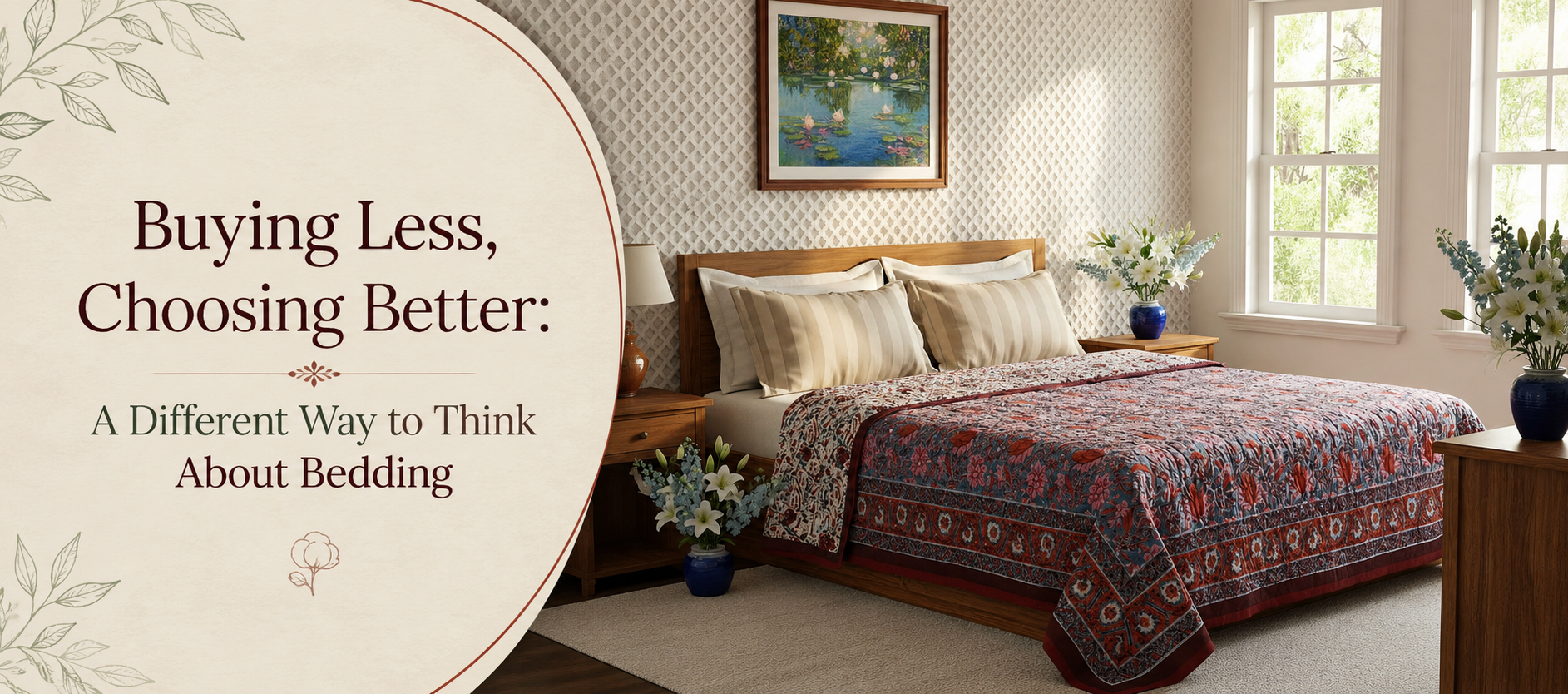
Buying Less, Choosing Better: A Different Way to Think About Bedding
Most people replace bedding far more often than they'd like to admit — not because they want something new, but because what they bought didn't last. A duvet cover pills after a dozen washes. A bedspread thins out by its second winter. Learning how to choose bedding properly the first time round changes that cycle entirely, and it usually has less to do with price than with understanding what's actually in the fabric. This piece looks at what separates bedding worth keeping from bedding that's designed to be replaced.
Why Most Bedding Doesn't Last as Long as It Should
Bedding wears out quickly when it's made from low-grade synthetic blends, woven loosely to cut costs, and finished with chemical softeners that wash out within months. Genuinely durable bedding depends on fibre quality, weave density, and construction — three factors that rarely appear on a product label but matter far more than thread count alone.
The Thread Count Myth
Thread count gets marketed as the main measure of bedding quality, but it's one of the least reliable indicators on its own. Manufacturers can inflate thread count by twisting multiple thin, low-quality threads together and counting each strand separately, producing a high number on a fabric that still feels rough and wears out fast. Fibre quality and weave type matter considerably more than the number printed on the packaging.
Reading Fabric Labels Properly
A genuine 100% cotton label, a stated weave (percale, sateen, or plain weave), and a country of origin tell you more than a thread count figure ever will. Percale weaves use a simple one-over-one-under pattern that produces a crisp, matte, breathable fabric — the kind that gets cooler and softer with each wash rather than pilling. Our cotton percale bedding range is woven this way, using long-staple cotton that holds up to repeated washing far better than shorter, cheaper fibres.
Natural Fibres vs Synthetic Blends
Cotton, linen, and other natural fibres are breathable and biodegradable, and they soften over years of use rather than degrading. Polyester and polycotton blends are cheaper up front but trap heat, resist breathability, and typically need replacing within one to two years of regular use. For UK homes running central heating through much of the year, the breathability difference alone often justifies choosing natural fibre over a synthetic blend.
Understanding GSM and Fabric Weight
GSM, or grams per square metre, measures how densely a fabric is woven — a more reliable durability signal than thread count for quilts, throws, and heavier bedspreads. A quilt with a higher GSM fill generally holds its shape and warmth longer than a thinner one, even after repeated washing. When comparing two similar-looking quilts, checking the GSM figure (where listed) gives a clearer sense of what you're actually paying for.
Quilts, Bedspreads and What Each One Is Actually For
A quilt is padded and stitched through its layers, built to provide warmth as well as decoration, while a bedspread sits flatter and is designed more for drape and finish than insulation. Buying the wrong one for the season is one of the more common reasons people end up owning bedding they rarely use. A queen size quilted bedspread works well as a year-round compromise, since it carries a quilt's padded warmth with a bedspread's fuller, tailored drop over the sides of the bed.
A Practical Checklist Before You Buy
- Check the fibre first. Look for 100% natural fibre content before anything else on the label.
- Identify the weave. Percale for a crisp, cool feel; sateen for a softer, slightly heavier drape.
- Compare weight, not just thread count. A stated GSM figure is more useful than an inflated thread count number.
- Match the piece to its purpose. A quilt for warmth, a bedspread for drape and finish.
- Check construction quality. Hand-finished seams and reinforced edges typically outlast overlocked machine seams.
Sizing Bedding Correctly for UK Beds
UK bed dimensions don't always match international sizing charts exactly, and this is one of the most common reasons a newly bought bedspread or quilt ends up too short at the sides. Measuring mattress length, width, and desired drop before ordering avoids the common mistake of buying bedding that looks right in a photo but sits awkwardly once it's on the bed. This applies equally to duvet covers, fitted sheets, and top layers like quilts and throws.
Choosing Between Machine-Made and Hand-Finished Bedding
Machine-made bedding is produced faster and more cheaply, but the seams and finishing are often the first parts to fail under repeated washing. Hand-finished bedding, including hand block-printed quilts and dohars, tends to use reinforced stitching and slightly heavier fabric weights, since the production process already involves more manual handling at every stage. Genuine Indian quilts made using traditional hand-quilting techniques are a clear example of this — the extra hand-stitching that goes into securing the wadding is exactly what keeps the quilt from shifting or clumping after repeated washes.
Colour and Pattern Longevity
Hand block-printed patterns use natural dyes and pigments pressed by hand, which tend to age more gracefully than digitally printed synthetic dyes that can fade unevenly within a year. A genuine block print bedspread often develops a slightly softer, more lived-in look with age rather than an obviously faded one, which is part of why hand block printing has remained in continuous use across Rajasthan for centuries rather than being replaced by faster printing methods.
Cost-Per-Wear: A Better Way to Compare Prices
A £30 bedspread replaced every eight months costs more over three years than a £90 bedspread that lasts the full three years without thinning or fading. Working out cost-per-wear, rather than comparing sticker prices directly, is a more accurate way to judge whether a cheaper option is genuinely better value. This is one of the more overlooked parts of learning how to choose bedding on a budget — the lowest upfront price is rarely the lowest overall cost. Over a five-year span, two well-made bedspreads bought once will usually work out cheaper, and involve far less waste, than five or six cheaper ones bought and discarded along the way.
An Artisan's Perspective on Buying Fewer, Better Pieces
In Jaipur, where much of our bedding is hand-printed and hand-quilted, artisans often work on a single quilt design for several days across multiple stages: block carving, dye preparation, printing, and finally hand-quilting the wadding into place. That time investment is reflected in the finished piece — a cotton queen bedspread made this way is built to be kept for years, not replaced each season, which is the opposite of how most fast-fashion bedding is designed and priced.
Decluttering the Linen Cupboard
Most linen cupboards hold more sets of bedding than actually get used, often because worn-out pieces were kept "just in case" rather than replaced or removed. Sorting bedding by condition, rather than quantity, before buying anything new usually reveals that only two or three sets are in regular rotation, with the rest taking up space unnecessarily. Clearing that space first makes it easier to see what's genuinely missing before making a new purchase. It also gives a clearer sense of which pieces have earned their place through years of use, and which were only ever holding a gap that better bedding should have filled from the start.
Choosing a Quilt as a Long-Term Investment
A well-made quilt is often the single piece of bedding that gets the most use across a year, layered under a duvet in winter and used alone in warmer months, which makes its construction quality worth scrutinising more than any other item in the linen cupboard. Hand-quilted stitching, spaced closely enough to hold the wadding evenly, is one of the clearest signs a quilt has been built to last rather than assembled quickly. Browsing a dedicated cotton quilts online collection rather than a general bedding aisle makes it easier to compare stitching density and fabric weight side by side before committing to one.
Caring for Bedding So It Lasts Longer
Even well-made bedding wears out faster than it should if it's washed too hot, tumble-dried on high heat repeatedly, or stored damp. Cooler washes, line-drying where possible, and gentle detergents without heavy optical brighteners all extend the working life of natural fibre bedding significantly. This matters just as much as the initial buying decision — a well-chosen quilt or bedspread cared for properly can outlast several cheaper replacements bought and discarded over the same period.
In short: choosing bedding that lasts comes down to fibre quality, weave type, and construction, not thread count or price alone. A natural fibre, properly woven and finished with care, will consistently outlast several cycles of cheaper replacements. Buying fewer, better pieces — checked against fibre, weave, and construction rather than marketing claims — is ultimately the more economical approach over several years.
Frequently Asked Questions
How do I know if bedding is good quality before buying it?
Check the fibre content first — 100% natural fibre such as cotton or linen is a strong starting point. Then check the weave (percale or sateen) and, where listed, the GSM or fabric weight, since these matter more for durability than thread count alone.
Is a high thread count always a sign of better bedding?
No. Thread count can be inflated by twisting several thin, low-quality threads together and counting each one separately. Fibre quality and weave type are more reliable indicators of how well bedding will hold up over repeated washing.
What's the difference between a quilt and a bedspread?
A quilt is padded and stitched through its layers to provide warmth as well as decoration, while a bedspread sits flatter and is designed mainly for drape and a finished look. Many households use a quilt for colder months and a bedspread the rest of the year.
Why does natural fibre bedding cost more than synthetic bedding?
Natural fibres such as cotton take more time and resources to grow, weave, and finish than synthetic materials, and genuinely well-made natural bedding is typically finished with more care. The higher upfront cost is usually offset by a longer usable lifespan.
How often should bedding actually be replaced?
Well-made natural fibre bedding, cared for properly, can reasonably last five years or more before it needs replacing. Lower-quality synthetic blends often show visible wear, pilling, or thinning within one to two years of regular use.
-
 October 2nd, 2026
 -
 September 25th, 2026
 -
 September 18th, 2026
 -
The Art of Layering Textiles: How UK Homes Can Mix Quilts & Tablecloths
September 11th, 2026 -
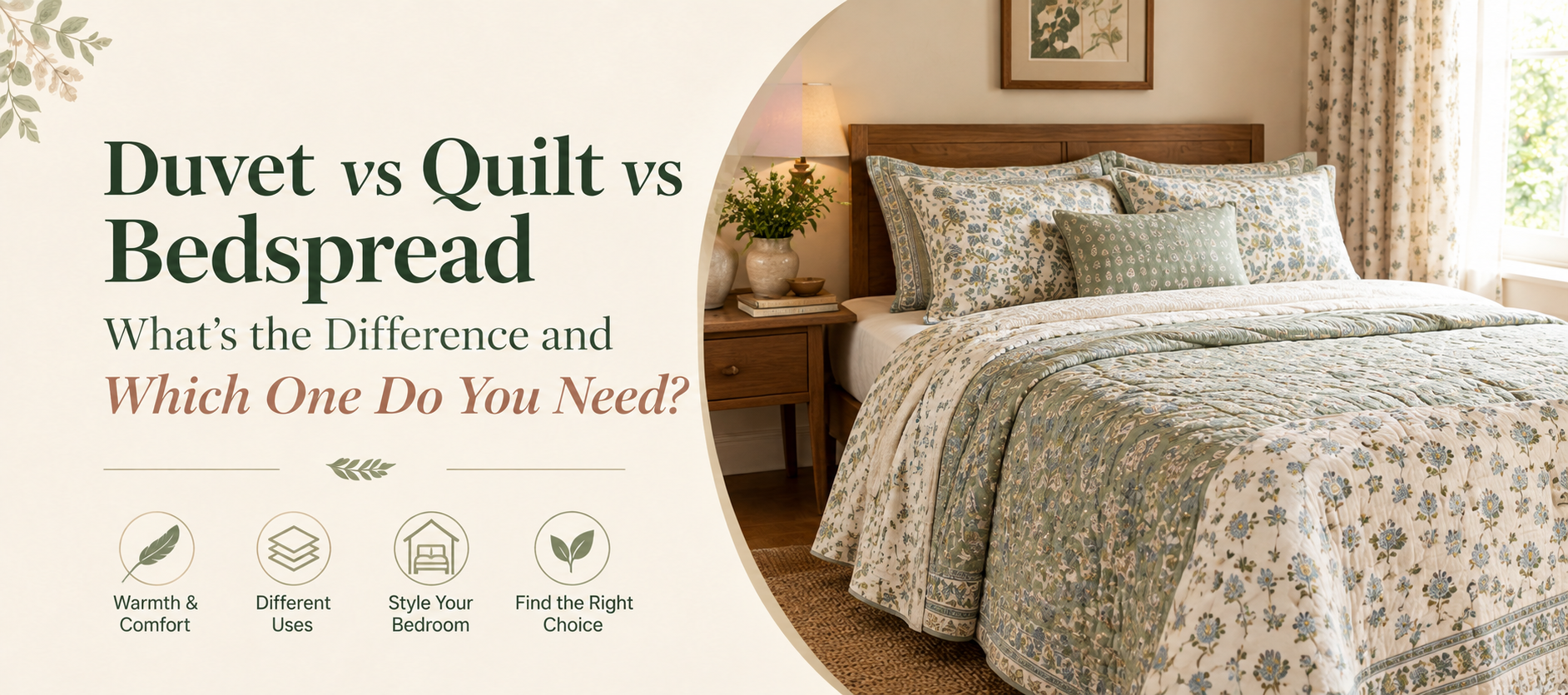
Duvet vs Quilt vs Bedspread: What's the Difference and Which One Do You Need?
September 11th, 2026