
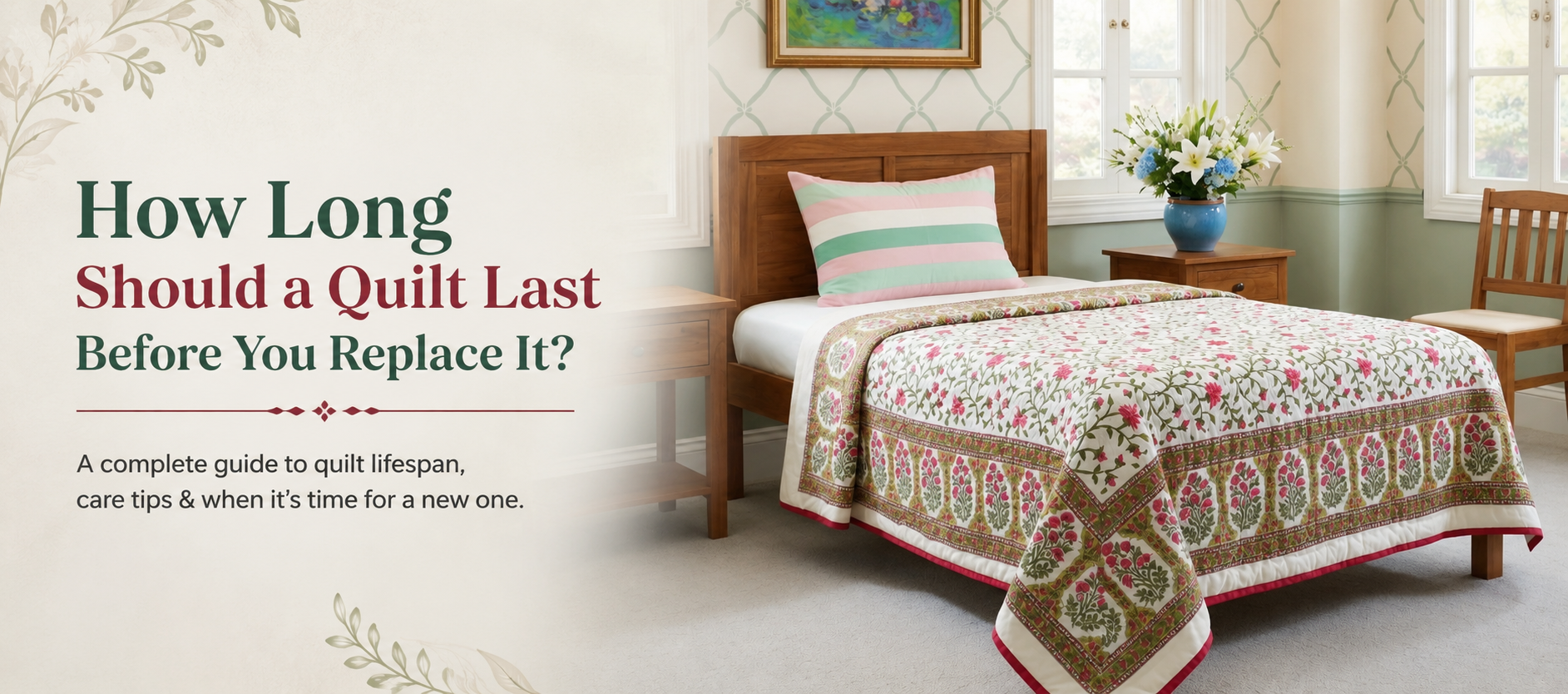
How Long Should a Quilt Last Before You Replace It?
A well-made quilt should last between five and fifteen years, depending on its filling, construction, and how it's cared for. Most people ask how often should you replace a quilt only after noticing it feels flatter, smells musty even after washing, or no longer keeps them as warm through the night. The honest answer depends less on age alone and more on what the quilt is made from and how it has been used.
This isn't a simple "replace every five years" rule. A synthetic-filled quilt bought from a budget range may need replacing within three to five years, while a genuine hand-quilted cotton piece, properly cared for, can remain comfortable and functional for well over a decade. Understanding what actually wears out in a quilt makes the decision far easier than guessing by calendar alone.
Understanding Quilt Lifespan: How Long a Quilt Should Really Last
What Determines How Long a Quilt Lasts?
Three factors decide a quilt's working life: the filling material, the quality of construction, and frequency of washing. Synthetic hollow-fibre fillings compress and lose loft faster than natural fibres, typically flattening within a few years of regular use. Natural cotton filling, by contrast, holds its structure longer and continues to insulate even after repeated washing.
Construction matters just as much as filling. Quilts with dense, close hand-stitching or tight box-quilting hold their filling in place, preventing the clumping and bunching that ages a quilt prematurely. Machine-stitched quilts with wide stitch spacing tend to shift filling within a season or two of regular use, creating cold spots and an uneven surface across the bed.
Frequency of washing plays a quieter but significant role too. Every full wash cycle puts mechanical stress on both the outer fabric and the filling inside it, so a quilt washed weekly will naturally reach the end of its life sooner than one washed a few times a year and aired regularly instead.
Signs Your Quilt Needs Replacing
A few practical checks reveal more than counting years ever will. Hold the quilt up to a light source: thin patches or visible gaps in the filling mean insulation has broken down. Press different sections with your hand — if some areas feel noticeably flatter or lumpier than others, the filling has shifted permanently and won't redistribute with fluffing or washing.
Persistent odour that survives a proper wash, seams that are fraying or pulling away from the outer fabric, and a quilt that no longer feels warm at the same room temperature it once did are all reliable signs the piece has reached the end of its useful life. Allergy sufferers should also note increased sneezing or congestion overnight, which can indicate dust mite build-up in older, heavily used fillings.
A simple three-step check can confirm whether a quilt is due for replacement:
- Light test: Hold the quilt against a window or bright lamp and look for thin, translucent patches where filling has thinned unevenly.
- Press test: Run a flat hand across the surface, section by section, checking for lumps, gaps, or areas that feel noticeably thinner than the rest.
- Warmth test: Note whether the quilt feels as warm as it did a year or two ago at the same room temperature — a genuine drop in warmth usually means the filling has compressed beyond recovery.
Typical Quilt Replacement Timelines
As a general guideline, how often should you replace a quilt comes down largely to filling type: synthetic quilts every three to five years, and well-made natural-fill or hand-quilted cotton quilts every eight to fifteen years. Quilts used daily and washed frequently wear faster than seasonal or guest-room pieces, so household use patterns matter as much as the label on the care tag.
Cotton vs Synthetic Quilts: Lifespan Comparison
Comparing the two filling types side by side makes the difference in longevity clear:
- Synthetic hollow-fibre: Typically lasts 3–5 years; compresses with repeated washing; loses loft and insulating power fastest.
- Natural cotton filling: Typically lasts 8–15 years; breathable and temperature-regulating; holds structure through many wash cycles.
- Down and feather: Can last 10+ years with careful care, but requires specialist cleaning and is prone to clumping if it gets damp.
- Hand-quilted cotton (block-printed): Dense hand-stitching keeps filling evenly distributed, extending practical life well beyond machine-quilted equivalents.
Cost Per Year: Why Longevity Matters More Than Sticker Price
A cheaper synthetic quilt that needs replacing every three years can end up costing more over a decade than a well-made cotton quilt bought once. Dividing purchase price by expected years of use — rather than comparing upfront cost alone — gives a clearer picture of genuine value, particularly for bedding used every night through the year.
This "cost per year" approach also accounts for the hidden expense of frequent replacement: repeated packaging, delivery, and the environmental impact of disposing of worn-out synthetic filling, which typically isn't biodegradable. A durable quilt bought once tends to be both the more economical and the more sustainable choice over time.
How UK Climate and Central Heating Affect Quilt Lifespan
British homes present a particular set of conditions for bedding. Central heating dries out bedrooms through winter, while damp, cooler months encourage moisture retention in fabrics that aren't aired regularly. Both extremes shorten a quilt's working life if it's stored in an airtight container or left unaired for long stretches, since trapped moisture breaks down natural fibres and encourages mildew.
Quilts used through a full British winter, often layered under a duvet or used alone during milder spells, see more temperature and humidity cycling than bedding used in more stable climates. This makes breathable, natural filling especially practical for UK homes, since it manages moisture better than synthetic alternatives across seasonal swings.
The Heritage Advantage of Hand-Stitched Cotton Quilts
Traditional Jaipuri Razai — the hand block printed indian quilts made in Rajasthan — are built using export-quality cotton batting and dense hand-quilting, a technique developed specifically to stop filling from migrating over years of use. Roopantaran's artisans hand-stitch each layer in Jaipur workshops, a process that takes considerably longer than machine quilting but produces a noticeably more durable finished piece.
This is one reason hand block printed cotton quilts have a longer working life than most mass-produced synthetic alternatives. The dense stitch pattern used in block print quilts from Jaipur holds the cotton filling firmly in place, so the quilt keeps an even loft across its surface rather than developing the thin patches typical of loosely stitched synthetic bedding.
Extending the Life of Your Quilt: Care Tips
Correct care adds years to any quilt, regardless of filling. Air a quilt outdoors, out of direct sun, every few weeks to release moisture and refresh the fibres. Spot-clean stains rather than washing the whole quilt whenever possible, since frequent full washes are the single biggest cause of premature filling breakdown.
Store off-season quilts in a breathable cotton bag rather than a sealed plastic container, which traps damp and encourages mildew. Rotate and turn the quilt periodically so filling wears evenly rather than settling in one direction, particularly important for quilts used nightly through a British winter. Following the specific wash-care instructions for the filling type — rather than a generic setting — also meaningfully extends a quilt's usable years.
Choosing a Longer-Lasting Replacement
When it is time to replace a quilt, filling quality and stitch density matter more than thread count or price alone. Bed size also affects how a quilt wears: a snugly fitted twin size quilts option for a single bed sees less strain from shifting during sleep than an oversized quilt on a smaller bed, which stretches unevenly at the edges over time.
For double and larger beds, proportion matters just as much. A properly sized queen size quilts piece drapes evenly without dragging on one side, while a generously cut king size quilts option gives full coverage on wider mattresses without the corner tugging that accelerates seam wear. Choosing the correct fit from the outset is a simple, often overlooked way to extend a new quilt's working life.
Where to Find Quilts Built to Last
Buyers researching longevity before purchasing often search specifically for jaipuri quilts online, drawn to the reputation hand block printing and dense hand-quilting have for outlasting standard synthetic bedding. Sourcing directly from artisan workshops in Jaipur, rather than mass manufacturers, is one practical way UK shoppers can prioritise construction quality when selecting a replacement.
Frequently Asked Questions
What's the general rule for quilt replacement?
Synthetic-filled quilts generally need replacing every three to five years, while well-made natural cotton or hand-quilted quilts can last eight to fifteen years. Frequency of use and washing both affect how quickly a quilt wears, so household habits matter as much as filling type when deciding.
What are the signs a quilt needs replacing?
Look for thin or uneven patches when held to the light, persistent odour after washing, fraying seams, and a noticeable drop in warmth. Increased overnight sneezing or congestion can also signal dust mite build-up in an ageing quilt that's due for replacement.
Do cotton quilts last longer than synthetic ones?
Yes. Natural cotton filling typically lasts eight to fifteen years compared to three to five years for synthetic hollow-fibre filling. Cotton holds its structure through more wash cycles and doesn't compress or clump as quickly as synthetic alternatives.
Can you extend the life of a quilt with proper care?
Regular airing, spot-cleaning instead of full washes, and storing in a breathable cotton bag rather than sealed plastic all help a quilt retain its loft and structure for longer. Rotating the quilt periodically also prevents filling from settling unevenly over time.
Is a hand block printed quilt more durable than a machine-made one?
Hand block printed cotton quilts are typically hand-quilted with dense stitching that keeps filling evenly distributed, which reduces the clumping and thin patches common in loosely machine-stitched bedding. This construction method is a key reason artisan-made cotton quilts often outlast standard mass-produced options.
In summary: a quilt's lifespan is shaped far more by its filling and stitch density than by its age alone — synthetic fillings typically need replacing every three to five years, while dense, hand-quilted natural cotton pieces can remain warm and structurally sound for eight to fifteen years or more. Checking for thinning, odour, and shifted filling is a more reliable guide than a fixed replacement date. Choosing a correctly sized, densely stitched cotton quilt from the outset is the simplest way to get the longest possible use from a new one.
-
 September 18th, 2026
 -

The Art of Layering Textiles: How UK Homes Can Mix Quilts & Tablecloths
September 11th, 2026 -
Duvet vs Quilt vs Bedspread: What's the Difference and Which One Do You Need?
September 11th, 2026 -
 August 26th, 2026