
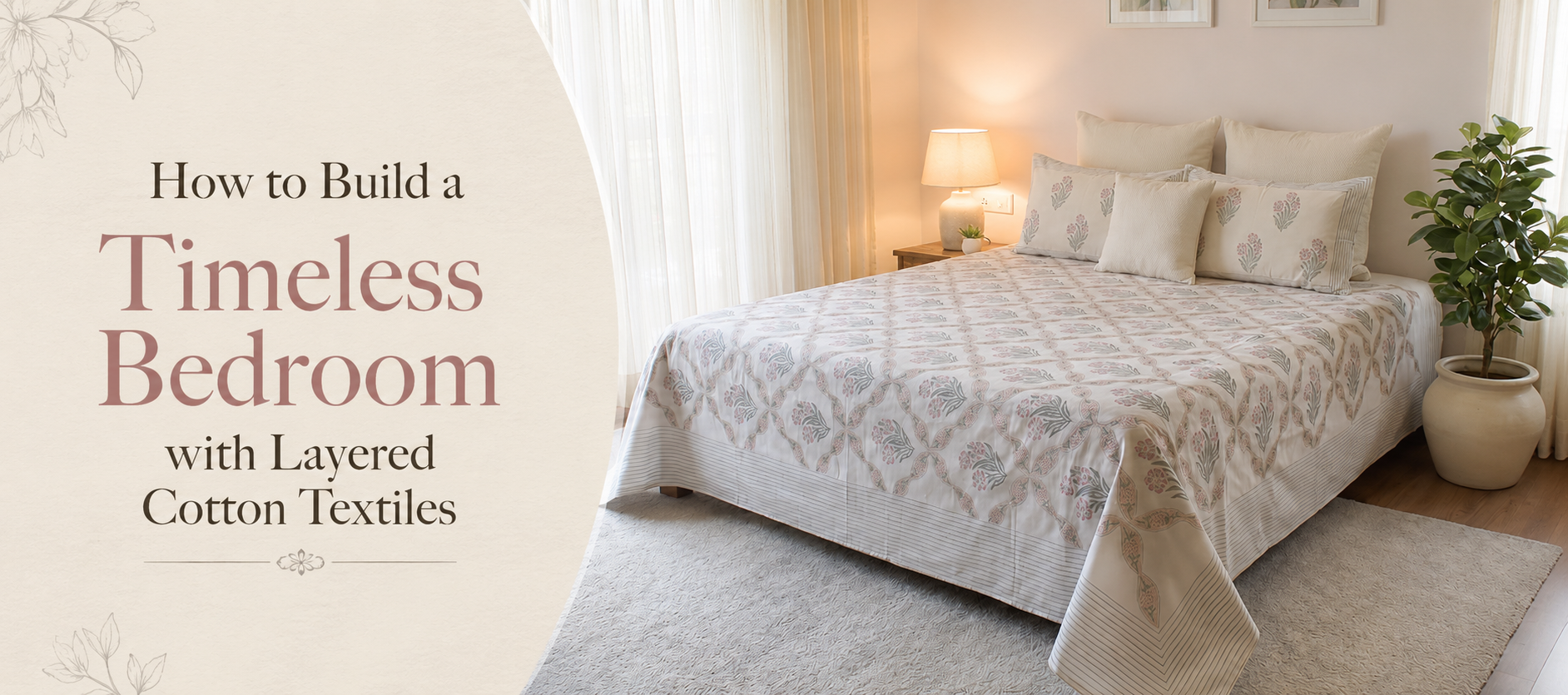
How to Build a Timeless Bedroom with Layered Cotton Textiles
A timeless bedroom does not need to follow every new interior trend. The most enduring spaces are usually built around practical materials, balanced colours and textiles that can be changed gradually as the seasons shift. For UK homes, cotton is particularly useful because it is breathable, versatile and easy to combine with different bedding weights.
A Bedroom with Layered Cotton Textiles uses several complementary textile layers rather than relying on one heavy covering. Sheets create the foundation, while a duvet, quilt, bedspread, throw and carefully chosen cushions can introduce warmth, texture and visual depth without making the room feel over-styled.
What Does Layered Cotton Bedding Mean?
Layered cotton bedding means arranging different cotton-based textiles according to their function, weight, texture and appearance. Instead of treating the bed as one large decorative object, each layer has a purpose: comfort against the skin, insulation, seasonal flexibility or visual texture.
The approach is particularly practical in Britain because bedroom temperatures can vary considerably between summer, autumn and winter. Lighter layers can be removed when the room is warm, while additional cotton quilts or throws can be introduced when extra comfort is needed.
Why Cotton Works So Well in a Timeless Bedroom
Cotton provides a strong foundation because it combines everyday comfort with design flexibility. It can be woven into crisp percale, softer plain weaves or textured fabrics, allowing the same natural fibre to create very different bedroom moods.
Breathability is another reason cotton remains a popular bedding material. Cotton sheets and covers can feel comfortable across different seasons, while separate layers give sleepers greater control over warmth rather than forcing them to depend on one very thick covering.
Choose Materials That Age Gracefully
Timeless design is partly about selecting materials that become more appealing with use. Natural cotton can soften over repeated washing, while hand-finished textiles may develop subtle changes in character that are difficult to reproduce through mass manufacturing.
When choosing bedding, look beyond appearance. Consider the fabric construction, stitching, care requirements, weight and whether the textile will work with pieces you already own. This approach reduces unnecessary replacements and makes it easier to build a bedroom gradually.
How to Choose Bedding for a Layered Bedroom
When deciding how to choose bedding, start with function rather than colour. Think about how warm you normally feel at night, how often you wash your bedding, the size of your mattress and whether the room needs to work differently through the seasons.
A useful starting point is a breathable cotton sheet, followed by your main sleeping layer. From there, add one or two lighter textiles for flexibility. This prevents the bed from becoming unnecessarily bulky while still giving you options when temperatures change.
Start with the Layer You Touch Most
The sheet is the closest textile to your skin, so its feel deserves more attention than purely decorative layers. A smooth cotton construction can create a crisp, clean appearance, while softer or lightly textured cotton gives the bed a more relaxed character.
Choose a fitted sheet that matches the mattress depth properly. An oversized or poorly fitted base can make even expensive bedding appear untidy, particularly when additional layers are placed over it.
Add the Main Warmth Layer
The duvet or quilt should reflect your sleeping habits and the season. Rather than automatically choosing the heaviest available option, consider whether you would benefit from several lighter layers that can be adjusted independently.
This is where cotton quilts can be particularly useful. They can sit over everyday bedding during cooler periods and can often be folded at the foot of the bed when they are not needed for warmth.
Build the Bed from Light to Heavy
A simple way to create balanced layering is to work from the thinnest textile towards the heavier pieces. This keeps the arrangement practical and makes each layer visually identifiable rather than allowing everything to merge into one bulky surface.
- Fitted sheet: Create a smooth and comfortable foundation.
- Flat sheet or duvet cover: Introduce the main colour and everyday texture.
- Duvet or lightweight quilt: Provide the primary sleeping warmth.
- Decorative quilt or bedspread: Add pattern, texture and seasonal flexibility.
- Throw: Finish the arrangement with a smaller, easily removable layer.
- Cushions: Use sparingly to establish proportion and visual balance.
You do not need every layer every night. The strength of this method is flexibility. A summer arrangement might stop at the duvet, while an autumn bed could include a cotton quilt and a folded throw.
Use Texture Instead of Too Many Patterns
Texture is one of the easiest ways to make layered bedding look sophisticated without introducing excessive colour. Combine smooth cotton sheets with quilted surfaces, subtle stitching, woven throws or lightly crinkled fabrics.
If your main textile already has a detailed pattern, keep the surrounding layers quieter. A patterned quilt can sit comfortably against plain sheets and a tonal throw. Conversely, a neutral quilt allows you to introduce more interest through cushions or a patterned bedspread.
Create Contrast Without Losing Harmony
Contrast does not always mean using opposite colours. It can come from differences in scale, finish and weight. For example, a finely woven sheet beside a softly quilted cover creates visual depth even when both textiles share similar shades.
A useful rule is to select one dominant pattern, one supporting texture and several quieter surfaces. This gives the eye somewhere to rest and helps the bedroom retain a calm appearance.
Choose a Timeless Colour Palette
A timeless bedroom usually benefits from colours that can accommodate changing accessories. Soft white, ivory, stone, beige, muted blue, sage, dusty pink and earthy neutrals are versatile starting points for UK interiors.
That does not mean the room has to be completely neutral. A botanical print, traditional motif or carefully chosen accent colour can provide personality while remaining adaptable. The key is to repeat a colour subtly across different layers rather than introducing several unrelated shades.
Let One Textile Become the Focal Point
Handcrafted cotton textiles can provide a natural focal point because their patterns often contain enough detail to make the bed visually interesting. A single patterned layer can therefore do more work than several decorative accessories.
Traditional Indian textile techniques are especially suited to this approach. Hand-block printing involves transferring a carved design onto fabric by hand, so small variations in alignment and pressure can form part of the finished character rather than looking like manufacturing defects.
Layer Cotton Textiles for Different UK Seasons
Seasonal flexibility is one of the strongest reasons to build a layered bed. Rather than replacing the entire bedding collection several times a year, you can adjust one or two layers according to temperature.
Spring
Spring is a useful time for lightweight cotton layers. Keep the base breathable and add a lighter quilt or throw for cooler evenings. Soft greens, faded blues and botanical prints can introduce seasonal character without creating a room that feels temporary.
Summer
During warmer periods, reduce the number of layers. A cotton sheet and lightweight cover may be enough for many sleepers, while a thin cotton quilt can remain folded nearby for cooler nights.
Autumn
Autumn is ideal for building texture. Introduce a quilt or medium-weight cotton layer over the main bedding and keep a throw at the foot of the bed. Warmer neutrals, rust, muted mustard and deeper greens can create seasonal depth without requiring a complete redesign.
Winter
In winter, the focus should be on practical warmth rather than simply adding decorative bulk. A suitable duvet can form the main insulation layer, while a cotton quilt or blanket provides additional flexibility when temperatures fall.
Layering also makes it easier to respond to individual sleeping preferences. One person can remove a top layer without changing the complete bed arrangement, which can be useful when two people have different temperature preferences.
How to Mix Quilts, Bedspreads and Throws
Quilts, bedspreads and throws perform different jobs, so combining them works best when their roles are clearly defined. A quilt usually provides more warmth and texture, while a bedspread is primarily useful for coverage and presentation. A throw is smaller and easier to move, making it a flexible finishing layer.
For example, place your everyday duvet beneath a lightweight quilt. During the day, fold the quilt towards the lower third of the bed and place a textured throw across it. At night, the quilt can be pulled up when additional warmth is needed.
If you prefer a more tailored appearance, use a bedspread as the main daytime cover and keep the heavier sleeping layers underneath. This creates a tidy surface without requiring decorative textiles to remain in use throughout the night.
Use Artisan Textiles for Character, Not Clutter
Handcrafted textiles can make a bedroom feel personal because each piece carries subtle evidence of its making. Traditional block printing, hand quilting and small variations in stitching create a sense of material history that perfectly manufactured surfaces often lack.
In Jaipur, hand-block printing is closely associated with a long-established textile tradition. A carved wooden block is inked and pressed onto fabric repeatedly to build a pattern. Maintaining consistent pressure and alignment requires considerable practical skill, which is why slight differences between repeats can be expected in genuine hand-printed fabric.
This is an important distinction when assessing handmade bedding. Uniformity is not always the measure of quality. In artisan textiles, controlled variation can be evidence of the human process behind the material.
How to Make Layered Bedding Look Effortless
The best layered beds rarely look as though every item has been carefully positioned for a photograph. A timeless bedroom should feel usable. Leave enough of the base bedding visible, fold larger textiles naturally and avoid filling every available space with cushions.
Keep Proportions in Mind
Consider the size of your bed, the height of the mattress and the proportions of the room. A small bedroom can quickly feel crowded when too many thick layers and oversized cushions are used.
On a larger bed, a generous quilt or bedspread can create visual balance. For smaller beds, a narrower folded layer at the foot can provide the same effect without overwhelming the room.
Do Not Ignore the Rest of the Room
Bedding should relate to the surrounding furniture, curtains, flooring and wall colour. If the bed is heavily patterned, keep nearby surfaces comparatively quiet. If the room has plain furniture and neutral walls, bedding can carry more of the decorative interest.
Lighting also matters. Warm bedside lighting can make natural cotton, quilting and block-printed patterns appear softer in the evening, while daylight reveals the texture and detail of the fabric.
Common Layering Mistakes to Avoid
Layering becomes less effective when every textile is treated as equally important. The objective is not to create the maximum number of layers but to create a useful hierarchy.
- Using too many competing patterns: Choose one dominant print and support it with quieter fabrics.
- Ignoring fabric weight: Several heavy layers can make a bed uncomfortable and visually bulky.
- Choosing the wrong size: Always check actual measurements rather than relying only on labels.
- Forgetting care requirements: Different textiles may require different washing and drying methods.
- Overusing cushions: Too many cushions can reduce the practical sleeping space and create unnecessary daily work.
- Styling without considering comfort: Decorative layers should remain functional and easy to remove.
Choosing the Right Size for UK Beds
UK and international bedding terminology can differ, so measurements should always take priority over names. A label such as “queen” or “king” can refer to different dimensions depending on the market and manufacturer.
Before buying any additional layer, measure the mattress width and length and consider how much drape you want at the sides. This is particularly important for quilts and bedspreads, where insufficient coverage can make an otherwise beautiful bed look disproportionate.
For shoppers comparing queen size quilts, check the product's stated measurements against your own mattress rather than assuming the terminology is identical across countries.
Build a Bedroom That Can Evolve
A timeless bedroom should be easy to update without starting again. Begin with neutral foundations, then introduce character through one or two distinctive textiles. When your preferences change, replace the accent layer rather than the complete bedding system.
This approach can also encourage more considered purchasing. Instead of buying several trend-led bedding sets, invest in versatile cotton pieces that work with different combinations and can remain useful across seasons.
For example, a simple cotton base can be paired with block print quilts when you want pattern and craftsmanship, then restyled with a plain throw when you prefer a quieter look.
How to Choose Bedding for Long-Term Use
When considering how to choose bedding for a bedroom intended to last, assess quality through several factors rather than relying on price or appearance alone. Look at the fabric composition, stitching, construction, size accuracy, washing instructions and the reputation of the maker.
For handmade products, also consider how the textile was produced. Information about the fabric, printing method, filling, quilting technique and care instructions can help you understand what you are actually buying.
A well-made cotton textile should fit naturally into your existing bedroom rather than dictate the entire design. That versatility is what makes it more likely to remain useful for years.
A Practical Layering Formula to Try
If you are unsure where to begin, use a simple five-part formula. It provides enough variation to create depth while keeping the bed comfortable and easy to maintain.
- Choose breathable cotton sheets in a quiet colour.
- Add your preferred duvet or main sleeping layer.
- Introduce one quilted or textured cotton layer.
- Fold a lighter throw across the lower section of the bed.
- Finish with a restrained arrangement of pillows or cushions.
This formula can be adjusted according to the season. Remove the heavier top layer in warmer weather and add it again when temperatures fall. The room remains visually consistent while its practical comfort changes.
Why Fewer, Better Layers Often Work Best
A timeless bedroom is not defined by the quantity of bedding on the bed. It is defined by how effectively the materials, colours, textures and proportions work together.
Choosing fewer, more versatile textiles can make the bedroom easier to maintain and easier to restyle. A carefully selected quilt may work as a bed layer, a folded throw or even a decorative textile elsewhere in the home, giving the piece more than one useful role.
This is particularly relevant when choosing bedspreads queen size, because a well-proportioned bedspread can provide substantial visual coverage without requiring several decorative layers underneath it.
Frequently Asked Questions About Layered Cotton Bedding
How many layers should a bed have?
There is no fixed number, but three to five functional layers are usually enough for a balanced bed. Start with a sheet and main sleeping layer, then add a quilt, bedspread or throw according to temperature and styling needs. More layers are not automatically better; comfort, proportion and ease of use should guide the arrangement.
Is cotton bedding suitable for UK homes?
Yes. Cotton is a versatile natural fibre that can work across UK seasons because it is breathable and available in different weights and weaves. The most practical approach is to combine cotton sheets with adaptable layers rather than depending on one bedding weight throughout the year.
How can I make my bed look layered without making it bulky?
Use differences in texture rather than adding many thick items. Start with a fitted sheet and duvet, then introduce one lightweight quilt or bedspread and a smaller throw. Keep the colour palette cohesive and fold the upper layers towards the foot of the bed so the individual textiles remain visible.
Should a quilt go over or under a duvet?
It depends on the season and the intended function. A lightweight quilt can sit over a duvet as a decorative and additional warming layer, while it can also be used underneath a duvet if you prefer warmth distributed more evenly. During warmer weather, the quilt can become the main top layer.
What should I look for when buying cotton bedding?
Check the fibre composition, fabric construction, stitching, dimensions, care instructions and expected weight. For handmade textiles, look for clear information about the production process and materials. Choosing bedding that suits your sleeping temperature and can work with existing layers is usually more valuable than simply selecting the most decorative option.
Final Thoughts
A timeless bedroom is built through thoughtful choices rather than constant decoration. Cotton provides a practical foundation, while quilts, bedspreads and throws introduce warmth, texture and personality that can change with the seasons. The most successful layered bedroom is comfortable enough for everyday use, visually calm enough to feel restful and flexible enough to evolve over time.
The simplest approach is to begin with breathable cotton basics, add warmth gradually and use one distinctive textile as the visual focus. Choose complementary colours, vary texture instead of adding unnecessary patterns and always prioritise accurate sizing and practical care. With the right combination of layers, a bedroom can feel considered and inviting without becoming overly styled.
-
 October 2nd, 2026
 -
 September 25th, 2026
 -
 September 18th, 2026
 -

The Art of Layering Textiles: How UK Homes Can Mix Quilts & Tablecloths
September 11th, 2026 -
Duvet vs Quilt vs Bedspread: What's the Difference and Which One Do You Need?
September 11th, 2026