

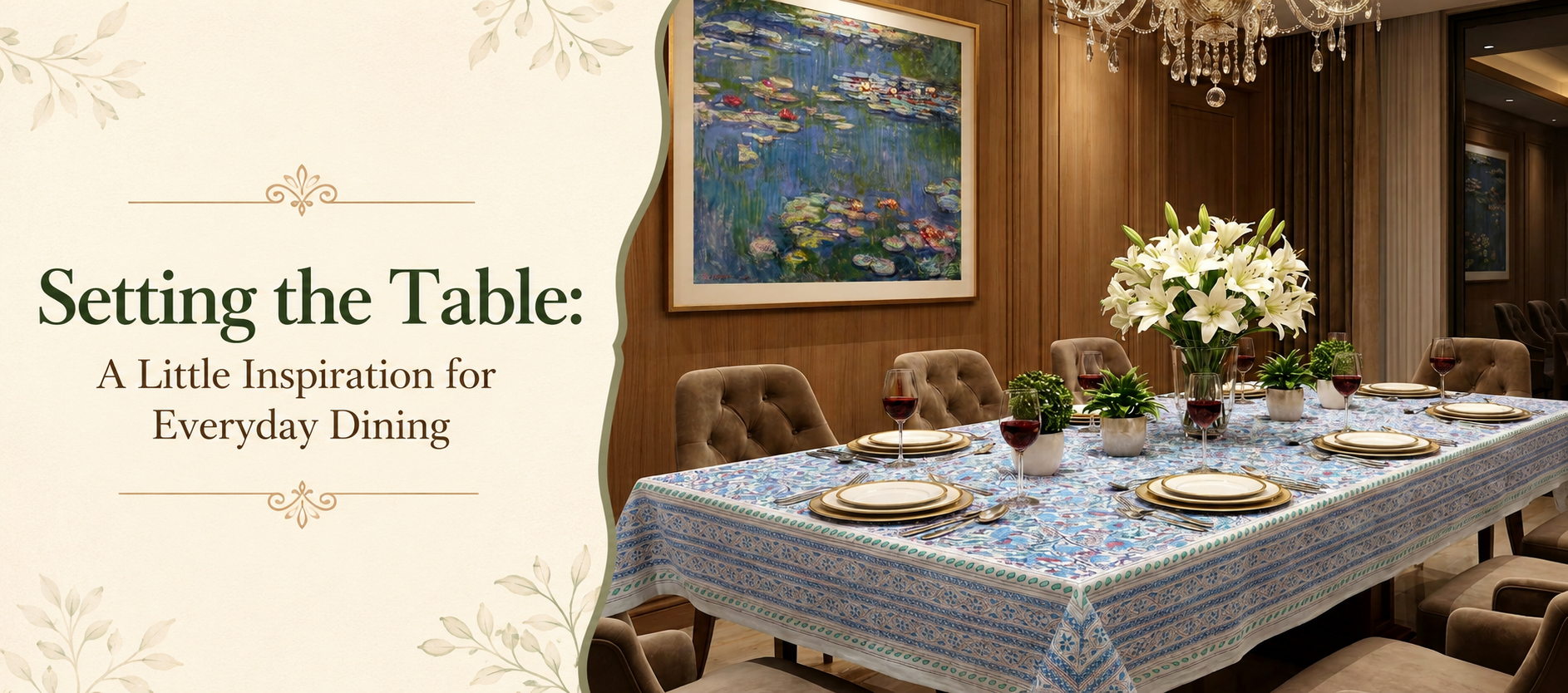
Setting the Table: A Little Inspiration for Everyday Dining
Most of us reserve a proper table setting for guests, but the truth is a Tuesday supper deserves just as much care as a dinner party. A well-dressed table changes how a meal feels, not because of expense or effort, but because of small, deliberate choices in linen, colour and layering. Table setting ideas for everyday dining are less about formality and more about building a handful of habits that make the ordinary feel considered.
This guide walks through practical ways to set a daily table that looks put-together without adding to your evening routine, along with notes on choosing linens that hold up to regular use.
What Is an Everyday Table Setting?
An everyday table setting is a simplified version of formal dining etiquette: one plate, one set of cutlery, a napkin and a tablecloth or placemat, arranged with enough consistency that laying the table becomes second nature. It skips the multiple courses and matching stemware of formal dining, focusing instead on comfort, ease of cleaning and a bit of visual warmth for meals eaten at home most days of the week.
Simple Table Setting Ideas Worth Repeating Daily
A handful of small, repeatable choices do more for a daily table than any single statement piece. The suggestions below are meant to be habits, not projects — things you can do in the two minutes before a meal without overthinking them.
Start With a Base Layer
A tablecloth or runner gives every meal a starting point. Beyond looking tidier than bare wood, a cloth protects the table surface from heat, spills and everyday scuffs, which matters more on a table used three times a day than on one reserved for special occasions. A cotton cloth in a pattern you're happy to see daily earns its place far more than one saved for best.
Layer Textures Rather Than Matching Everything
Matching dinnerware sets can feel flat on a daily table. Mixing a textured cotton cloth with plain stoneware, or a patterned napkin with solid plates, adds visual interest without requiring new purchases. The goal is contrast, not coordination — one printed element is usually enough to anchor the whole setting.
Let Colour Do Some of the Work
Colour is the easiest way to change the mood of a table without changing anything else on it. A deep indigo or terracotta cloth reads warmer for autumn and winter meals, while sage green or soft yellow suits spring and summer. Rotating two or three cloths through the seasons keeps the table feeling current without needing a large linen collection.
Keep the Centrepiece Small and Seasonal
A centrepiece for daily use should never compete with the food or block sightlines across the table. A short glass with a few stems, a small bowl of fruit, or nothing at all beyond a lit candle in the evening is usually enough. Save elaborate arrangements for occasions when the table itself is the main event.
Choosing the Right Tablecloth for Daily Use
The tablecloth is the single piece of linen that does the most visual work on a table, so it's worth choosing one suited to how you actually eat. Natural cotton is the most practical choice for everyday dining in the UK: it breathes well, softens with washing and doesn't cling the way synthetic blends can. Shoppers looking to buy indian tablecloths online will find that hand block-printed cotton, in particular, tends to hide the small marks and creases of daily use better than plain fabric, since the pattern itself absorbs visual attention.
Hand-block printing is one of India's oldest textile crafts, still practised largely as it was centuries ago: a design is carved into a wooden block, then inked and pressed onto fabric by hand, repeated across the length of the cloth until the pattern is complete. Because each impression is made manually, no two block print tablecloths are ever entirely identical — a quality that mass-printed linen can't replicate.
Rectangle Tablecloths for Family Dining Tables
For a standard four to six seater dining table, a well-fitted rectangle tablecloths collection is the most straightforward option, giving a clean drape on all sides without excess fabric pooling at the corners. Rectangular cloths also make the most efficient use of fabric, which tends to keep them among the more affordable options in a table linen range.
Round Table Cover Cloth for Compact Spaces
Round dining tables are common in smaller UK kitchens and breakfast nooks, and a properly sized round table cover cloth avoids the awkward overhang that happens when a rectangular cloth is used on a circular surface. A round cloth that just clears the seats keeps the table looking finished from any angle in the room.
Long Tablecloths for Bigger Gatherings
Households that regularly seat eight or more, whether for Sunday lunches or extended family visits, generally get more use from long tablecloths sized for larger tables. Keeping one long cloth on hand means you're not scrambling to improvise linen when a bigger group turns up unannounced.
Napkins and the Small Finishing Details
Cloth napkins are one of the fastest upgrades available for an everyday table, largely because they replace something disposable with something that improves with age. Block printed napkins made from pure cotton hold up to regular washing far better than paper, and a set in a print that echoes the tablecloth — even loosely, in a shared colour rather than an identical pattern — pulls a table setting together without looking overly matched.
Placemats are worth adding if your household eats in shifts or at a table that doesn't get a full cloth every day; a woven or cotton placemat under each setting achieves a similar effect to a tablecloth with a fraction of the laundry.
A Step-by-Step Approach to Laying an Everyday Table
Building a habit is easier with a fixed sequence. This is a practical order that works for most daily meals:
- Lay the base. Spread the tablecloth or placemats first, smoothing out creases before anything else goes down.
- Place the dinner plate. Position it centrally in front of each seat, roughly two centimetres from the table edge.
- Add cutlery. Fork to the left, knife and spoon to the right, blade facing the plate.
- Set the napkin. Fold simply and place to the left of the fork, or inside a napkin ring for a slightly more finished look.
- Add glassware. Position just above the knife, within easy reach without crowding the plate.
- Finish with a small centrepiece. Keep it low enough that people can see and talk across the table.
Once this order becomes automatic, laying a full table takes barely longer than setting out plates on their own.
Seasonal Dining Table Inspiration
A table doesn't need a new set of dinnerware for every season — usually a change of linen is enough. In colder months, deeper tones like maroon, forest green or indigo block prints suit the shorter days and heavier winter meals. Come spring and summer, lighter grounds in soft yellow, sage or dusty pink bring the table in line with brighter mealtimes and longer evenings. Festive occasions are a natural moment to bring out a dedicated cloth, but the same fabric that dresses up a Christmas table can just as easily go back into weekly rotation once the season passes.
Caring for Handcrafted Table Linen
Natural cotton table linen, particularly hand block-printed cotton, benefits from a gentler laundry routine than most people expect. Washing in cold water with a mild detergent, avoiding bleach, and air-drying rather than tumble-drying preserves both the colour and the slight texture that comes from natural dyeing. It's also worth washing a new cloth once before its first use, since cotton typically shrinks by around three to five per cent after the initial wash — a detail well-made tablecloths, including those sized specifically for UK dining tables, already account for. Cared for this way, a cotton block-print cloth tends to soften and improve with age rather than wear out, which is part of why handcrafted linen is often kept in daily rotation for years rather than treated as an occasional-use item.
In Short
A good everyday table setting comes down to a handful of repeatable choices: a base layer that suits daily wear, textures that add interest without demanding coordination, and linens sturdy enough to be washed and reused without losing their character. Handcrafted, hand block-printed cotton fits this brief particularly well, since its slight irregularities and fade-resistant natural dyes are built for regular use rather than a single occasion. Approached this way, setting the table stops being an extra chore and becomes a small, consistent ritual that changes how an ordinary meal feels.
Frequently Asked Questions
What is the difference between a formal and an everyday table setting?
A formal table setting includes multiple courses, matching stemware and precisely arranged cutlery for each dish. An everyday table setting simplifies this to one plate, one set of cutlery, a napkin and a tablecloth or placemat, prioritising ease and comfort over strict etiquette for daily family meals.
How do I make my everyday table look nicer without spending much time?
Keep a couple of cotton tablecloths and a set of cloth napkins on hand, and rotate them by season or mood. Laying a cloth and napkins takes barely longer than setting out plates alone, and consistent small details do more for a table's appearance than an elaborate one-off setup.
What size tablecloth do I need for a 4-6 seater table?
A rectangular tablecloth around 150 x 220 cm typically suits a standard four to six seater dining table, giving a generous drape on all sides without excess fabric pooling at the corners. Always measure your table before buying, since drop length preferences vary by household.
Is cotton the best fabric for a daily-use tablecloth?
Cotton is generally the most practical choice for everyday dining because it breathes well, softens with washing and resists clinging compared with synthetic blends. Hand block-printed cotton has the added benefit of hiding minor marks within its pattern, which matters on a cloth used several times a day.
How do I wash a hand block-printed tablecloth without fading it?
Wash in cold water with a mild detergent, avoid bleach and harsh chemicals, and air-dry rather than tumble-dry. It's also worth washing the cloth once before first use to allow for the natural three to five per cent shrinkage common in untreated cotton.
-
 September 25th, 2026
 -
 September 18th, 2026
 -
The Art of Layering Textiles: How UK Homes Can Mix Quilts & Tablecloths
September 11th, 2026 -
Duvet vs Quilt vs Bedspread: What's the Difference and Which One Do You Need?
September 11th, 2026 -
 August 26th, 2026