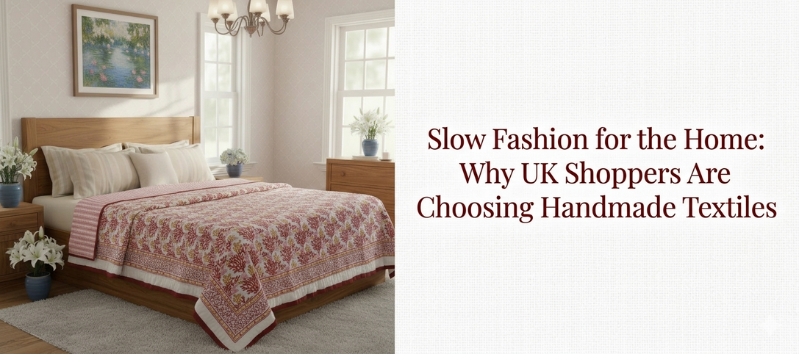
Slow Fashion for the Home: Why UK Shoppers Are Choosing Handmade Textiles
In recent years, a quiet yet powerful shift has been taking place across UK homes. Consumers are moving away from fast, mass-produced home décor and embracing thoughtful, long-lasting alternatives. This shift reflects a broader lifestyle change—one that values quality, sustainability, and authenticity. At the heart of this movement lies Slow Fashion for the Home, a concept that extends the principles of ethical fashion into interior spaces.
Rather than chasing trends that quickly fade, UK shoppers are investing in timeless, handcrafted textiles that tell a story. From block-printed quilts to breathable cotton bedding, the focus is no longer just on aesthetics—it’s about conscious living, heritage craftsmanship, and environmental responsibility.
What Does “Slow Living” Mean in Home Décor?
Slow living in the context of home décor focuses on intentional choices. It encourages consumers to prioritise durability, craftsmanship, and ethical sourcing over convenience and low cost. Instead of frequently replacing items, homeowners choose pieces designed to last for years.
This approach aligns closely with Slow Fashion for the Home, where textiles are not just functional items but meaningful additions to a space. Each piece is carefully made, often by skilled artisans, using traditional techniques that have been passed down through generations.
Key Characteristics of Slow Home Textiles
• Handcrafted production methods
• Use of natural fibres like cotton
• Timeless designs rather than trend-driven patterns
• Ethical and sustainable manufacturing practices
Why UK Consumers Are Moving Away from Fast Home Décor
Fast home décor, much like fast fashion, has dominated the market for years. However, it comes with hidden costs—both environmental and social. Low-quality materials, mass production, and short product lifespans have led to increasing waste.
UK shoppers are becoming more aware of these issues and are actively seeking alternatives that align with their values. Handmade textiles offer a solution that combines beauty, sustainability, and longevity.
Growing Awareness of Sustainability
Environmental concerns are a major driving force behind this shift. Consumers are increasingly choosing products that reduce their ecological footprint. Natural fabrics like cotton are biodegradable and breathable, making them a preferred choice.
Demand for Unique and Personalised Spaces
Modern homeowners want their spaces to reflect individuality. Mass-produced items often lack character, whereas handcrafted textiles bring uniqueness and authenticity to interiors.
The Appeal of Artisan Craftsmanship in Modern Homes
Handmade textiles are more than just decorative elements—they represent cultural heritage and skilled craftsmanship. Techniques such as hand-block printing and traditional quilting create pieces that are rich in detail and history.
Unlike factory-made products, no two handcrafted items are exactly the same. This uniqueness adds depth and personality to home décor, making each piece feel special.
Preserving Heritage Techniques
Artisan-made products help preserve traditional crafts that might otherwise disappear. Supporting these techniques ensures that cultural heritage continues to thrive.
Attention to Detail and Quality
Handcrafted textiles often undergo meticulous processes, resulting in superior quality. The emphasis is on durability and comfort, making them a practical investment.
The Role of Natural Fabrics in Comfortable Living
One of the defining features of slow home décor is the use of natural materials. Cotton, in particular, has gained popularity due to its breathable and hypoallergenic properties.
Lightweight bedding options such as cotton dohar online searches have increased among UK shoppers looking for comfort throughout the year. These textiles are ideal for layering and adapting to changing temperatures.
Benefits of Cotton Textiles
• Breathable and temperature-regulating
• Soft and comfortable for everyday use
• Durable and easy to maintain
• Eco-friendly and biodegradable
How Handmade Bedding Enhances Interior Aesthetics
Handcrafted bedding brings warmth and texture to interiors. The intricate patterns and subtle imperfections create a lived-in, inviting atmosphere that mass-produced items cannot replicate.
Designs inspired by traditional techniques, such as block print quilts, add a distinctive charm to bedrooms. Their artistic appeal complements both modern and classic interiors, making them versatile décor elements.
Creating a Balanced Bedroom Look
Pairing handcrafted quilts with neutral furnishings creates a harmonious aesthetic. The key is to let the textile become the focal point while maintaining overall balance.
Choosing the Right Quilt for Your Space
Selecting the right quilt depends on both functional needs and design preferences. UK homes often require adaptable bedding that can transition across seasons.
Many shoppers are exploring options such as indian quilts, which are known for their lightweight construction and intricate detailing.
Understanding Quilt Sizes
Different room sizes and bed dimensions require specific quilt types:
• Twin Size Quilts are ideal for compact spaces or guest rooms.
• Queen Size Quilts offer a balanced fit for standard bedrooms.
• King Size Quilts provide ample coverage for larger beds and a luxurious look.
The Sustainability Factor: Why It Matters More Than Ever
Sustainability is no longer a niche concern—it has become a mainstream priority. Consumers are evaluating products based on their environmental impact, from raw materials to production methods.
Handmade textiles align with these values by reducing reliance on industrial processes and promoting ethical practices. This makes them a preferred choice for conscious buyers.
Reducing Waste Through Longevity
High-quality handcrafted items are designed to last, reducing the need for frequent replacements. This not only saves money in the long run but also minimises waste.
Why Slow Fashion Principles Are Shaping the Future of Home Décor
The principles of slow fashion are transforming how people approach their living spaces. Instead of focusing on quantity, the emphasis is on quality and meaning.
Slow Fashion for the Home encourages mindful consumption, where every purchase is intentional and aligned with personal values. This shift is redefining modern interiors, making them more sustainable and authentic.
From Trend-Based to Timeless Design
Trends come and go, but timeless designs remain relevant. Handcrafted textiles often feature classic patterns that transcend seasonal changes, ensuring long-term appeal.
How UK Shoppers Are Redefining Luxury
Luxury is no longer defined by price alone—it is about quality, craftsmanship, and sustainability. UK consumers are increasingly viewing handmade textiles as premium products due to the effort and skill involved in their creation.
This evolving definition of luxury aligns perfectly with slow living, where value is placed on authenticity rather than mass appeal.
Practical Tips for Transitioning to a Slow Home
Start with Key Textiles
Begin by replacing frequently used items such as bedding and throws with handcrafted alternatives.
Choose Versatile Pieces
Opt for textiles that can be used across seasons to maximise functionality.
Prioritise Quality Over Quantity
Invest in fewer, high-quality items rather than multiple low-cost products.
Support Ethical Brands
Look for brands that emphasise artisan craftsmanship and sustainable practices.
Conclusion: A Conscious Shift Towards Meaningful Living
The growing popularity of handmade textiles in the UK reflects a deeper cultural shift towards conscious living. Consumers are no longer satisfied with disposable décor—they want products that offer value, authenticity, and sustainability.
Slow Fashion for the Home is not just a trend; it is a movement that encourages thoughtful choices and long-term thinking. By embracing handcrafted textiles, homeowners can create spaces that are not only beautiful but also meaningful and environmentally responsible.
Frequently Asked Questions (FAQs)
1. What is slow home décor?
Slow home décor focuses on choosing high-quality, sustainable, and handcrafted items that are designed to last, rather than following short-term trends.
2. Why are handmade textiles popular in the UK?
They offer uniqueness, sustainability, and superior craftsmanship, which align with the values of modern UK consumers.
3. Are cotton textiles suitable for all seasons?
Yes, cotton is breathable and adaptable, making it suitable for both warm and cooler weather conditions.
4. How do handcrafted quilts differ from mass-produced ones?
Handcrafted quilts are made using traditional techniques, offering better quality, unique designs, and longer durability.
5. Is investing in slow home products cost-effective?
While the initial cost may be higher, their durability and timeless design make them a cost-effective choice over time.
-
 September 18th, 2026
 -

The Art of Layering Textiles: How UK Homes Can Mix Quilts & Tablecloths
September 11th, 2026 -

Duvet vs Quilt vs Bedspread: What's the Difference and Which One Do You Need?
September 11th, 2026 -
 August 26th, 2026