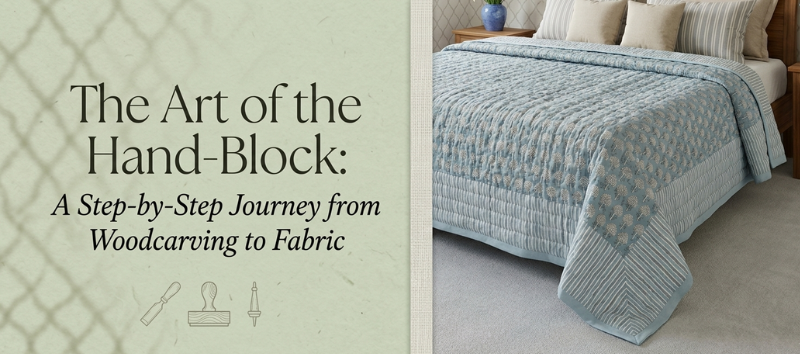
The Art of the Hand-Block: A Step-by-Step Journey from Woodcarving to Fabric
Hand-block printing is more than just a decorative technique—it is a story of tradition, patience, and craftsmanship. In today’s fast-paced world, where mass production dominates, handcrafted textiles bring a sense of authenticity and individuality that modern consumers truly value.
In this detailed guide, we explore The Art of the Hand-Block, uncovering each stage of the journey from raw wood to beautifully printed fabric. This process not only highlights artisan skill but also reflects a sustainable approach that resonates strongly with UK audiences.
What Makes Hand-Block Printing Unique?
Hand-block printing is a centuries-old method where artisans use carved wooden blocks to imprint designs onto fabric. Each impression is done manually, which means no two pieces are ever exactly the same.
This uniqueness is what makes handcrafted textiles so valuable in modern homes, especially for those seeking something beyond factory-made products.
The Cultural Roots of Traditional Printing
Originating in regions like Rajasthan, this craft has been passed down through generations. It represents not only artistic skill but also cultural storytelling through patterns and motifs.
These traditions continue to influence global home décor trends, particularly in markets like the UK where heritage craftsmanship is highly appreciated.
Step 1: Designing the Pattern
Every hand-block printed textile begins with a thoughtfully created design. Artists carefully sketch motifs inspired by nature, architecture, and traditional elements.
The design must be precise, as it will later be translated into a physical wooden block used for printing.
Why Design Planning Matters
A well-planned design ensures symmetry and balance across the fabric, which is essential for achieving a polished final look.
Step 2: Carving the Wooden Blocks
Once the design is finalised, it is transferred onto wooden blocks. Skilled artisans carve these blocks by hand, ensuring that every detail is accurately represented.
The carving process requires immense precision, as even a minor error can affect the final print.
The Beauty of Handcrafted Tools
Each carved block is unique, adding depth and character to the fabric. This stage truly showcases the artisan’s expertise.
Step 3: Preparing Natural Dyes
Natural dyes are used to create rich, long-lasting colours. These dyes are derived from organic sources, making the process environmentally friendly.
The preparation of dyes involves careful mixing to achieve the desired consistency and shade.
Sustainability in Colouring
This eco-conscious approach aligns perfectly with the growing demand for sustainable products in the UK market.
Step 4: Preparing the Fabric
Before printing begins, the fabric is washed thoroughly to remove impurities. This step ensures that the dye adheres evenly and produces a clean finish.
Cotton is commonly used because of its softness and ability to absorb colour effectively.
This preparation process plays a vital role in crafting high-quality indian quilts that offer both comfort and durability.
Step 5: The Printing Process
The actual printing involves dipping the carved block into dye and pressing it onto the fabric with precision. Each colour requires a separate block, and the process is repeated multiple times.
Artisans rely on experience and rhythm to maintain consistency throughout the design.
Precision and Craftsmanship
The human touch ensures subtle variations, making each piece distinctive and visually appealing.
Step 6: Drying and Fixing the Colours
After printing, the fabric is left to dry naturally under sunlight. This helps set the colours and enhances their vibrancy.
Additional treatments may be applied to ensure that the colours remain long-lasting even after multiple washes.
Step 7: Finishing and Quality Check
The final stage involves washing, ironing, and inspecting the fabric to ensure it meets quality standards.
Only the finest pieces are selected for transformation into home décor products.
Why Hand-Block Printed Textiles Are Trending in the UK
Consumers are increasingly moving towards sustainable and meaningful purchases. Handcrafted textiles offer a perfect blend of tradition and modern aesthetics.
Many buyers today explore cotton quilts online to discover authentic pieces that reflect both comfort and craftsmanship.
The Rising Demand for Artisan Quilts
The popularity of handcrafted bedding has grown significantly due to its uniqueness and eco-friendly appeal.
Among these options, block print quilts are widely appreciated for their intricate patterns and timeless charm.
Choosing the Right Quilt Size
Selecting the appropriate size is essential for both comfort and style in your bedroom.
For smaller spaces, twin size quilts provide a practical yet stylish solution.
For a more spacious and luxurious feel, king size quilts are an excellent choice.
Balancing comfort and versatility, queen size quilts remain a popular option for modern homes.
The Future of Handcrafted Textiles
As sustainability becomes a priority, traditional crafts like hand-block printing are gaining renewed importance. They offer a responsible alternative to mass production while preserving cultural heritage.
Choosing handcrafted products is not just about aesthetics—it is about supporting artisans and embracing a more conscious lifestyle.
Conclusion
The Art of the Hand-Block is a celebration of creativity, tradition, and sustainability. Each step in the process reflects dedication and skill, resulting in textiles that are both beautiful and meaningful.
By incorporating these handcrafted pieces into your home, you contribute to preserving a timeless craft while enhancing your living space with unique and authentic designs.
Frequently Asked Questions (FAQs)
1. What is hand-block printing?
It is a traditional method of printing fabric using hand-carved wooden blocks and natural dyes.
2. Are hand-block printed fabrics durable?
Yes, with proper care, these fabrics can last for years while maintaining their quality and colour.
3. Why are handcrafted textiles popular in the UK?
They offer sustainability, uniqueness, and a connection to traditional craftsmanship.
4. How should I care for these fabrics?
Use mild detergents and avoid harsh sunlight to preserve the colours and texture.
5. What makes them different from machine-made textiles?
Their handmade nature ensures individuality and a higher level of craftsmanship.
-
 September 18th, 2026
 -

The Art of Layering Textiles: How UK Homes Can Mix Quilts & Tablecloths
September 11th, 2026 -

Duvet vs Quilt vs Bedspread: What's the Difference and Which One Do You Need?
September 11th, 2026 -
 August 26th, 2026