
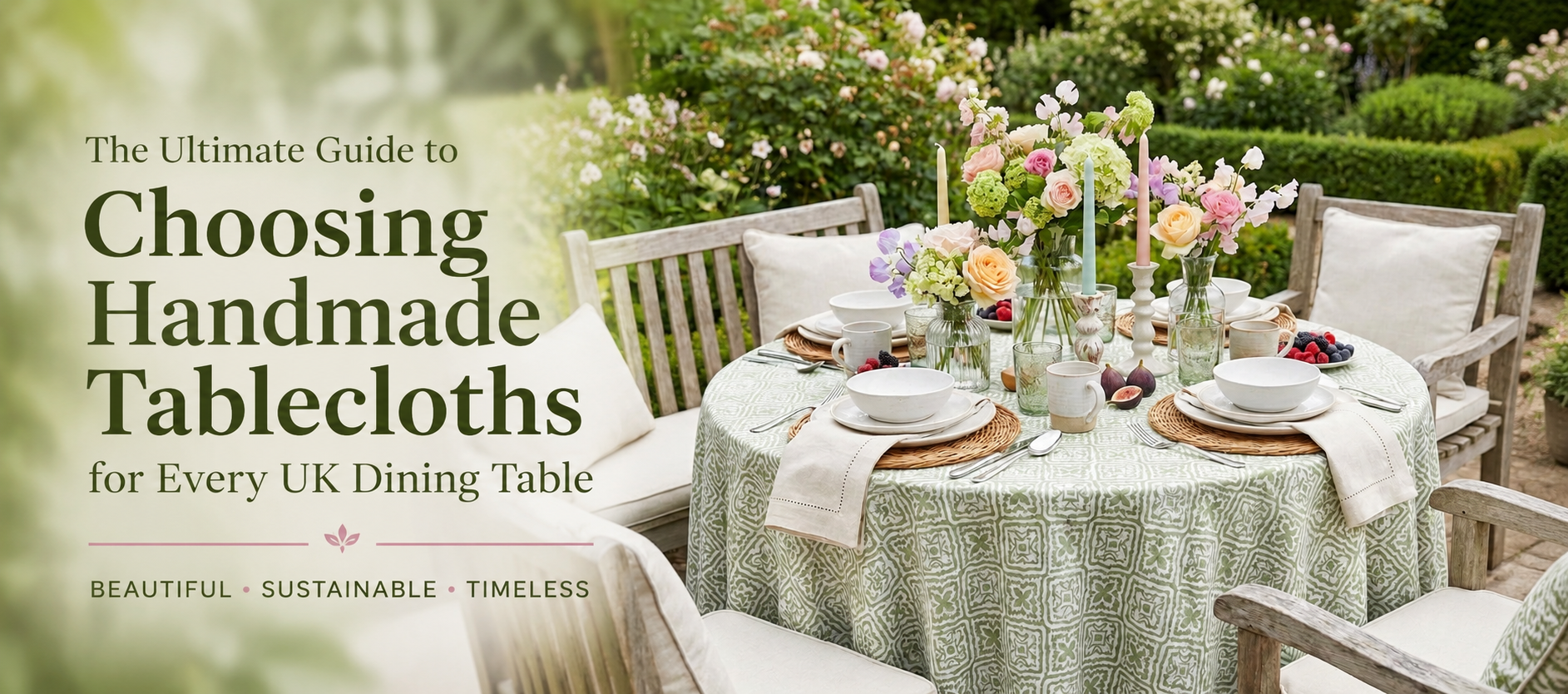
The Ultimate Guide to Choosing Handmade Tablecloths for Every UK Dining Table
A dining table says a lot about a home before a single dish is served, and the tablecloth covering it often does much of that work. Choosing handmade tablecloths UK shoppers can genuinely rely on means looking past surface-level pattern and thinking carefully about fabric, sizing, and craftsmanship together. This guide walks through everything worth knowing before buying, from how artisan textiles differ from mass-produced prints to getting the sizing exactly right for a specific table shape, so the final choice suits both everyday meals and special occasions, without needing to guess or compromise along the way.
Why Handmade Tablecloths Are Worth the Investment
What Sets Handmade Apart From Mass-Produced Linen
Mass-produced tablecloths are manufactured at scale using digital or screen printing, which produces flawless, identical repeats across every metre of fabric. Handmade pieces, by contrast, are created using techniques like hand-block printing, where a design is carved into a wooden block and stamped onto cloth one press at a time. This process introduces subtle variation between repeats that no two handmade tablecloths ever share, giving each piece a genuine sense of individuality that machine-made alternatives cannot replicate.
The Craft Behind Every Hand-Printed Design
Understanding the process behind hand-printed textiles makes it easier to appreciate why they carry a different kind of value. A design is first carved by hand into teak or sheesham wood, a task that can take days depending on complexity. The block is then dipped into natural or eco-conscious dye and pressed firmly onto pre-washed cotton, with multi-coloured designs requiring a separate block and full drying time for each colour layer. This patient, layered approach is why a single tablecloth can take considerably longer to produce than its machine-printed equivalent.
Why Jaipur Remains the Heart of This Tradition
Much of the world's finest hand-block printed textile work still originates from Jaipur and the neighbouring town of Sanganer in Rajasthan, where generations of artisan families have refined their carving and dyeing skills. This concentration of expertise reflects centuries of accumulated craft knowledge passed down within workshops that continue much as they always have. Sourcing from this region offers a direct link to the tradition's genuine origin, rather than a factory reproduction attempting to imitate the aesthetic.
Block Print Cotton Tablecloth Sizing for Standard Tables
For most UK households, a block print cotton tablecloth in the standard 150 x 220 cm format suits typical 4–6 seater dining tables, offering a balanced drape on every side. Made from single-weave, pre-washed cotton, these tablecloths sit flat without stiffening agents and soften further with each wash, making the sizing as important a consideration as the pattern itself when shopping online.
How to Identify Genuine Craftsmanship When Shopping Online
Buying handmade textiles without seeing them in person requires knowing what to look for in product photography and descriptions. Genuine hand-block printed pieces typically show slight, natural variation between pattern repeats, along with a softer, less saturated version of the design visible on the fabric's reverse side. Listings that mention pre-washing, single-weave cotton, and a specific artisan region of origin, such as Jaipur, are generally more trustworthy than generic descriptions offering no detail on production method.
Rectangle Tablecloths for the Most Common UK Table Shape
rectangle tablecloths remain the most frequently purchased shape, largely because most UK dining tables are rectangular by default. Available across sizes suited to 4–6 and 6–8 seater tables, a properly fitted rectangular cloth offers a clean, even drape without excess fabric bunching at the corners. Getting the length right relative to table size matters particularly for this shape, since an ill-fitting rectangular cloth is one of the more visible sizing mistakes at a dining table.
Comparing Cotton to Synthetic Table Linen
Polyester and vinyl tablecloths are often marketed as more convenient thanks to their wipe-clean surfaces, but the trade-offs are real. These synthetic materials trap heat, feel less pleasant against the skin, and tend to look artificial under natural light compared with the soft, matte finish of genuine cotton. While cotton requires a proper wash rather than a quick wipe, its natural drape, breathability, and tendency to improve with age make it the more comfortable, longer-lasting choice for most UK dining settings.
Round Table Cover Cloth Sizing for Circular Tables
For households with a circular dining table, a properly sized round table cover cloth makes a noticeable difference to how finished the table looks. The general guide is to measure the table's diameter and add 30 to 45 centimetres for an elegant overhang, whether the table is a small occasional piece or a larger dining centrepiece. Round cloths in cotton drape particularly well, since the fabric's natural weight allows it to fall evenly around the table's curve without stiff, awkward folds.
Caring for Handmade Tablecloths So They Last
Proper care extends the life of a handmade tablecloth considerably. Washing in cold or lukewarm water with a mild detergent helps preserve both colour and fibre strength, while bleach and harsh chemicals should generally be avoided, particularly with naturally dyed pieces. Air drying in shade rather than direct sunlight prevents premature fading, and a light iron on medium heat while the fabric is still slightly damp gives the crispest, most presentable finish for both everyday meals and special occasions.
Styling a Tablecloth for Everyday Meals and Special Occasions Alike
One of the strengths of a well-chosen tablecloth is how easily it adapts to different occasions using the same base piece. For everyday meals, a single cloth paired with simple, functional dishware keeps things practical and low-maintenance. For special occasions, layering the same tablecloth with a coordinating runner, printed napkins, and considered centrepieces elevates the table without requiring an entirely separate set of linens purchased solely for guests.
Long Tablecloths for Extended and Banquet-Style Tables
Larger gatherings call for their own sizing considerations, and long tablecloths are designed specifically for extended dining tables, banquet setups, and event settings. Made from durable, handcrafted cotton, these longer formats hold their shape and colour across large surfaces, an important consideration when a cloth needs to look presentable across an entire extended table rather than just a compact seating arrangement. Measuring carefully and allowing extra fabric for a well-proportioned drape remains essential at this larger scale.
Matching a Tablecloth to Your Home's Existing Style
Beyond size and fabric, the right tablecloth should feel at home within a room's broader aesthetic. A muted, single-tone print suits a pared-back, Scandinavian-influenced dining space, while a bolder floral or geometric block print works well in a room that already embraces colour and pattern elsewhere. Considering the existing colours in flooring, walls, and seating before choosing a cloth helps ensure the finished table setting feels like a natural extension of the room rather than an unrelated addition.
Block Printed Napkins to Complete the Table Setting
No tablecloth feels fully finished without coordinating linen, and block printed napkins offer an easy, affordable way to complete a table setting. Typically sold in sets, these cotton napkins can either match a printed tablecloth closely for a cohesive look or be chosen in a contrasting print for visual interest. Their durability and washability make them just as suited to daily family meals as they are to a more considered dinner party arrangement.
Why Provenance Matters When Buying Table Linen
Not all handmade tablecloths are created equal, and provenance plays a meaningful role in both quality and durability. Pieces made using traditional hand-block printing techniques, sourced from artisan regions like Jaipur and Sanganer, typically use pre-washed, single-weave cotton chosen specifically for its performance over repeated use. Choosing a tablecloth with this kind of documented artisan origin, rather than an anonymous factory import, tends to result in a piece that both looks better and lasts considerably longer.
Common Mistakes to Avoid When Buying Table Linen
A handful of avoidable mistakes account for most tablecloth disappointments. Ordering based on seat count alone, rather than actual table measurements, is the most frequent error, followed closely by choosing a fabric weight unsuited to the intended use, such as a delicate cloth for daily family meals. Overlooking care instructions before purchase, particularly for hand-dyed or printed pieces, can also shorten a tablecloth's lifespan unnecessarily. Taking a few minutes to measure, consider intended use, and check care requirements avoids the majority of these common pitfalls.
Building a Considered Table Linen Collection Over Time
Rather than purchasing every piece at once, building a table linen collection gradually tends to produce more cohesive, lasting results. Starting with a well-chosen everyday tablecloth, then adding coordinating napkins, a runner, and eventually a second cloth for larger gatherings, allows a household's dining style to develop naturally over time. For anyone specifically searching for handmade tablecloths UK retailers can be trusted to deliver consistently, prioritising documented artisan origin and natural fibre quality over price alone tends to produce the most satisfying long-term results.
Frequently Asked Questions
What makes a tablecloth genuinely handmade rather than machine-printed?
Handmade tablecloths are created using techniques like hand-block printing, where a carved wooden block is stamped onto fabric by hand. This produces subtle, natural variation between pattern repeats that uniform machine printing cannot replicate.
What size tablecloth do I need for my dining table?
Measure your table and add 20 to 30 centimetres of overhang on each side for a rectangular table, or the diameter plus 30 to 45 centimetres for a round table. Always measure rather than relying on seat count alone.
Are handmade cotton tablecloths practical for everyday use?
Yes, handmade cotton tablecloths are durable, washable, and soften with regular use. With proper care, including cold water washing and shade drying, they hold up well to daily family meals as well as special occasions.
How do I care for a hand block printed tablecloth?
Wash in cold or lukewarm water with a mild detergent, avoiding bleach and harsh chemicals that can fade natural dyes. Air dry in shade rather than direct sunlight, and iron on medium heat while slightly damp for the cleanest finish.
Why choose a handmade tablecloth over a mass-produced one?
Handmade tablecloths, particularly those hand block printed in regions like Jaipur, offer genuine artisan provenance, natural fibre durability, and unique pattern variation that mass-produced printed alternatives simply cannot replicate.
-

Why Hand Block Printed Home Furnishings Are Getting Popular in the UK
October 16th, 2026 -
 October 2nd, 2026
 -
 September 25th, 2026

