

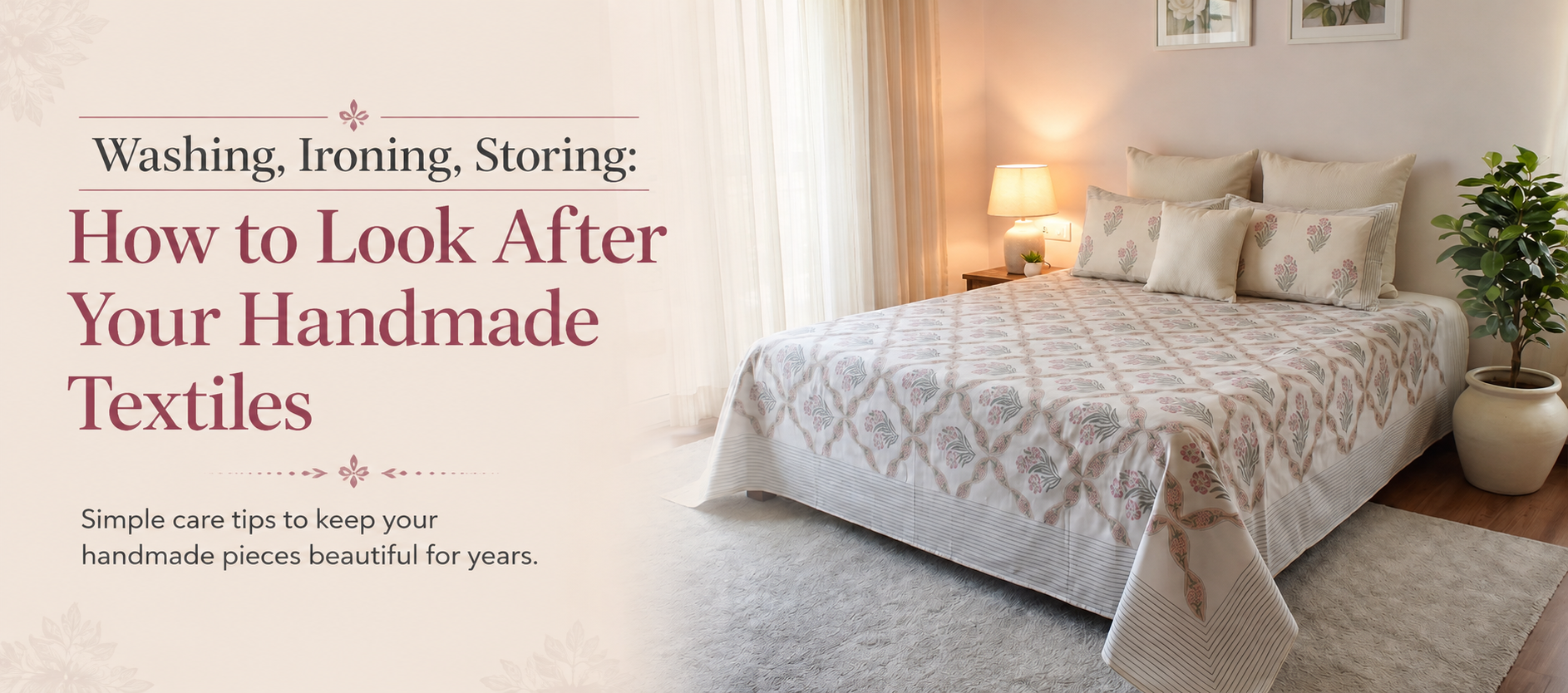
Washing, Ironing, Storing: How to Look After Your Handmade Textiles
A hand block printed quilt or a hand-stitched Kantha throw is not made the way most bedding is made. It is dyed, printed, or embroidered by hand, one length of cotton at a time, which means it also asks for a slightly different kind of care than a machine-finished set from a high street shop. Knowing how to care for handmade textiles properly is what keeps the colours sharp, the stitching intact, and the fabric soft, wash after wash, for years rather than seasons.
This guide walks through washing, drying, ironing, and storing handcrafted cotton textiles, with practical detail drawn from artisan workshop practice in Rajasthan, where techniques like hand block printing and Kantha stitching originate.
What Does "Caring for Handmade Textiles" Actually Mean?
Caring for handmade textiles means matching your washing, drying, ironing, and storage habits to how the fabric was made, not just what it is made from. A hand block printed cotton quilt, for example, needs cooler water and gentler detergents than a synthetic-blend duvet cover, because the dye sits closer to the surface of the fibre and the print can fade with harsh handling.
Why Handmade Textiles Need Different Treatment
Mass-produced bedding is usually finished with dyes and resins designed to withstand industrial laundering. Handcrafted textiles, by contrast, are often dyed using natural or low-impact pigments and printed with wooden blocks pressed by hand, so the colour penetrates the weave rather than being sealed onto it chemically. That is part of what gives block print bedding its slightly softer, more matte finish compared with mass-market prints, but it also means the fabric rewards a gentler laundering routine.
Washing Hand Block Printed and Hand-Stitched Cotton
Wash hand block printed and hand-stitched cotton textiles in cold or lukewarm water (around 30°C), on a gentle machine cycle or by hand, using a mild, dye-safe detergent without bleach or optical brighteners. This single step does more to protect colour and stitching than any other part of the care routine.
Water Temperature and Detergent
Hot water is the single biggest cause of premature fading in hand-dyed cotton. Water at 30°C or below is gentle enough to lift dirt and oils without stripping pigment from the fibre. Choose a mild, pH-neutral detergent, and avoid anything containing bleach, chlorine, or optical brighteners, which are formulated to whiten synthetic fabrics and can dull natural dyes over repeated washes.
Hand Washing vs Machine Washing
Hand washing is the safest option for anything with dense embroidery, such as a Kantha throw, where machine agitation can loosen running stitches over time. For everyday cotton bedspreads and dohars, a gentle machine cycle in a mesh laundry bag works well and protects any decorative edging or piping from snagging against the drum.
Colour Separation and First Wash
Wash new block-printed pieces separately for the first two or three launders. Natural dyes typically release a small amount of excess pigment in early washes as the fabric settles, which is normal and not a sign of poor quality, but it means a first wash alongside pale linens is worth avoiding.
Drying Handcrafted Textiles the Right Way
Line dry or lay handmade cotton textiles flat in shade rather than direct sun, and avoid high-heat tumble drying, which can shrink natural cotton fibres and cause hand-stitched seams to pucker. Gentle air drying preserves both the shape and the colour depth of the fabric.
Sun Exposure and Fading
Direct, prolonged sunlight is one of the fastest ways to fade a hand-dyed print. A shaded outdoor spot or an airy indoor rack achieves the same freshness without the UV exposure that gradually bleaches natural pigments.
Tumble Drying: When It's Safe
If a tumble dryer is unavoidable, use the lowest heat setting and remove the textile while it is still slightly damp, then finish drying flat. This limits the mechanical stress on hand stitching, which is typically less elastic than machine-locked seams and can loosen under sustained high heat.
Ironing Block Printed and Quilted Cotton
Iron hand block printed cotton on a medium setting, ideally on the reverse side of the fabric or with a thin cloth between the iron and the print, to protect the pigment from direct heat contact. A warm iron, used briefly, is usually enough to smooth cotton without flattening its natural texture.
Reverse Ironing to Protect the Print
Turning the fabric inside out before ironing is standard practice in artisan workshops, because it keeps the iron's soleplate away from direct contact with the printed surface. This small adjustment prevents the slight shine or colour transfer that can happen when a hot iron presses straight onto a hand-printed motif.
Ironing Quilted and Embroidered Pieces
Quilted bedspreads and Kantha throws generally need less ironing than flat cotton, since their texture is meant to look relaxed rather than crisp. A light steam pass on a low setting, avoiding direct pressure on embroidered areas, is usually sufficient to remove travel or storage creases.
Storing Quilts, Bedspreads, and Throws Between Seasons
Store handmade textiles clean, completely dry, and folded loosely in breathable cotton bags rather than sealed plastic, in a cool, dry space away from direct light. This lets the natural fibres breathe and prevents the musty odour and mildew risk that plastic storage can trap in over time.
Folding vs Rolling
Rolling is gentler than folding for quilted pieces and heavily embroidered throws, since it avoids the sharp creases that repeated folding along the same lines can eventually wear into the fabric. A cotton bedspread, whether a block print bedspread or a plainer weave, can be folded loosely instead, as long as the fold lines are varied between uses.
Protecting Against Moths and Damp
Natural cotton and cotton-fill quilts are attractive to moths if stored in a damp or poorly ventilated space. Cedar blocks or lavender sachets are a traditional, chemical-free deterrent, and airing stored textiles every few months keeps both moisture and pests at bay.
Seasonal Rotation for UK Homes
In a UK climate, lighter cotton quilts and dohars typically come into use in spring and summer, while heavier quilted bedspreads take over for autumn and winter. Rotating pieces seasonally, rather than leaving one on the bed year-round, also spreads out wear and gives each textile a longer rest between washes.
A Quick Step-by-Step Care Routine
For anyone short on time, this five-step sequence covers the essentials for most handcrafted cotton textiles, whether it's one of our indian quilts or a lightweight throw.
- Check the care label first. Embroidered or heavily embellished pieces may call for hand washing or dry cleaning only.
- Wash cold, wash gentle. Use 30°C water, a mild detergent, and a slow cycle or hand wash.
- Dry flat or on the line, in shade. Skip direct sun and high-heat tumble settings.
- Iron on the reverse, on medium heat. Protect the printed or embroidered face from direct contact.
- Store clean, dry, and breathable. Cotton bags, not sealed plastic, in a cool, dark spot.
Caring for Different Types of Handcrafted Bedding
Not every handmade textile behaves the same way, and a little bit of category-specific knowledge goes a long way. A queen size quilted bedspread, for instance, holds more layers of cotton fill than a flat print, so it benefits from a slightly longer drying time to make sure the inner wadding is fully dry before it goes back into use or storage. Damp wadding left folded away is one of the more common causes of a musty smell developing in stored bedding.
A cotton queen bedspread in a lighter percale weave, by comparison, dries quickly and irons easily, making it a practical everyday choice for households that want the handcrafted look without a demanding care routine. The same tight percale weave that gives cotton percale bedding its crisp, breathable feel also makes it less prone to creasing than heavier weaves, so it needs only a brief, low-heat iron to look finished.
Frequently Asked Questions
How do I wash a hand block printed quilt without fading the colours?
Wash it in cold or lukewarm water, around 30°C, using a mild detergent with no bleach or optical brighteners. Wash it separately or with similar colours for the first few launders, and avoid wringing the fabric, which can stress the printed area and cause uneven colour loss over time.
Can handmade cotton bedding go in the tumble dryer?
It can, but only on the lowest heat setting, and it is best removed while still slightly damp to finish drying flat. High heat can shrink natural cotton fibres unevenly and put strain on hand-stitched seams, so line drying or flat drying in shade remains the gentler option overall.
What is the best way to iron a block printed textile?
Iron on a medium setting with the fabric turned inside out, or place a thin cloth between the iron and the printed surface. This keeps the iron's heat from making direct contact with the pigment, which protects both the colour and the slightly matte finish typical of hand block printing.
How should I store a quilt or bedspread when it's not in use?
Make sure it is completely clean and dry, then fold or roll it loosely and place it in a breathable cotton storage bag rather than sealed plastic. Keep it in a cool, dry space away from direct sunlight, and air it out every few months to prevent damp, odour, or moth damage.
Why does my handmade textile need different care to regular bedding?
Handcrafted textiles are usually dyed and printed by hand using techniques where the colour sits closer to the surface of the fibre, rather than being heat-sealed the way many mass-produced fabrics are. That makes them more responsive to water temperature, detergent choice, and direct heat, so a gentler routine protects both the print and the stitching for longer.
In Short
Looking after handmade textiles comes down to a handful of consistent habits: wash cool and gentle, dry away from direct heat and sun, iron on the reverse at a moderate temperature, and store clean pieces in breathable fabric rather than plastic. Once you know how to care for handmade textiles this way, the routine becomes second nature, and a hand block printed quilt or hand-stitched throw can easily stay in daily rotation for many years without losing the character that made it worth choosing in the first place.
-
 September 25th, 2026
 -
 September 18th, 2026
 -

The Art of Layering Textiles: How UK Homes Can Mix Quilts & Tablecloths
September 11th, 2026 -

Duvet vs Quilt vs Bedspread: What's the Difference and Which One Do You Need?
September 11th, 2026 -
 August 26th, 2026