
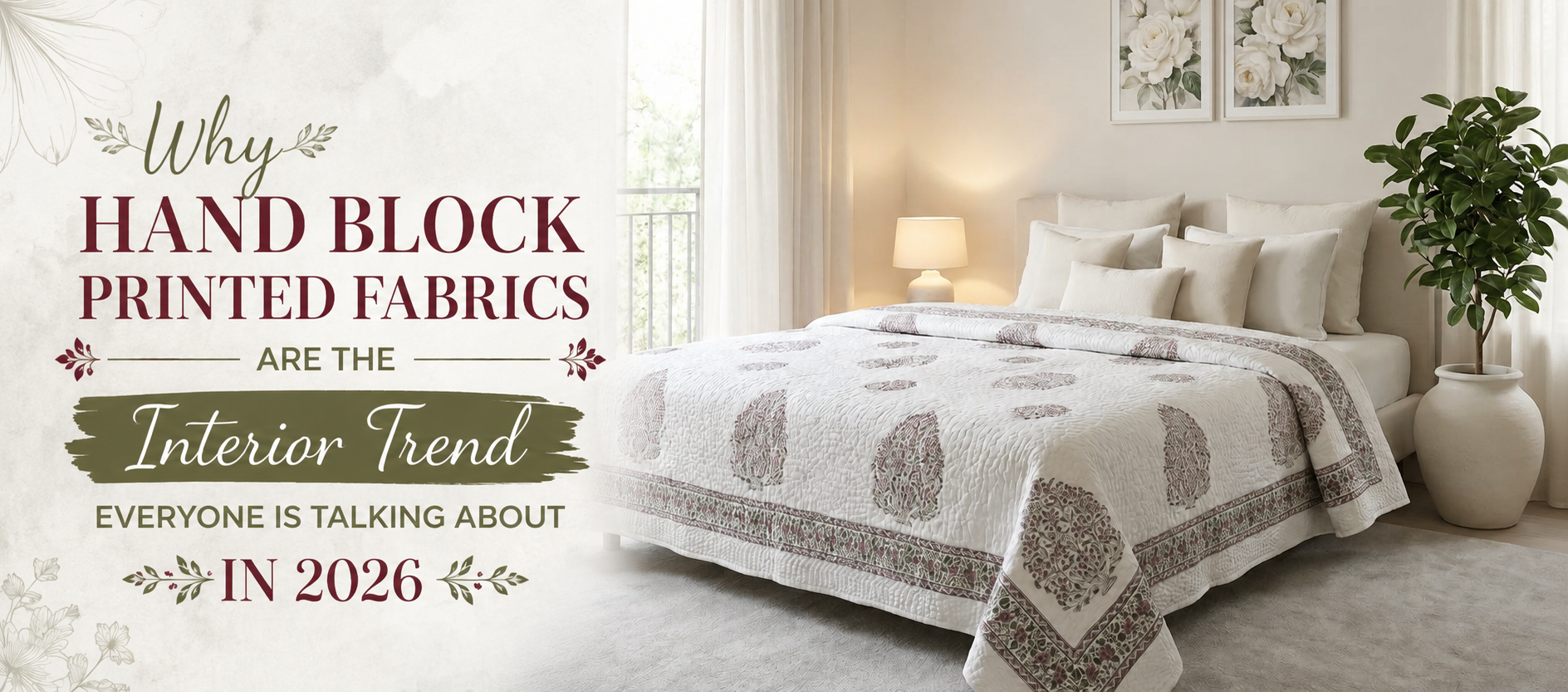
Why Hand Block Printed Fabrics Are the Interior Trend Everyone Is Talking About in 2026
Scroll through UK interiors content in 2026 and one thread keeps reappearing: a renewed appetite for textiles with visible craft behind them. Hand block printed fabrics sit right at the centre of this shift, offering something that mass-produced prints simply cannot replicate — the gentle imperfection of a design stamped by hand, one press at a time. From dining tables to bedrooms, these artisan textiles are moving from niche interest to genuine interior staple. This guide looks at why the trend has taken hold, what makes the craft behind it so distinctive, and how to bring it into a UK home in a way that feels considered rather than fleeting.
Understanding the 2026 Shift Toward Artisan Textiles
What Is Driving This Renewed Interest?
Interior trends tend to move in cycles, and the current pull toward handcrafted textiles reflects a broader fatigue with uniform, mass-produced homeware. Shoppers increasingly want pieces with a story, a visible human hand, and a sense that no two items are quite identical. Social platforms have also played a role, with close-up shots of textured, hand-stamped fabric performing well precisely because the irregularities photograph beautifully. Combined with growing interest in slow fashion and sustainable sourcing, this has created ideal conditions for a craft that has existed for centuries to feel newly relevant.
The Craft Behind Every Hand-Stamped Design
At its core, the process behind hand block printed fabrics has changed remarkably little over generations. A design is carved by hand into a wooden block, dipped into dye, and pressed firmly onto fabric one motif at a time. Multi-coloured patterns require a separate block for each shade, with the fabric left to dry between layers to keep colours crisp and true. This unhurried, layered process is precisely why interior stylists and design-conscious shoppers now treat these textiles as considered investment pieces rather than disposable seasonal decor.
Why Jaipur Remains the Global Centre of This Craft
Much of the world's finest hand block printing still originates from Jaipur and the neighbouring town of Sanganer, where generations of artisan families have refined their carving and dyeing techniques. This concentration of skill is not incidental; it reflects centuries of accumulated knowledge passed down within workshops that continue much as they always have. For UK buyers seeking authenticity rather than an imitation print, sourcing from this region offers a direct link to the craft's genuine origin rather than a factory reproduction of the aesthetic.
Block Print Tablecloths Leading the Dining Table Refresh
Nowhere is this trend more visible than at the dining table, where block print tablecloths have become a go-to way to update a space without a full renovation. Available across rectangular, round, and square formats, these cloths introduce colour and pattern while remaining practical enough for everyday family meals. Their breathable cotton construction also means they hold up well to repeated washing, making them as functional as they are decorative — a combination that has helped drive their growing popularity across UK homes this year.
How to Spot Genuine Craftsmanship Versus Imitation Prints
As interest in this style grows, so does the number of machine-printed imitations attempting to mimic the look. Genuine pieces reveal themselves on close inspection: slight variations in spacing, pressure, and colour saturation between pattern repeats are the clearest sign of a human hand at work, since a machine produces perfectly uniform results every time. The reverse side of authentic fabric typically shows a softer, less saturated version of the design, a natural consequence of hand stamping. Checking for these details helps ensure a purchase supports genuine artisan work rather than a lookalike.
Block Print Cotton Tablecloth Choices for Every Table Size
For households wanting a closer match to their exact table dimensions, a block print cotton tablecloth offers sizing flexibility that generic printed alternatives rarely match, spanning options suited to compact four-seaters through to larger family tables. Made from pre-washed, single-weave cotton, these tablecloths sit flat without stiffening agents and soften further with each wash. This attention to practical detail, alongside the visual appeal of the print itself, is part of why cotton tablecloths in this style continue to outsell purely decorative alternatives.
Why This Trend Extends Beyond the Dining Room
While dining linen has been an early entry point for many shoppers, the appeal of hand-stamped textiles has clearly spread into bedrooms and living spaces too. Cushions, throws, and quilts finished with the same techniques bring a cohesive sense of craft across an entire home rather than a single styled corner. This cross-room appeal is one of the clearest indicators that the trend has genuine staying power in 2026, rather than being confined to a single product category or seasonal styling moment.
Block Print Quilts Bringing the Trend Into the Bedroom
Block print quilts have become one of the standout ways UK shoppers are extending this aesthetic into their bedrooms, combining breathable cotton fill with the same hand-carved printing techniques used across dining textiles. Their lightweight construction suits layering beneath a duvet in colder months or use alone during summer, while reversible designs often offer two distinct looks in one piece. For anyone drawn to the trend but unsure where to start, a quilt offers an easy, high-impact entry point.
Sustainability as Part of the Appeal
Beyond aesthetics, part of what is fuelling this trend is a growing awareness of how textiles are made. Hand-produced pieces rely on human skill rather than energy-intensive machinery, typically use natural cotton rather than synthetic blends, and are often finished using eco-conscious dyeing methods. For shoppers increasingly conscious of where their homeware originates, choosing artisan-made textiles allows style and sustainability to align, rather than treating the two as competing priorities.
Block Printed Napkins for Everyday Table Styling
Smaller pieces are proving just as popular as larger statement items, with block printed napkins offering an accessible way to try the trend without committing to a full room refresh. Typically sold in sets, these cotton napkins pair naturally with printed tablecloths and runners for a coordinated look, or work equally well layered against plain linen for contrast. Their affordability relative to larger pieces has made them a popular starting point for shoppers testing the aesthetic before investing further.
Caring for Hand-Printed Textiles So the Trend Lasts
Keeping these pieces looking their best requires slightly different care than mass-produced synthetic textiles. Washing in cold or lukewarm water with a mild detergent helps preserve natural dyes, while avoiding bleach and harsh chemicals prevents premature fading. Air drying in shade rather than direct sunlight protects colour vibrancy, and a light iron on medium heat while the fabric is still slightly damp gives the crispest finish. Proper care means these pieces remain a lasting feature of a home rather than fading after a handful of seasons.
Block Print Bedspread Styling for a Layered Bedroom Look
Rounding out the bedroom side of this trend, a block print bedspread offers a versatile way to bring pattern into a space without the commitment of a full quilt. Light enough for warm months yet easily layered beneath a duvet in winter, these bedspreads double as decorative throws or even wall hangings for those wanting to display the craftsmanship as standalone art. Their adaptability across seasons and uses is a large part of why bedspreads remain one of the most searched entry points into this look.
Will This Trend Continue Beyond 2026?
Unlike fast-moving colour or pattern trends that fade within a season, the appeal of hand-stamped, artisan-made textiles is rooted in genuine craftsmanship rather than a passing aesthetic. Because each piece carries lasting quality, natural materials, and a documented artisan story, interest in this style tends to translate into long-term ownership rather than a quick replacement cycle. Design commentators increasingly frame it less as a fleeting trend and more as a broader, sustained shift back toward considered, handmade homeware.
Bringing This Look Into a UK Home Today
For anyone keen to explore this style, starting small tends to work best: a single tablecloth or a set of napkins offers an easy way to test the aesthetic before committing to larger bedroom pieces. From there, layering complementary patterns across dining and living spaces builds a cohesive look gradually, rather than requiring an overnight overhaul. This considered, room-by-room approach mirrors the craft itself — patient, deliberate, and built to last well beyond a single interior season.
Mixing Patterns Without Overwhelming a Room
One question that comes up often among newer shoppers is how to introduce several printed pieces into a single space without the result feeling chaotic. A useful starting point is to anchor a room with one dominant pattern, such as a quilt or tablecloth, then bring in smaller printed accents like napkins or cushions in a complementary but quieter colourway. Sticking to a shared colour family across pieces, even when the individual motifs differ, keeps a layered look feeling curated rather than accidental. This approach also makes it easier to add further pieces over time, since new items only need to work with the established palette rather than the entire existing collection.
Frequently Asked Questions
Why is hand-stamped artisan fabric trending in UK interiors right now?
Growing interest in slow fashion, sustainable sourcing, and handmade craftsmanship has driven demand for textiles with visible artisan character. Social media has also amplified their appeal, with the natural texture and imperfections of hand-stamped fabric photographing distinctively well, drawing new audiences into the style.
How can I tell if a fabric is genuinely hand block printed?
Look for slight variations in spacing and colour saturation between pattern repeats, which indicate hand craftsmanship rather than machine uniformity. The reverse side often shows a softer version of the design, a natural result of manual stamping rather than industrial printing.
Are hand block printed textiles practical for everyday use?
Yes, most pieces are made from durable, breathable cotton designed for regular use and washing. With gentle care, including cold water washing and shade drying, these textiles hold their colour and softness well over years of everyday use.
Is this trend expected to last beyond 2026?
Design commentators generally view it as more than a passing trend, since it is rooted in genuine craftsmanship, natural materials, and durability rather than a fleeting colour or pattern cycle. This tends to encourage long-term ownership over quick replacement.
What is the easiest way to start incorporating this trend at home?
Smaller items like napkins or a single tablecloth offer an affordable, low-commitment way to try the aesthetic. From there, layering quilts, bedspreads, or additional table linen gradually builds a cohesive, considered look across a home.
-
 October 2nd, 2026
 -
 September 25th, 2026
 -
 September 18th, 2026
 -
The Art of Layering Textiles: How UK Homes Can Mix Quilts & Tablecloths
September 11th, 2026 -
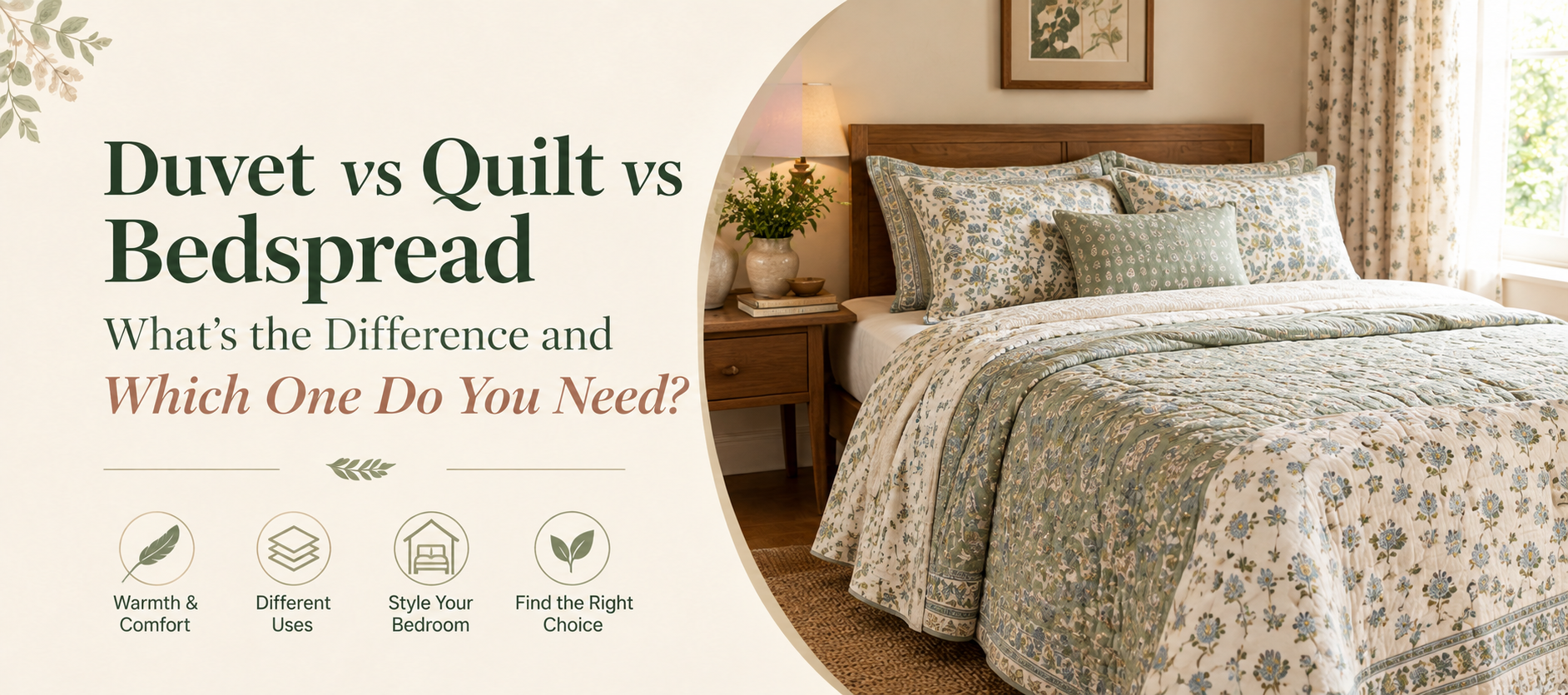
Duvet vs Quilt vs Bedspread: What's the Difference and Which One Do You Need?
September 11th, 2026