
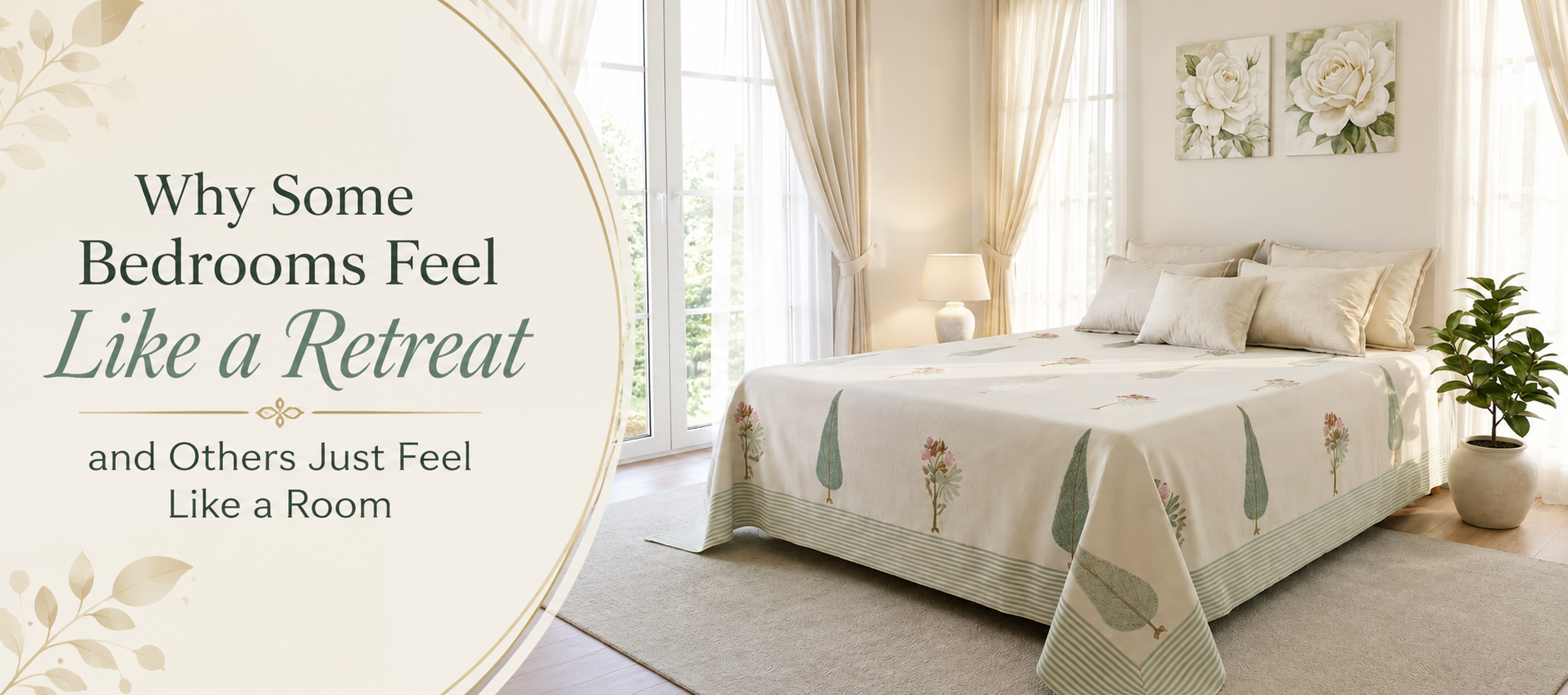
Why Some Bedrooms Feel Like a Retreat and Others Just Feel Like a Room
Walk into some bedrooms and the whole body seems to exhale. Walk into others, decorated just as carefully, and nothing quite lands. The difference rarely comes down to budget or square footage. It comes down to a handful of small, considered choices around texture, light, and materials — the kind of bedroom decor tips that get overlooked in favour of matching furniture sets and statement headboards. This piece looks at what actually separates a restful retreat from a room that simply holds a bed.
What Turns an Ordinary Bedroom Into a Restful Retreat
A bedroom feels like a retreat when its textures, light, and colour work together to slow the nervous system down, rather than stimulate it. This usually means layered natural fabrics, warm and dim lighting options, an uncluttered surface count, and a palette drawn from no more than three or four related tones. The effect is felt within seconds of entering the room.
Understanding the Room vs Retreat Divide
A "room" is functional: a bed, storage, somewhere to charge a phone. A "retreat" is sensory — it responds to touch, softens sound, and looks considered rather than assembled. The quickest way to notice the divide is to touch the bed linen. Crisp, cool, high-thread-count cotton reads as intentional. Thin polyester-cotton blends, however neatly made, tend to read as a hotel corridor rather than a personal space. Many of the bedrooms that succeed at feeling like a retreat lean on our cotton quilts online collection precisely because hand-finished cotton behaves differently under the hand than anything mass-produced — it has weight, drape, and a slightly irregular hand-printed pattern that machine printing can't replicate.
Start With What You Already Own
Before buying anything new, it helps to audit what's already in the room. Three unrelated wood tones on furniture, four different metal finishes on hardware, and mismatched lampshades are common culprits behind a room that "just feels off." None of these need replacing outright — a retreat-style bedroom often uses the same furniture as before, just edited down to fewer, more consistent finishes.
Natural Fabrics vs Synthetic Ones
Natural cotton fibres breathe, regulate temperature overnight, and soften with each wash, while synthetic blends trap heat and often pill within a few months. UK bedrooms in particular benefit from breathable fabric, given how often central heating runs through autumn and winter. Percale weaves are especially well suited to this: a tight, matte, cool-to-the-touch construction that's become a quiet favourite among people upgrading from basic polycotton sheets. Our cotton percale bedding range uses 100% cotton throughout, which is one of the more reliable bedroom decor tips for anyone whose current sheets always seem to feel warm and slightly damp by 3am.
Colour Palettes That Calm the Mind
Muted, earthy tones — terracotta, sage, indigo, warm ivory — consistently test better for sleep-supportive environments than high-contrast brights or stark monochrome schemes. This isn't a stylistic preference so much as a practical one: low-saturation colour reduces visual stimulation right before bed. A useful rule is to keep no more than one saturated accent colour in the room, letting everything else sit within a narrow tonal range.
Choosing Between a Quilt and a Bedspread
Quilts and bedspreads solve slightly different problems, and mixing them up is one of the more common styling mistakes. A quilt is typically padded and stitched through its layers, offering warmth as well as decoration — ideal for colder months or households that like a heavier top layer. A bedspread sits flatter and drapes further down the sides of the bed, giving a more tailored, finished look without the bulk. A queen size quilted bedspread is a practical middle ground for UK bedrooms: it has the padded structure of a quilt with the fuller drop of a bedspread, so it works as both a decorative layer and genuine bedding.
Pattern and Print Without Overwhelm
Hand block-printed patterns work well in a retreat-style bedroom because no two motifs print identically — the slight variation reads as handmade rather than uniform, which the eye tends to find more restful than a perfectly repeating digital print. The trick is restraint: one printed hero piece, such as a quilt or bedspread, paired with solid or subtly textured cushions rather than three competing patterns fighting for attention.
Layering Quilts, Throws and Texture
Texture layering is the single most repeated theme among interior stylists working on hospitality and residential bedrooms alike, because a flat, single-fabric bed reads as unfinished no matter how expensive the sheets are. A folded throw at the foot of the bed, a textured cushion or two, and a woven rug underfoot all add depth without adding clutter. Traditional Indian quilts are particularly good for this layering approach, since their hand-stitched quilting already carries visible texture before a single throw or cushion is added.
Step-by-Step: Building a Retreat-Style Bedroom
- Edit the palette first. Choose three to four related tones before buying any new textiles, and check them against existing walls, floors, and curtains.
- Upgrade the base layer. Swap synthetic-blend sheets for breathable, natural cotton — this single change affects comfort more than any decorative choice.
- Add one printed hero piece. A quilt or bedspread carries most of the visual character, so choose it before smaller accessories.
- Layer texture, not clutter. One throw, two cushions, one rug is usually enough — resist adding more, since texture works best with breathing room.
- Dim the lighting. Swap a single overhead bulb for a warm bedside lamp or two, ideally on a dimmer switch.
- Clear the surfaces. Limit bedside tables to two or three objects each, moving overflow items to a drawer or shelf.
Matching Bedspreads to Room Size
Smaller UK bedrooms, common in period terraces and flats, often benefit from a bedspread with a shorter drop and a more compact print scale, so the pattern doesn't overwhelm the room. Larger rooms can take a fuller, more dramatic block print bedspread without it feeling busy. As a working guide, measure the drop needed on each side of the mattress before ordering, since UK bed sizes don't always match international quilt and bedspread dimensions exactly.
Lighting, Scent and Small Details
Warm-white bulbs (around 2700K) consistently outperform cool-white or daylight bulbs for evening use, since blue-toned light suppresses melatonin production more than warm light does. Pairing this with a low-key scent — cedar, sandalwood, or a light linen spray — reinforces the sense of a considered space rather than a purely functional one. These are inexpensive changes, but they compound with the textile choices already covered.
An Artisan's Perspective on Comfort
Every hand block-printed quilt and bedspread we work with passes through several artisan hands in Jaipur before it reaches a UK bedroom: the fabric is washed and stretched, the wooden printing blocks are carved by hand, and each colour layer is pressed and dried before the next is applied. Nothing about that process can be rushed — a single block can take days to carve, and a large bedspread pattern often uses six or more separate blocks, one for each colour and outline. This slower production shows up in the finished piece: handmade textiles carry small, natural imperfections that machine-made bedding simply can't, and those imperfections are usually what make a bed feel personal rather than generic. A cotton queen bedspread made this way tends to soften and improve with each wash, rather than thinning out the way cheaper blends do.
Decluttering the Surfaces Around the Bed
Bedside tables covered in chargers, water glasses, and half-read post carry a surprising amount of visual noise, even when the bedding itself is well chosen. A retreat-style bedroom usually limits each bedside surface to two or three objects: a lamp, a small dish for jewellery or glasses, and perhaps one book. Wall-mounted or floating shelves can absorb the overflow without adding more floor-level furniture, which matters most in the smaller box rooms and period bedrooms common across the UK.
Choosing a Headboard and Frame That Support the Look
A plain, upholstered or wood-framed headboard tends to age better than a heavily patterned one, since it acts as a neutral backdrop for the printed textiles doing the visual work elsewhere in the room. Where a bed frame is older or mismatched to the rest of the room, a well-chosen bedspread and cushion arrangement can often carry the look on its own, without an immediate frame replacement.
In short: a bedroom becomes a retreat through layered natural textiles, a restrained colour palette, warm low lighting, and at least one handmade piece with genuine texture — not through spending more on furniture. Get the base layer, the palette, and the lighting right, and the room does the rest of the work on its own.
Frequently Asked Questions
What is the easiest way to make a bedroom feel more like a retreat?
Start with the bed linen. Swapping synthetic-blend sheets for breathable natural cotton, then adding one textured throw or quilt, makes the biggest visible difference for the least effort and cost, before any furniture or paint changes are needed.
Should I choose a quilt or a bedspread for my bedroom?
Choose a quilt for extra warmth and a padded, cosy finish, especially in colder months. Choose a bedspread for a flatter, more tailored drape that suits warmer seasons or a more polished, hotel-style look. Many UK bedrooms use one of each, rotating seasonally.
Why does natural cotton bedding feel different from synthetic bedding?
Cotton fibres are breathable and absorb moisture, so they regulate temperature overnight and soften with repeated washing. Synthetic blends trap heat, feel warm to the touch, and tend to pill and thin rather than soften over time.
What colours work best for a calming bedroom?
Muted, earthy tones such as terracotta, sage, indigo, and warm ivory are consistently linked to more restful environments than bright or high-contrast colour schemes, because lower saturation reduces visual stimulation before sleep.
Does hand block-printed bedding cost more than regular bedding?
It typically sits at a higher price point than mass-produced bedding because each piece passes through several stages of hand-carving, printing, and finishing by skilled artisans, rather than being machine-printed in bulk. The trade-off is a more durable, individually patterned piece.
-
 October 2nd, 2026
 -
 September 25th, 2026
 -
 September 18th, 2026
 -

The Art of Layering Textiles: How UK Homes Can Mix Quilts & Tablecloths
September 11th, 2026 -
Duvet vs Quilt vs Bedspread: What's the Difference and Which One Do You Need?
September 11th, 2026