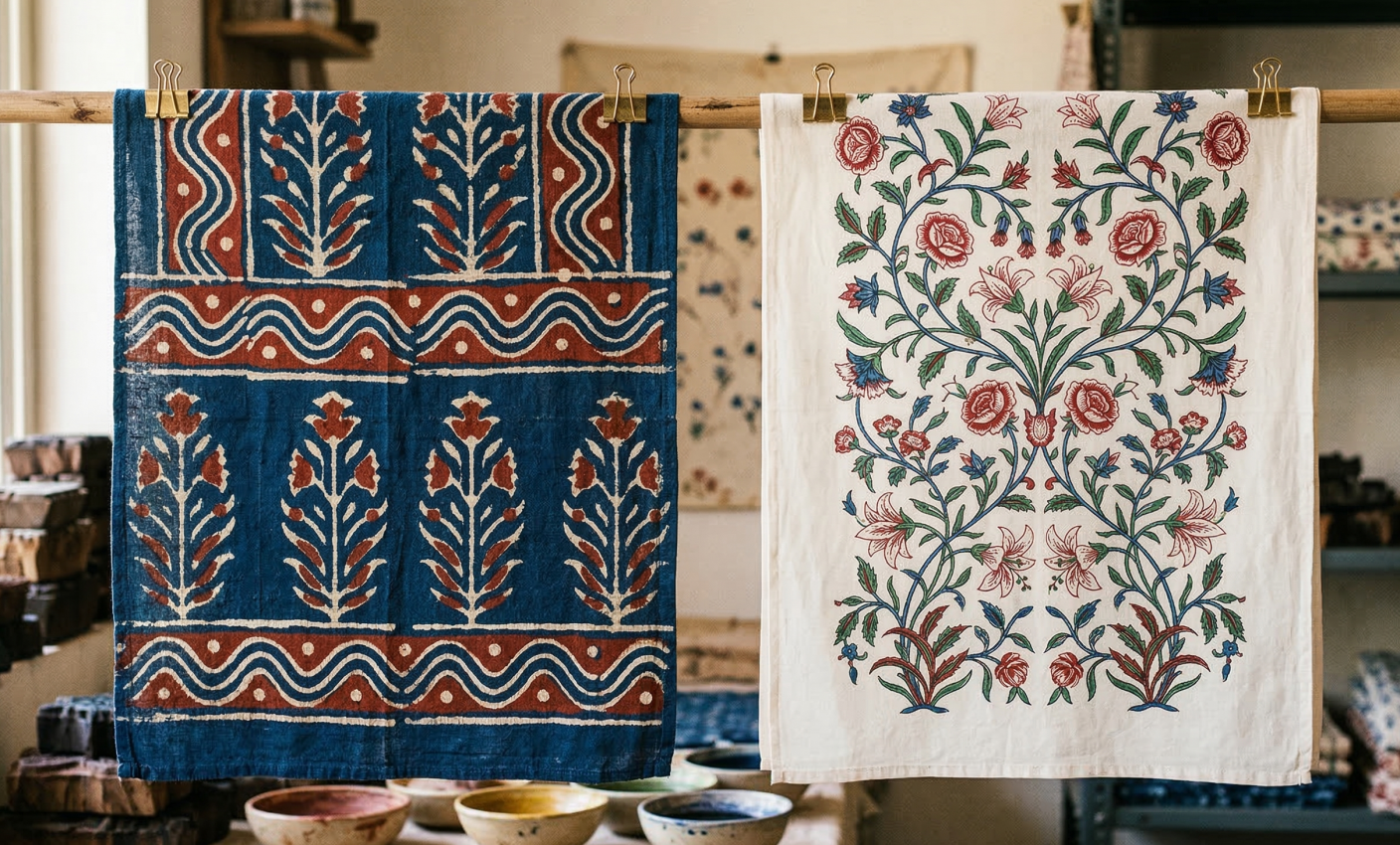
Bagru vs Sanganeri Block Prints: What’s the Difference?
Welcome to the vibrant world of Indian textiles, where stories are told through colors and patterns stamped onto fabric by hand. If you have ever been captivated by the intricate beauty of a block printed quilt or a flowing cotton dress, you have likely encountered two of India's most famous styles: Bagru and Sanganeri. Both originate from the craft heartland of Rajasthan, but they are as distinct as night and day. At Roopantaran, we celebrate the skill of the artisans who keep these traditions alive. Our collection of hand block printed home furnishings, quilts, fabrics, and garments is a testament to the timeless appeal of these techniques. But with so many beautiful options, how do you choose? Understanding the unique characteristics of Bagru and Sanganeri printing can help you appreciate the artistry and select the perfect piece for your home or wardrobe.
1. The Tale of Two Towns: Background and Origin
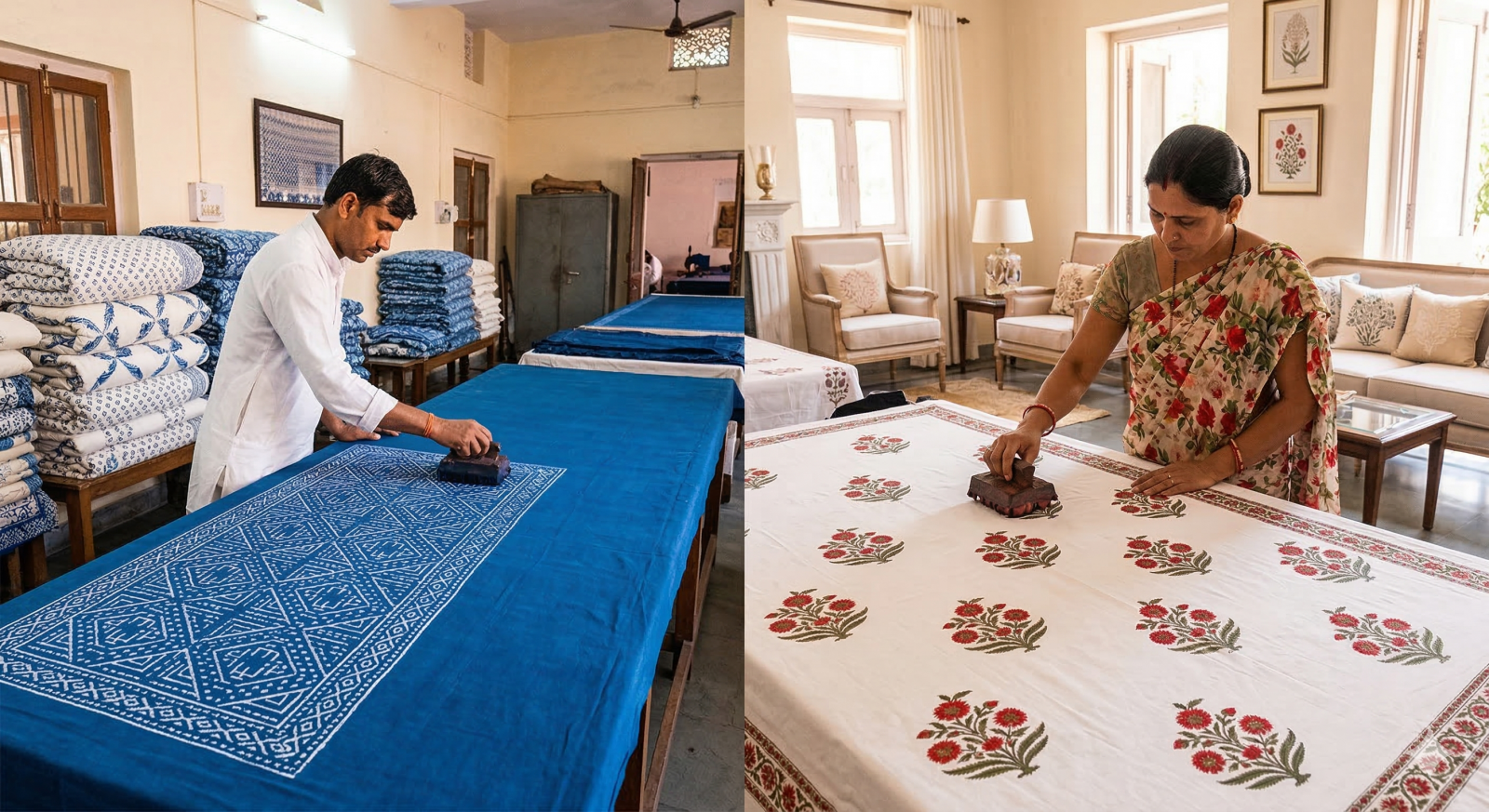
Sanganer and Bagru are two small towns located near the pink city of Jaipur. While geographically close, they developed distinct artistic identities over centuries, influenced by different patrons and available resources. Sanganer, situated on the outskirts of Jaipur, became a major hub of textile printing during the Mughal era. The local water from the Sanjhi River was believed to have unique properties that enhanced the brightness and clarity of the dyes. Sanganeri printers traditionally used fine cotton and silk fabrics, creating delicate, intricate designs that catered to the royal court and sophisticated urban markets. This royal patronage encouraged precision and finesse. Bagru, located about 30 kilometers from Sanganer, has a more rustic history. The Chhipa community, known for their traditional dyeing and printing skills, has lived in Bagru for generations. Their methods are deeply rooted in nature. Unlike Sanganer, the available water in Bagru was hard and had different properties, which led the printers to develop a more complex, natural dyeing process. This rustic environment influenced a bolder, simpler, and more earthy style of printing.
2. A Symphony of Shades: Color Palette and Dyes
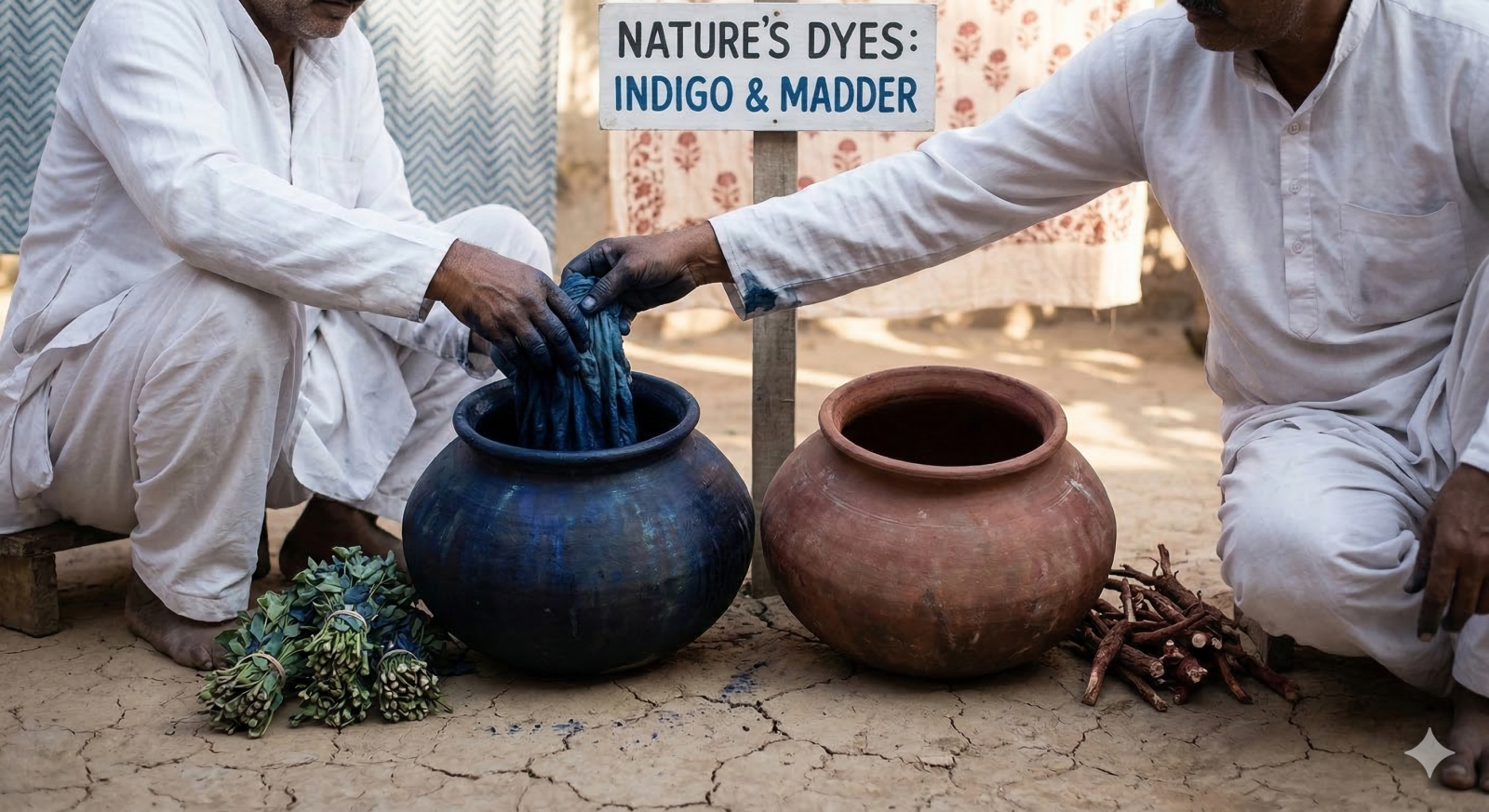
The most striking difference between the two styles is their approach to color. The choice of dyes and the resulting shades define the visual landscape of each print. Sanganeri printing is synonymous with vibrant and varied colors. While traditionally using natural dyes, modern Sanganeri printers also utilize high quality, safe, and vibrant screen and pigment dyes to achieve a wide spectrum of bright blues, vivid reds, sunny yellows, and cheerful greens. The hallmark of Sanganeri is its crisp, white, or off white background, which makes the multi colored motifs stand out with exceptional clarity. The overall feel is bright, clean, and refreshing. Bagru printing, in stark contrast, is the soul of natural dyeing. The printers of Bagru rarely print on a white background. Instead, the fabric is pre dyed in warm, earthy tones. The signature Bagru background color is a deep indigo blue, a rich madder red, or a soft, warm cream. They use a completely natural process, utilizing indigo for blue, madder root for red, iron filings and jaggery for black, and turmeric for yellow. The resulting colors are muted, deep, and beautifully organic. This reliance on nature gives Bagru prints their characteristic rustic charm.
3. The Language of Patterns: Motifs and Designs
The motifs chosen by the printers reflect their aesthetic sensibilities and the environments that inspired them. Sanganeri patterns are famously delicate, symmetrical, and incredibly detailed. Heavily influenced by Mughal floral arts, they feature fine lines and graceful curves. You will often see "Butis" (small, stylized floral bouquets), intertwined vines, roses, lilies, and sunflowers. These designs are often multi colored, requiring the printer to use several blocks to complete a single pattern with overlapping colors. The complexity and precision of Sanganeri motifs are a testament to the artisan's skill. This style looks exceptionally elegant on home furnishings like our table runners and bedsheets. Bagru patterns have a bolder, simpler, and more earthy character. While they also feature floral designs, they are generally less detailed and more abstracted than their Sanganeri counterparts. The defining characteristic of Bagru is its love for geometric motifs. You will frequently find interlocking grids, bold lines, waves, and dotted patterns. These designs are often printed in single colors or simple, two tone combinations. This minimalist, powerful aesthetic gives Bagru prints a timeless and grounded appeal, making them perfect for a cozy quilt or a statement garment.
Which Print Resonates with You?
At Roopantaran, we believe both Sanganeri and Bagru prints offer a unique and beautiful way to bring traditional Indian artistry into your daily life.
- Choose Sanganeri if you love bright colors, detailed floral motifs, and a sophisticated, intricate aesthetic. Our Sanganeri collection brings a cheerful elegance to any space.
- Choose Bagru if you are drawn to natural dyes, earthy colors, bold geometric patterns, and a more rustic, bohemian charm. Our Bagru collection adds warmth and soul to your home and wardrobe.
Explore our curated range of hand block printed treasures and discover the perfect piece that reflects your personal style. Whether it is a vibrant Sanganeri bedsheet or a deep indigo Bagru quilt, you are not just buying a product you are keeping a precious tradition alive.
-
 September 18th, 2026
 -

The Art of Layering Textiles: How UK Homes Can Mix Quilts & Tablecloths
September 11th, 2026 -

Duvet vs Quilt vs Bedspread: What's the Difference and Which One Do You Need?
September 11th, 2026 -
 August 26th, 2026