
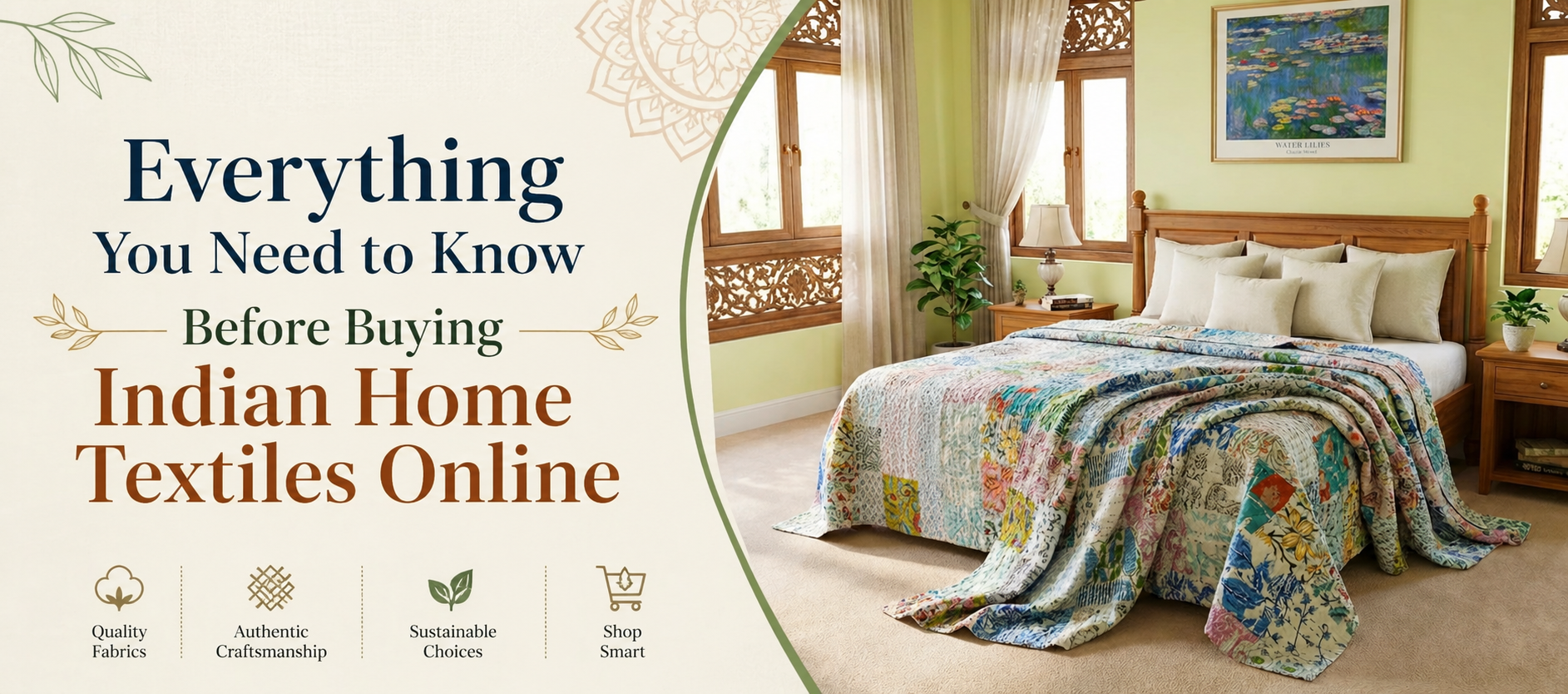
Everything You Need to Know Before Buying Indian Home Textiles Online
The global appreciation for handcrafted textiles has grown significantly in recent years — and British consumers are at the forefront of this movement. Whether you are refreshing your bedroom, upgrading your dining room, or simply looking for something that feels more considered than what the high street offers, Indian Home Textiles Online present a compelling and increasingly accessible option.
But buying textiles online — particularly artisan-made ones from another country — requires a little more knowledge than clicking "add to basket." Fabric weight, weave type, sizing conventions, care requirements, ethical sourcing: these are all questions worth asking before you spend your money.
This guide answers all of them. By the end, you will know exactly what to look for, what to avoid, and how to find pieces that will genuinely last and genuinely look beautiful in a British home.
Why Indian Home Textiles Have Earned a Place in British Homes
India has been producing exceptional textiles for over five thousand years. The country's regional craft traditions — block printing in Rajasthan, Kantha quilting in West Bengal, Kalamkari painting in Andhra Pradesh — represent some of the most technically sophisticated and visually rich textile heritage on the planet.
What makes these traditions particularly relevant to UK buyers today is the convergence of three things: a growing appetite for sustainable living, a rejection of mass-produced goods, and the simple fact that handcrafted Indian textiles are extraordinarily beautiful.
British homes — whether Victorian terraces in London, stone cottages in the Cotswolds, or modern apartments in Manchester — benefit enormously from the warmth, colour, and texture that Indian textiles bring. They layer well with neutral interiors. They add depth to minimalist spaces. And they carry a story that a machine-printed duvet cover from a supermarket simply cannot.
What Makes Handcrafted Textiles Different from Mass-Produced Alternatives
The fundamental difference is attention. A machine-produced textile is designed for speed and uniformity. A handcrafted one is made by a person who has spent years — sometimes decades — developing the skill to create it.
Hand-block printing, for example, involves dipping a hand-carved wooden block into natural dye paste and pressing it onto fabric with consistent, precise pressure — repeating this process thousands of times across a single piece of cloth. The result is a pattern with subtle, beautiful imperfections that make each piece genuinely unique. No two hand-block printed tablecloths are exactly identical. That is not a flaw. It is the point.
Dining Room Textiles: What to Look For Before You Buy
The dining table is one of the most social spaces in a British home — the place where family gathers, guests are entertained, and daily meals become small occasions. Investing in quality dining textiles is one of the most impactful changes you can make to a room.
Choosing the Right Tablecloth for Your Table Size
Before shopping for indian tablecloths online, measure your table carefully. The standard recommendation is a drop of 25–35 cm on each side for everyday use, and 35–45 cm for a more formal, dressed look. Most UK dining tables fall into the following categories:
4–6 seater rectangular: 150 x 220 cm
8–10 seater rectangular: 180 x 270 cm
6 seater round: 180 cm diameter
8–10 seater round: 220–275 cm diameter
Always size up if you are between measurements. A slightly longer tablecloth looks intentional and generous; a slightly short one looks like a mistake.
Understanding Block Print Fabric Quality
When evaluating a block print cotton tablecloth, there are three quality markers worth understanding:
Thread count and weave: For tablecloths, a medium thread count cotton (180–250) strikes the right balance between durability and a soft drape. Higher thread counts are better suited to bedding.
Dye fastness: Quality block-printed tablecloths use dyes that are fixed through a washing and drying process after printing. Ask whether the product has been pre-washed before shipping — this indicates the colours have been properly set.
Print registration: On a genuine hand-block print, you will notice very slight variations in the pattern repeat — this is the hallmark of the handmade process. If every repeat is pixel-perfect, it is likely screen-printed or digitally printed rather than hand-blocked.
Bedroom Textiles: A Room-by-Room Buying Guide
The bedroom is where quality textiles make the most immediate difference to daily life. Poor bedding affects sleep quality, skin comfort, and how you feel when you wake up. Good bedding — made from natural fibres, with proper construction — makes your bedroom a place you actually want to spend time in.
Everything You Should Know Before Buying Cotton Quilts
When browsing cotton quilts online, the most important factors to evaluate are filling weight, fabric quality, and size accuracy for UK beds.
Indian cotton quilts — particularly those from Jaipur — are typically filled with natural cotton wadding and covered with block-printed cotton fabric. They are breathable, naturally hypoallergenic, and well-suited to the UK's mild but variable climate. Unlike synthetic duvets that trap heat, cotton quilts regulate temperature naturally — keeping you comfortable whether it's a warm August night or a cool October evening.
On sizing: UK and Indian bed size terminology differs. Here is the direct translation:
Single (UK) = Twin (Indian/US) — typically 135 x 200 cm
Double (UK) = Queen (Indian/US) — typically 200 x 200 cm
King (UK) = King (Indian/US) — typically 230 x 220 cm
Always confirm measurements before purchasing. A quilt that is 10 cm short on each side will look and feel insufficient — particularly on a UK double bed.
What to Know About Twin Size Quilts for UK Beds
Twin Size Quilts — equivalent to the UK single size — are ideal for children's rooms, spare bedrooms, or narrower beds. When buying a twin/single quilt from an Indian supplier, confirm that the dimensions match your UK bed frame (standard UK single: 90 cm wide x 190 cm long). A quilt of 135 x 200 cm provides the right coverage with adequate overhang on both sides.
For children's bedrooms specifically, look for quilts made with natural cotton filling and low-irritant dyes — Indian block-printed quilts using water-based natural dyes are an excellent choice for sensitive skin.
Bedspreads vs Quilts: Understanding the Difference
This is one of the most common points of confusion when shopping for Indian bedding online. Here is the practical distinction:
A quilt has a filling layer (cotton wadding) sandwiched between two layers of fabric, stitched together. It provides warmth and is used as the primary layer on a bed.
A bedspread is typically a single or lightly lined layer of fabric designed to cover the entire bed — including the pillows — for a decorative, dressed look. It is used over a duvet or blanket rather than as a standalone warm layer.
If you are looking for decorative coverage with a tailored, hotel-style finish, Bedspreads queen size are the right choice. They create a clean, elegant look and work beautifully with neutral or natural-toned bedroom colour palettes common in UK interiors.
Why Quilted Bedspreads Are Worth Considering
A Queen Size Quilted Bedspread occupies the middle ground between a decorative bedspread and a functional quilt. It has a light quilted construction that adds texture and warmth without the full weight of a traditional quilt — making it ideal for British summers or well-heated bedrooms in winter.
The quilted stitching also adds a visual depth that flat bedspreads lack — particularly striking when the bedspread features traditional Jaipur block print patterns.
The Case for a Cotton Queen Bedspread in a UK Bedroom
A Cotton Queen Bedspread made from percale or cotton sheeting is one of the most versatile pieces of bedding you can own. Cool in summer when used alone. Beautiful layered over a duvet in winter. Easy to wash, quick to dry, and — when block-printed — visually striking enough to be the centrepiece of an entire bedroom.
For UK buyers, percale cotton is particularly recommended: its tight weave gives it a crisp, cool feel similar to the best hotel bedding, and it launders exceptionally well at the lower temperatures recommended for colour-printed fabrics.
The Dohar: India's Most Underrated Bedroom Essential
If you have not encountered a dohar before, you are about to discover one of the most practical and beautiful textile traditions in Indian home culture.
A dohar is a lightweight, multi-layered cotton throw — typically three layers of fine muslin or cotton stitched together. It is softer and lighter than a quilt, cooler than a blanket, and more substantial than a single sheet. In the UK context, it is the perfect layer for mild evenings, for sofa use, or as an extra layer on a bed during spring and autumn.
When you shop cotton dohar online, look for products made from fine cotton — the weight should feel light and airy when held. A quality dohar will feel noticeably softer after the first wash, and will continue to soften over time. This is a textile that rewards ownership.
Dohars are also an excellent choice for guest rooms — lightweight enough to fold into a drawer or basket, versatile enough to serve as an extra layer on any bed size.
Beyond Bedding: Indian Textile Accessories Worth Knowing About
Why Artisan Tote Bags Belong in Your Everyday Life
The shift away from single-use plastics in the UK has made reusable bags an everyday necessity. But necessity does not have to mean uninspiring. Block Printed Tote Bags from Jaipur are handcrafted from sturdy cotton with traditional block print patterns applied by hand — the result is a bag that is practical for the weekly food shop and distinctive enough to carry to a dinner party.
When evaluating quality, look for double-stitched handles, a reinforced base, and a fabric weight that holds its shape when loaded. A well-made cotton tote will last years with regular use — far beyond the lifespan of any synthetic "bag for life."
Travel Accessories That Are Both Ethical and Functional
For travellers who want sustainable alternatives to synthetic accessories, browsing toiletry bags online from Indian artisan brands reveals options that are both beautiful and built to last. Handcrafted from block-printed cotton with durable construction, these bags replace the disposable or low-quality synthetic pouches that fill most travel sections of UK high street shops.
Look for bags with a water-resistant lining on the interior — an important practical detail for toiletry use — combined with a traditional block-printed cotton exterior. This combination of function and craft is what distinguishes a genuinely useful artisan accessory from a purely decorative one.
How to Buy Indian Home Textiles Online Safely and Confidently
Shopping for Indian Home Textiles Online from a UK address involves a few considerations that do not apply to domestic purchases. Here is what experienced buyers recommend.
Verify Materials and Production Methods
Reputable Indian textile brands are transparent about the materials they use and how their products are made. Look for clear statements about fabric composition (100% cotton vs cotton blends), dye types (natural/water-based vs chemical), and production methods (handmade vs machine-made).
If a product description is vague about any of these details, treat it as a warning sign. Authentic handcrafted textiles come with a story — and that story should be clearly told on the product page.
Check Sizing Against UK Standards
Always read the dimensions listed in centimetres rather than relying on size names like "queen" or "king" — these vary between countries. Measure your bed or table before purchasing and compare against the product's stated dimensions. A reliable seller will always list precise measurements rather than approximate size categories.
Understand Shipping Timelines and Returns Policies
International shipping from India to the UK typically takes 7–21 days depending on the courier and any customs processing. Factor this into your timeline — particularly if you are buying a gift or purchasing ahead of a specific occasion.
Review the returns policy before purchasing, particularly for larger items like bedspreads and quilts. Reputable brands offer clear guidance on how to return or exchange items that do not meet expectations.
Look for Ethical Production Credentials
For UK buyers who care about where their products come from — and increasing numbers do — look for brands that are transparent about their artisan communities, their production practices, and their commitment to fair wages. This information should not be hidden in a small-print page; it should be central to how the brand presents itself.
Caring for Indian Cotton Textiles: Making Them Last
One of the most important things to understand about handcrafted Indian textiles is that they reward proper care. A well-maintained hand-block printed quilt or bedspread will last a decade or more. A poorly cared-for one may fade or distort within a year.
Washing Guidelines
Temperature: Always wash at 30°C or lower. Hot water causes natural dyes to bleed and cotton fibres to shrink.
Cycle: Use a gentle or delicate cycle. Vigorous machine washing can distort the weave of finer cotton fabrics.
Detergent: Use a mild, colour-safe detergent. Avoid bleach or optical brighteners, which degrade natural dyes rapidly.
First wash: Wash your new textile separately for the first one or two washes. Some initial colour release is normal in hand-dyed fabrics and is not a defect — it will stabilise after the first few washes.
Drying and Storage
Air drying is always preferable. Lay flat or hang on a line away from direct sunlight — UV exposure fades natural dyes over time.
If tumble drying, use the lowest heat setting and remove while still slightly damp to prevent over-drying and stiffening.
Storage: Fold and store in a cool, dry place. Avoid plastic storage bags, which trap moisture. Cotton breathes — let it.
The Bigger Picture: Why Buying Artisan Textiles Matters
Every purchase of a handcrafted Indian textile is, in a very direct sense, a vote for a particular kind of economy. One where skill is valued. Where craft traditions are preserved rather than replaced by machines. Where the people who make beautiful things are paid fairly for making them.
The block printing communities of Jaipur represent one of the world's great living craft traditions. The artisans who practice this craft — carving wooden blocks, preparing fabrics, mixing dyes, stamping patterns — have skills developed over years of practice, often within families where the knowledge passes from parent to child across generations.
When UK consumers choose these products over mass-produced alternatives, they contribute to the economic viability of these communities. They create demand that justifies the continued investment in craft skills. And they receive something genuinely extraordinary in return — a piece of textile heritage that no factory can replicate.
Roopantaran, based in Jaipur, has built its entire brand around this principle. Every product — from a hand-block printed quilt to a simple cotton napkin — is made by skilled artisans using traditional techniques. The brand ships internationally, including to the UK, with a commitment to sustainable materials and fair production practices.
Final Thoughts: Is Buying Indian Textiles Online Worth It?
The short answer is yes — emphatically — provided you know what you are looking for and who you are buying from.
Indian home textiles offer something that the British high street increasingly cannot: genuine craftsmanship, natural materials, unique designs, and a story worth knowing. They are better for your home, better for your conscience, and — when properly cared for — better value over time than the synthetic alternatives that dominate most homeware retailers.
The key is knowledge. Understand the sizing conventions. Know what quality looks like. Choose brands that are transparent about how and where their products are made. And invest in pieces that are built to last, not to be replaced in a season.
The tradition of Indian textile craft is one of humanity's great achievements. Bringing a piece of it into your home is not just a purchase — it is a decision to surround yourself with something that has meaning, beauty, and permanence.
Frequently Asked Questions
1. Are Indian cotton textiles suitable for UK washing machines?
Yes, most Indian cotton textiles — including block-printed quilts, bedspreads, tablecloths, and dohars — are machine washable. Always use a gentle cycle at 30°C or lower with a mild detergent. Avoid high-temperature washing, which can cause shrinkage and colour fading in naturally dyed fabrics. When in doubt, check the care label supplied with your specific product.
2. How do Indian bed sizes compare to standard UK sizes?
Indian and UK sizing terminology differs, which can cause confusion when shopping online. The key conversions are: Twin (India/US) = Single (UK); Queen (India/US) = Double (UK); King (India/US) = King (UK). Always verify the actual dimensions in centimetres listed on the product page rather than relying solely on the size name. Standard UK single beds are 90 cm wide; doubles are 135 cm; king size beds are 150 cm wide.
3. How can I tell if a block-printed textile is genuinely handmade?
Genuine hand-block printed textiles have subtle, beautiful imperfections in the pattern repeat — very slight variations in alignment, pressure, or colour density that occur naturally in the hand-printing process. If a block print pattern is perfectly uniform with pixel-precise repeats, it has likely been screen-printed or digitally printed rather than hand-blocked. These are not necessarily inferior products, but they are not handmade in the traditional sense. Reputable artisan brands will be transparent about their production methods.
4. What is the difference between a dohar and a regular throw blanket?
A dohar is a specifically Indian textile tradition — it consists of multiple layers of fine cotton (typically two or three) stitched together to create a lightweight, breathable throw that is distinctly softer and airier than a conventional blanket. Unlike wool or synthetic throws, a cotton dohar is suitable for year-round use in a UK home — light enough for warm evenings, warm enough for mild nights. It softens significantly with washing and is particularly well-suited to people who prefer lighter bedding.
5. How long does shipping from India to the UK typically take?
Shipping times from India to the UK vary by courier and method, but most reputable artisan brands offering international delivery estimate 7–14 working days for standard shipping. Express options are often available for faster delivery. It is advisable to factor in potential customs processing time, particularly for larger orders. Always check the specific seller's shipping policy and estimated delivery times before ordering — particularly if you are purchasing for a specific occasion or as a gift.
-
 September 18th, 2026
 -
The Art of Layering Textiles: How UK Homes Can Mix Quilts & Tablecloths
September 11th, 2026 -
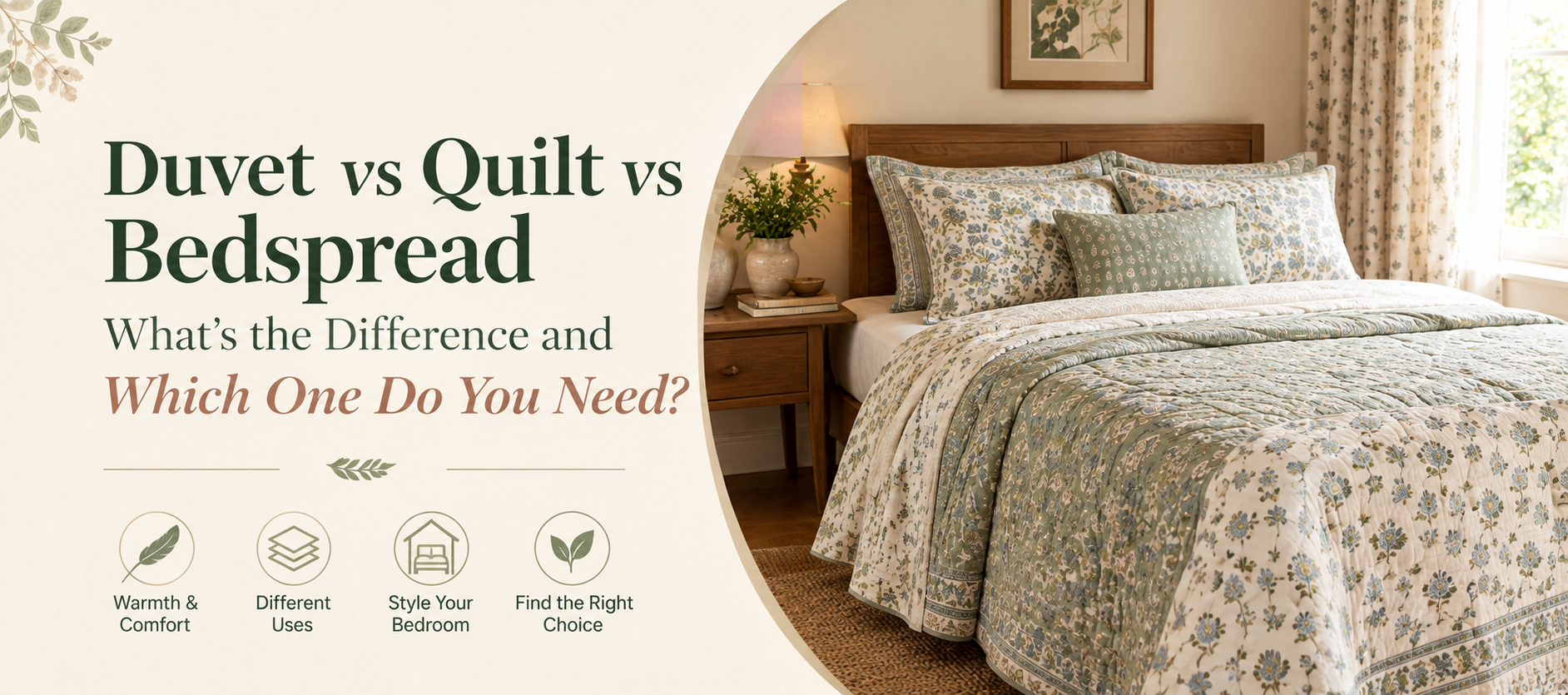
Duvet vs Quilt vs Bedspread: What's the Difference and Which One Do You Need?
September 11th, 2026 -
 August 26th, 2026