

Why More UK Homeowners Are Choosing Handmade Home Décor Over Mass-Produced Products
Walk into a British home today and you will notice a quiet shift taking place. The identical cushions, the flat-pack throws, the printed cotton that feels papery after two washes — all of it is slowly being replaced by something with more soul. Homeowners across the UK are turning away from factory-made soft furnishings and choosing pieces with a story behind them. This growing preference for handmade home decor UK shoppers can trust reflects a broader change in how people think about the things they bring into their homes.
This shift is not simply a passing design trend. It touches on sustainability, craftsmanship, comfort, and a desire for individuality that mass production simply cannot offer. Below, we look at why more UK homeowners are moving towards artisan-made textiles, what actually separates handcrafted pieces from their factory-made counterparts, and how small, considered choices in bedding, dining linen, and soft furnishings can transform the feel of an entire home.
Why Mass-Produced Décor Is Losing Its Appeal in British Homes
The Growing Appeal of Artisan-Made Textiles in the UK
For decades, convenience shaped how people furnished their homes. Big-box retailers offered speed and low prices, and most shoppers accepted the trade-off: identical products, thinner fabrics, and a shorter lifespan. That trade-off is losing its appeal. British consumers are increasingly drawn to pieces that carry a sense of place and process — textiles printed by hand, stitched by named artisans, and chosen for how they age rather than how cheaply they can be produced. A cushion cover, bedspread, or set of table linens made this way rarely looks or feels like anything sitting on a supermarket shelf.
What Sets Handcrafted Textiles Apart From Factory Production
The gap between handcrafted and mass-produced goods is not just aesthetic — it is procedural. A factory-printed textile passes through a machine in seconds, with rollers stamping identical patterns onto metres of fabric at high speed. A hand block printed piece, by contrast, is built motif by motif. An artisan dips a carved wooden block into natural dye and presses it onto the fabric by hand, repeating the motion hundreds of times across a single length of cloth. The result carries small, honest variations that no machine could ever replicate intentionally — proof that a human being, not an assembly line, made the piece in front of you.
Bringing Heritage Craft Into the Bedroom
Nowhere is this shift more visible than in bedding. Cotton quilts have become one of the clearest examples of how artisan textiles are reclaiming space in British bedrooms. Shoppers seeking cotton quilts online are often looking for something specific: a covering light enough for a mild UK autumn evening yet substantial enough to hold its shape through a proper winter. Traditional quilting techniques, refined over generations in Rajasthan, achieve exactly this balance — a breathable cotton fill wrapped in a hand-printed shell, stitched to stay soft and structured wash after wash.
The Story Behind Jaipur's Block Printing Tradition
Much of this craftsmanship traces back to Jaipur and the neighbouring town of Sanganer, two of India's most celebrated centres for textile printing. For centuries, families in this region have carved intricate patterns into rosewood blocks — florals, paisleys, geometric lattices — passing the skill down through generations rather than through training manuals. Each block is a small piece of engineering in itself, cut precisely enough that a full repeat pattern can be built across a length of fabric without visible seams. Understanding the patience behind a single printed metre makes it easier to see why these textiles command a different kind of respect than anything from an industrial press.
Why Natural Fabrics Matter for Everyday Comfort
Fabric choice matters as much as the printing method. Most artisan textile houses work almost exclusively with natural cotton, and there is good reason for that. Cotton is breathable, gentle against the skin, and genuinely suited to the UK's unpredictable climate — cool enough for a warm July night, yet capable of layering through a damp February. For customers exploring authentic indian quilts, natural cotton fill offers a meaningful advantage over synthetic alternatives: no static cling, no overheating, and no chemical smell straight out of the packaging. Over time, cotton also tends to soften rather than degrade, which is part of why these pieces are so often handed down rather than thrown away.
Dressing the Dining Table With Character
The dining table is another space where handcrafted textiles quietly change the atmosphere of a room. A plain, mass-produced tablecloth does its job and disappears into the background. A hand block printed one does the opposite — it becomes part of the setting, sparking conversation before the first course arrives. For hosts who care about the small details of entertaining, table linen is one of the easiest ways to introduce genuine craftsmanship without a full redesign.
Small Details That Elevate Everyday Meals
Napkins are a particularly good example of how a small textile choice can shift the feel of daily routines. Reaching for a set of block printed napkins instead of paper ones is a small, practical swap with a surprisingly large effect: less waste at the table, a softer texture against the hands, and a decorative touch that turns an ordinary dinner into something slightly more intentional. Because each napkin is printed individually by hand, no two are perfectly identical, giving a set of four the quiet character a uniform, machine-printed pack never achieves.
Sustainability and the Slow Fashion Movement in Home Furnishings
Sustainability is one of the strongest forces driving this change in buying habits. UK households are increasingly aware of the environmental cost of fast, disposable homeware — the synthetic fibres that shed microplastics in the wash, the short product lifespans, the sheer volume of textile waste generated by trend-driven décor. Artisan-made, natural-fibre textiles sit firmly on the other side of that equation, produced in smaller batches using techniques that require far less industrial processing than synthetic manufacturing. Choosing these pieces is as much an environmental decision as an aesthetic one, aligning with the broader slow-fashion philosophy reshaping how people furnish their homes.
Choosing Bedding That Feels as Good as It Looks
Beyond quilts, bedspreads offer another route into this world of considered, artisan-made textiles. A well-chosen block print bedspread can transform a bedroom instantly, adding pattern, colour, and texture without the bulk of a full duvet set. Because these pieces are made from breathable cotton, they work equally well as a lightweight summer cover or as an extra layer through the colder months, making them one of the more versatile pieces a UK homeowner can add to a bedroom.
Layering Textures for a Considered Bedroom
Once the main bedspread is in place, layering becomes the next step towards a truly finished room. A folded throw at the foot of the bed, a coordinating cushion in a complementary print, or a lighter cotton dohar for warmer nights all add depth without cluttering the space. This layering approach is a hallmark of considered interior styling, and it works particularly well with handcrafted textiles because subtle variations between individually printed pieces prevent a room from ever looking too matched or showroom-like.
The Case for Crisp, Breathable Sleep
For those who prefer a cleaner, more tailored look, percale weaves offer a compelling alternative to heavier bedding fabrics. Genuine cotton percale bedding is woven in a tight, one-over-one-under structure that produces a crisp, matte finish and a notably cool feel against the skin — the same qualities that make percale a favourite in boutique hotels. Combined with hand block printing, percale bedding becomes something more distinctive still: a hotel-style sleep surface with genuine artisan character, rather than the flat uniformity of standard high-street sheeting.
Why Provenance Matters When Buying Bedding
Knowing where a textile comes from, and who made it, has become an increasingly important part of the buying decision for UK shoppers. A piece with a clear artisan origin carries a different kind of value than one with an anonymous supply chain — it comes with a story that can be shared, a technique that can be appreciated, and a tangible connection to the people whose skill produced it. This sense of provenance is often what turns a simple purchase into a genuinely meaningful addition to a home.
Completing the Look With Table Linen
For homeowners who want a fully coordinated look, table linen is often the finishing touch. A well-chosen set of indian tablecloths online can tie a dining space together, echoing the same block-print motifs found in a home's cushions, quilts, or bedspreads. With sizes ranging from compact four-seater cloths to long banquet-style lengths, it is straightforward to find a piece that fits a table properly rather than settling for an awkward off-the-shelf size.
Supporting Artisan Communities With Every Purchase
There is also a human dimension to this shift worth remembering. Every hand block printed textile represents real, skilled labour — a named artisan working within a long-standing craft community, rather than an anonymous factory line. Choosing handmade textiles over mass-produced alternatives directly supports the livelihoods of these craftspeople and helps keep centuries-old techniques alive for future generations. For UK shoppers who care about where their money goes, that is often just as compelling a reason to buy artisan-made pieces as the appeal itself. It is this combination — genuine sustainability, lasting quality, and a direct link to skilled craft communities — that continues to draw more homeowners towards handmade home decor UK retailers who can demonstrate real provenance behind every piece they sell.
Frequently Asked Questions
What makes handmade home décor different from mass-produced alternatives?
Handmade décor is produced individually using traditional techniques such as hand block printing, resulting in natural variations, richer texture, and genuine craftsmanship. Mass-produced items are machine-made in bulk, offering uniformity but lacking the character, durability, and story behind each handcrafted piece.
Are handcrafted cotton textiles suitable for the UK climate?
Yes. Natural cotton is breathable and temperature-regulating, making it ideal for the UK's changeable weather. It stays comfortable during warmer months and layers well in colder seasons, offering year-round versatility that many synthetic fabrics simply cannot match.
How do I care for hand block printed textiles?
Wash gently in cold or lukewarm water using a mild, colour-safe detergent, and avoid bleach or harsh chemicals. Air-drying in the shade helps preserve both the vibrancy of the print and the strength of the cotton fabric over repeated washes.
Why do handmade textiles cost more than high-street alternatives?
Handmade textiles reflect the time, skill, and labour involved in traditional techniques like hand block printing and hand quilting. Each piece takes considerably longer to produce than a machine-printed equivalent, and pricing reflects fair compensation for skilled artisan work rather than bulk manufacturing.
Can handmade home décor really be considered sustainable?
Yes. Handcrafted textiles are typically made from natural fibres using low-impact, small-batch production methods that require far less industrial processing than synthetic manufacturing. This slower, more considered approach generates less waste and supports a genuinely more sustainable model of home furnishing.
-

How to Build a Timeless Bedroom with Layered Cotton Textiles
August 24th, 2026 -

How to Style Block Printed Accessories with Everyday Outfits
August 21st, 2026 -
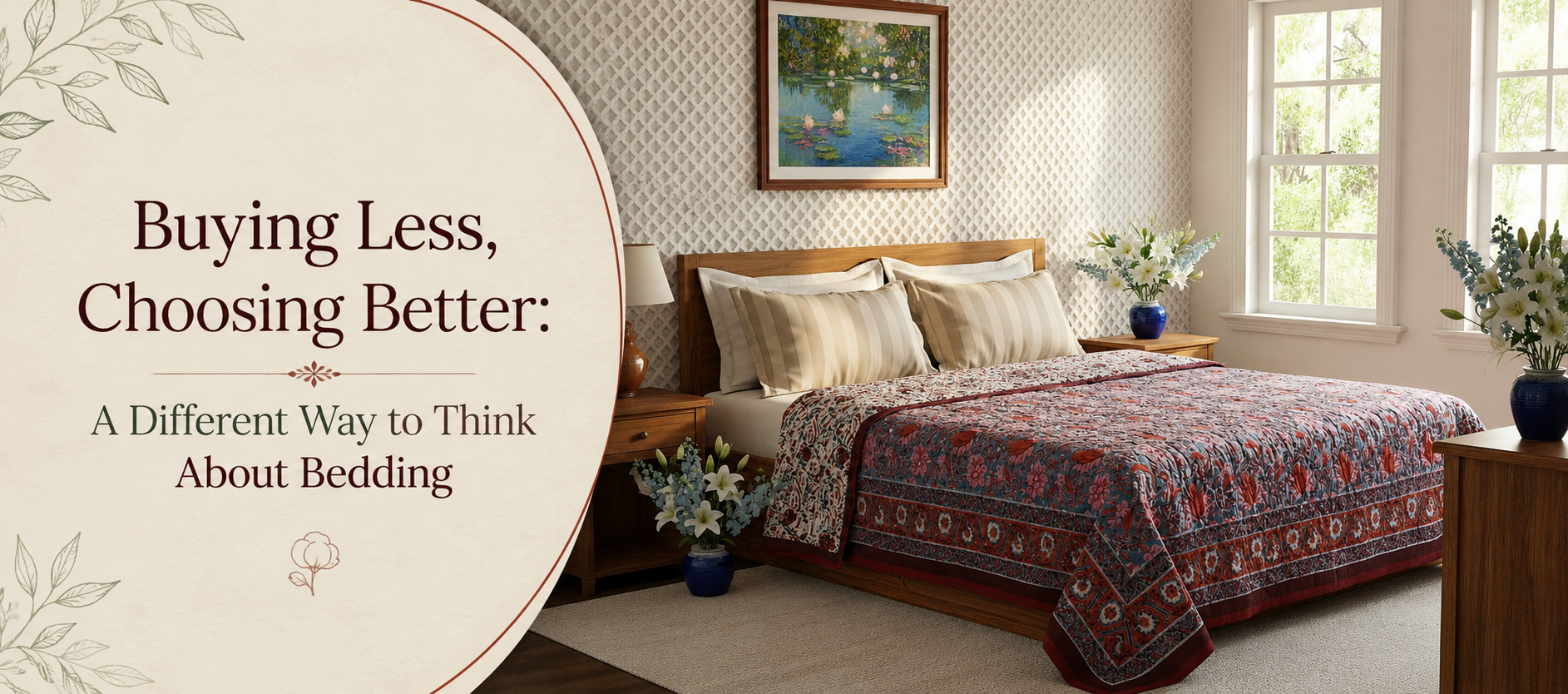
Buying Less, Choosing Better: A Different Way to Think About Bedding
August 20th, 2026 -
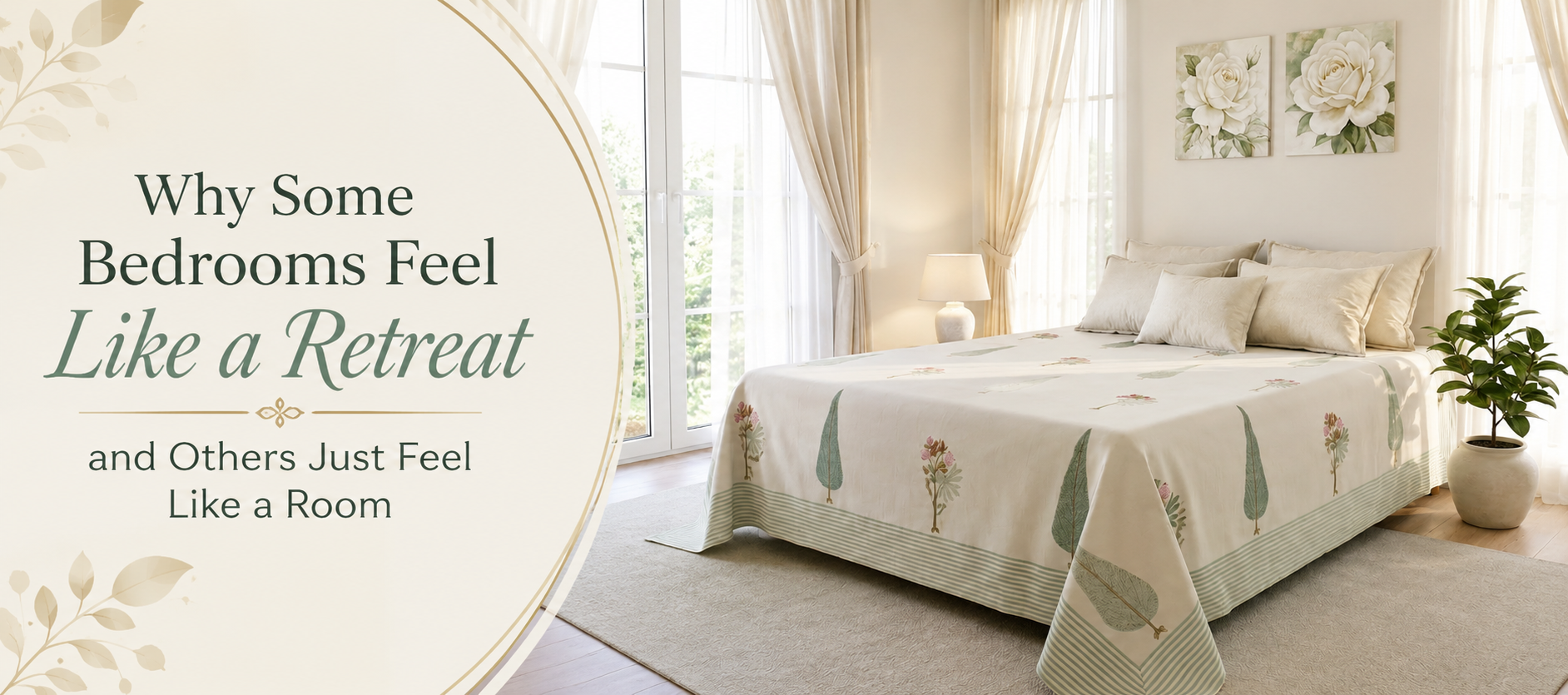
Why Some Bedrooms Feel Like a Retreat and Others Just Feel Like a Room
August 20th, 2026 -

How to Mix Indian Block Prints with Scandinavian Interior Design
August 14th, 2026