

Why Your Dining Table Looks Incomplete — And the Artisan Secret to Fixing It
A beautifully arranged dining table is more than just a place to eat — it is a reflection of your home’s personality, your sense of style, and the experience you want to create for your guests. Yet, many homeowners across the UK find that despite investing in elegant crockery or stylish furniture, their dining setup still feels unfinished. Something seems missing, but it’s difficult to pinpoint exactly what.
The truth is, the missing element is often not expensive furniture or luxury dinnerware — it is thoughtful, handcrafted table decor that brings cohesion, warmth, and character to the space. In this blog, we explore why your dining table may feel incomplete and reveal the artisan-inspired secret that interior stylists swear by to elevate everyday dining into an experience.
What Makes a Dining Table Feel Incomplete?
Before we explore solutions, it is important to understand the underlying problem. Most dining tables lack visual layering and intentional styling. Without these elements, even the most expensive table can appear flat and uninspired.
Common issues include:
- Lack of texture and contrast
- Over-reliance on plain or synthetic materials
- Absence of a focal point
- Mismatch between table elements
- No connection to personal or cultural style
These gaps often result from relying on mass-produced items that lack depth and story. This is where handcrafted table decor plays a transformative role.
The Artisan Secret Interior Designers Don’t Talk About Enough
Interior designers consistently use one powerful yet understated approach — incorporating handcrafted, culturally rich textiles into dining spaces. These elements instantly add dimension, authenticity, and a sense of intentional design.
Unlike factory-made décor, handcrafted pieces carry subtle imperfections, intricate detailing, and a human touch that machines simply cannot replicate. These characteristics create visual interest and emotional connection.
Whether it’s a handwoven runner, a block-printed fabric, or artisanal napkins, these details bring life to your dining table in a way that feels effortless yet impactful.
How Handcrafted Table Decor Transforms Your Dining Experience
Adding handcrafted table decor is not just about aesthetics — it enhances the overall dining experience. From everyday meals to special occasions, these elements create an inviting atmosphere that encourages people to gather and connect.
1. Adds Depth and Texture
Flat surfaces often make dining tables look dull. Introducing handcrafted textiles introduces layers — soft fabrics, detailed patterns, and tactile richness that elevate the visual appeal.
2. Creates a Cohesive Look
When thoughtfully chosen, artisanal pieces tie together different elements on the table, from plates to centrepieces, creating harmony rather than visual chaos.
3. Brings Cultural and Artistic Value
Handcrafted pieces often reflect heritage techniques, such as traditional printing or weaving methods. This adds a narrative to your décor, making it more meaningful.
4. Enhances Everyday Dining
You don’t need a special occasion to enjoy a beautiful table. Incorporating artisan décor transforms even a simple meal into a refined experience.
Why UK Homes Are Embracing Artisan Dining Aesthetics
Across the UK, there is a growing shift towards sustainable and meaningful home styling. Consumers are moving away from fast décor and embracing products that are ethically made and rich in craftsmanship.
This shift aligns perfectly with handcrafted table decor, which offers:
- Eco-friendly materials like natural cotton
- Support for artisan communities
- Unique, non-replicable designs
- Long-lasting quality
As a result, dining spaces are becoming more personalised, intentional, and visually engaging.
The Role of Textiles in Completing Your Dining Table
Textiles are the foundation of a well-styled dining table. They set the tone, define the colour palette, and anchor all other elements. More importantly, they bridge the gap between functionality and aesthetics — ensuring your table feels intentional rather than accidental.
In modern UK homes, where open-plan dining areas are increasingly common, textiles also help visually separate the dining space from the rest of the room. This subtle zoning effect makes your table feel like a curated focal point rather than just another surface.
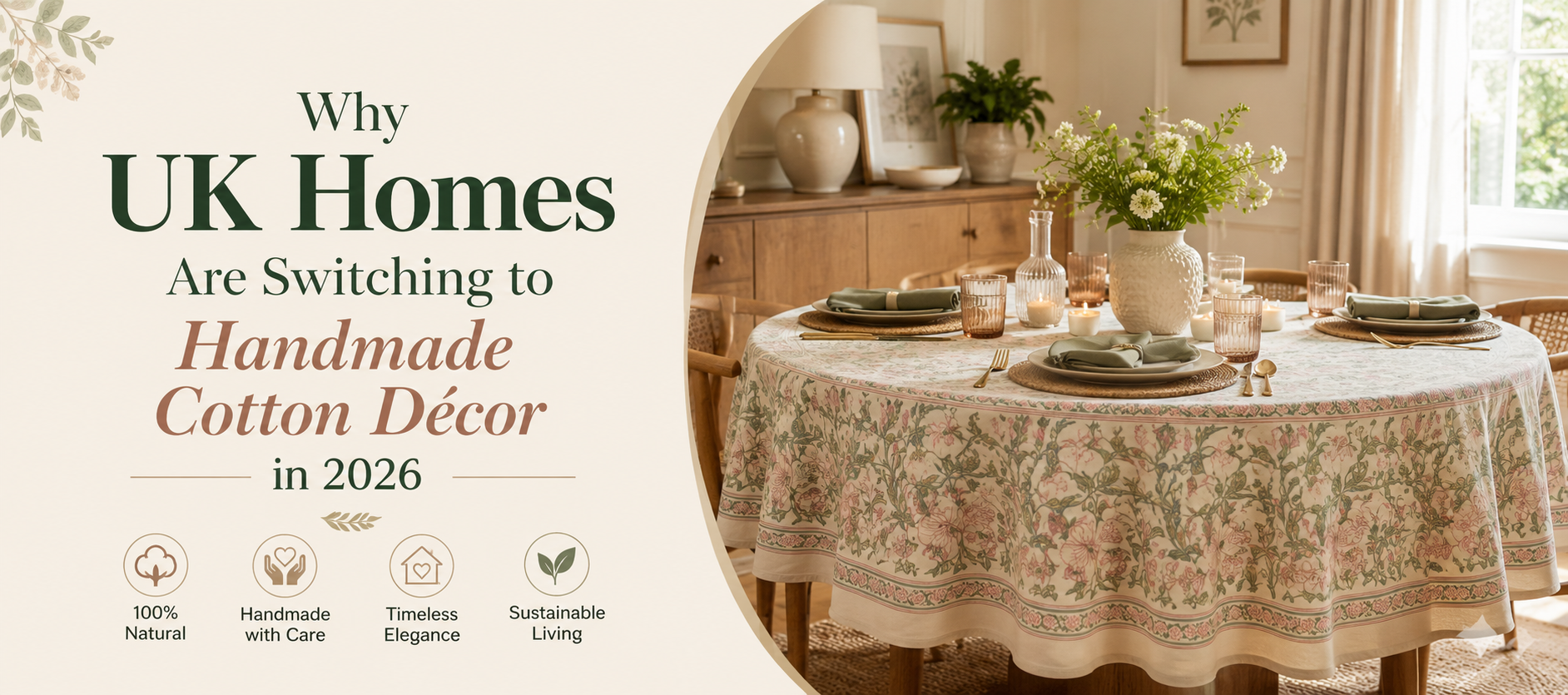
Tablecloths: The Base Layer: A well-chosen tablecloth acts as the canvas for your entire setup. Options like Indian Tablecloths Online offer intricate designs that instantly elevate the table’s appearance. Beyond aesthetics, they also protect your table surface and create a softer, more inviting dining environment.
Statement Pieces with Character: Using a Block Print Cotton Tablecloth introduces traditional artistry and subtle patterns that create visual interest without overwhelming the space. These handcrafted details often become conversation starters, adding depth to your dining experience.
Functional Elegance: Choosing rectangle tablecloths ensures a structured and tailored look, especially for modern dining tables. The clean lines help maintain symmetry, which is key to achieving a polished and organised aesthetic.
Flow and Coverage: For larger tables, Long tablecloths add drama and sophistication while maintaining balance across the setup. They are particularly effective for hosting occasions, where a more formal and cohesive look is desired.
Softening Round Tables: If your dining table is circular, Round table covers provide a seamless and elegant drape that enhances symmetry. This helps avoid awkward edges and ensures a harmonious visual flow.
Finishing Touches: Small details like Block Printed Napkins complete the look, adding consistency and refinement to your table setting. Coordinated napkins can tie together colours and patterns, making the overall arrangement feel thoughtfully curated.
When selected carefully, textiles do more than decorate — they tell a story, reflect craftsmanship, and create a sensory experience through touch and visual texture.
How to Style a Dining Table Like an Expert
Styling your dining table does not require professional training — just a thoughtful approach and attention to detail. In UK homes, where dining areas often blend with kitchens or living spaces, the goal is to achieve a refined balance between visual appeal and everyday practicality.
Start with a Neutral Base
Choose a textile that complements your existing interior without overpowering it. Neutral tones such as warm beige, soft greys, sage green, and classic ivory are particularly popular in UK interiors, as they create a calm and timeless foundation. This approach works especially well in British homes where understated elegance is often preferred over overly bold or dramatic styling.
Add Layers Gradually
Incorporate runners, placemats, or napkins to build dimension. Layering is essential for achieving a polished, designer-inspired look — it introduces depth and prevents the table from appearing flat or uninspired. For UK households, practicality is key, so opt for layers that are easy to maintain and suitable for both weekday meals and weekend gatherings.
Focus on Balance
Avoid overcrowding the table. Leave sufficient space for dining essentials while maintaining a visually pleasing arrangement. A well-balanced table ensures comfort, particularly in compact dining areas common in many UK homes. Consider proportion carefully — extend styling elements across longer tables, while keeping smaller tables minimal and uncluttered.
Introduce a Centrepiece
This could be fresh seasonal flowers, a simple ceramic vase, or candles that create a warm and inviting focal point. In the UK, seasonal styling works beautifully — think fresh tulips in spring, greenery in summer, dried florals in autumn, and candles during winter months. The centrepiece should enhance the table without obstructing conversation, ensuring both style and functionality.
Mix Patterns Thoughtfully
Handcrafted textiles often feature intricate patterns — balance them with simpler elements for a cohesive look. In UK interiors, subtle pattern mixing is preferred, often combining delicate prints with understated plains. Stick to a consistent colour palette to maintain harmony. A refined mix of patterns adds interest without overwhelming the space.
Consider Lighting and Ambience
Lighting plays a crucial role in how your dining table is experienced. Soft, warm lighting is particularly important in UK homes, where natural light can be limited during certain seasons. Candles, pendant lights, or soft ambient lighting can enhance the textures of your textiles while creating a cosy and inviting dining atmosphere — especially during evening meals.
Adapt Styling for Everyday vs Occasions
Your everyday table setting should remain simple, functional, and easy to maintain. For special occasions such as Sunday roasts, festive dinners, or gatherings with friends, you can elevate the look with additional layers, coordinated napkins, and statement centrepieces. This adaptability ensures your dining table remains practical for daily use while still offering the flexibility to create a more refined setting when entertaining guests.
The Psychology Behind a Well-Styled Dining Table
A thoughtfully styled dining table influences mood and behaviour. It creates a sense of comfort, encourages conversation, and enhances the overall dining experience.
Studies in home design psychology suggest that visually appealing spaces can:
- Improve relaxation during meals
- Encourage longer, more meaningful gatherings
- Create a sense of pride in your home environment
This is why investing in handcrafted table decor is not just about appearance — it is about enhancing everyday living.
Common Mistakes to Avoid
While styling your dining table, avoid these common pitfalls:
- Using overly synthetic materials
- Ignoring proportion and scale
- Overloading the table with décor
- Choosing mismatched elements
- Neglecting texture and layering
By focusing on quality over quantity, you can achieve a sophisticated and timeless look.
Why Handcrafted Table Decor Is Worth the Investment
Unlike mass-produced alternatives, handcrafted pieces offer durability, uniqueness, and a story. They age beautifully and often become timeless additions to your home.
Additionally, they align with modern values of sustainability and ethical consumption, making them a conscious choice for today’s homeowners.
Final Thoughts
If your dining table feels incomplete, the solution is not necessarily more décor — it is better, more meaningful décor. Incorporating handcrafted table decor brings depth, authenticity, and warmth that transforms your dining space effortlessly.
By embracing artisan textiles and thoughtful styling, you can create a dining table that not only looks complete but also feels inviting, personal, and timeless.
FAQs
1. What is the easiest way to upgrade a dining table?
The simplest way is to introduce high-quality textiles such as a handcrafted tablecloth or napkins, which instantly add texture and style.
2. Why does my dining table look plain even with decorations?
This usually happens due to a lack of layering and texture. Incorporating handcrafted elements helps create depth and visual interest.
3. Are handcrafted table textiles suitable for everyday use?
Yes, especially those made from natural materials like cotton. They are durable, easy to maintain, and enhance daily dining experiences.
4. How do I choose the right tablecloth size?
Select a size that allows for a balanced drop on all sides. This ensures both functionality and aesthetic appeal.
5. Is handcrafted table decor worth the investment?
Absolutely. It offers long-term value, unique design, and supports sustainable and ethical production practices.
-
 September 18th, 2026
 -
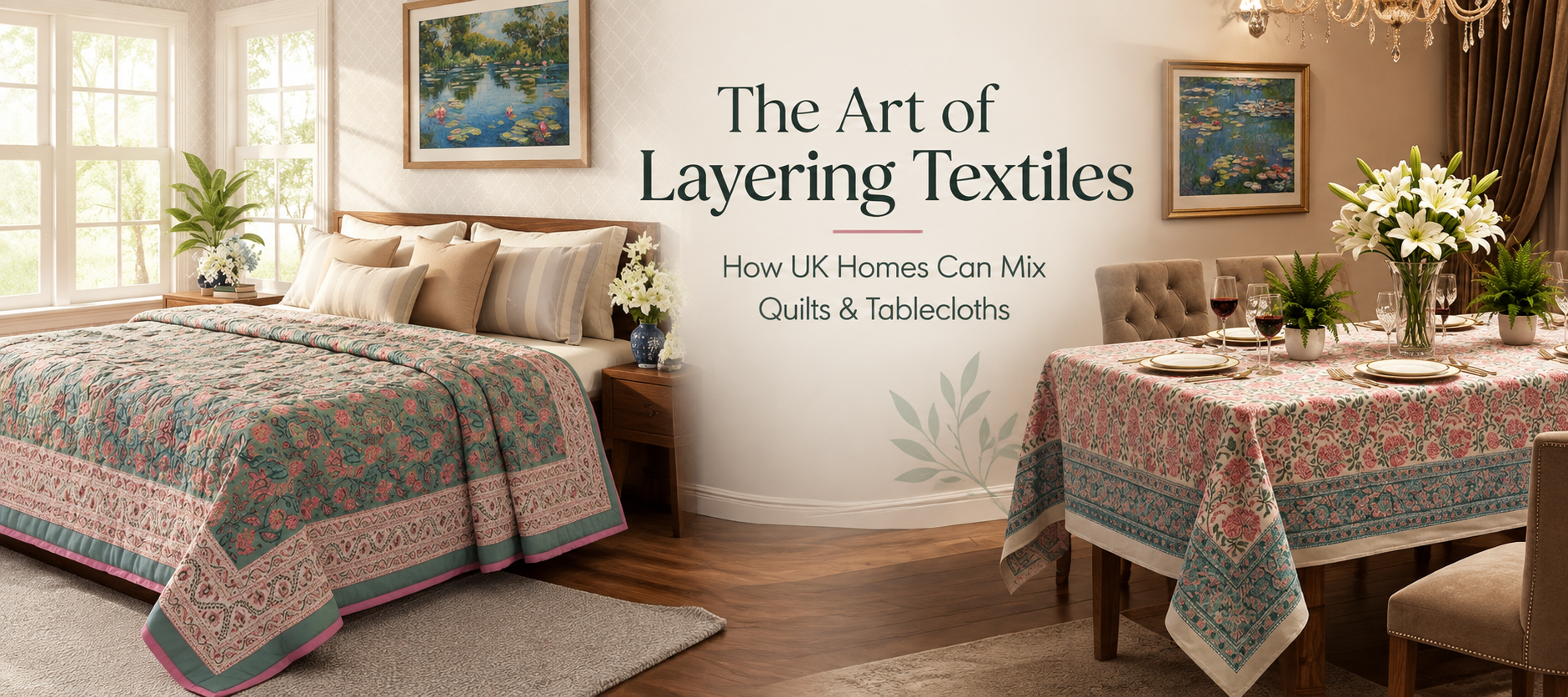
The Art of Layering Textiles: How UK Homes Can Mix Quilts & Tablecloths
September 11th, 2026 -
Duvet vs Quilt vs Bedspread: What's the Difference and Which One Do You Need?
September 11th, 2026 -
 August 26th, 2026