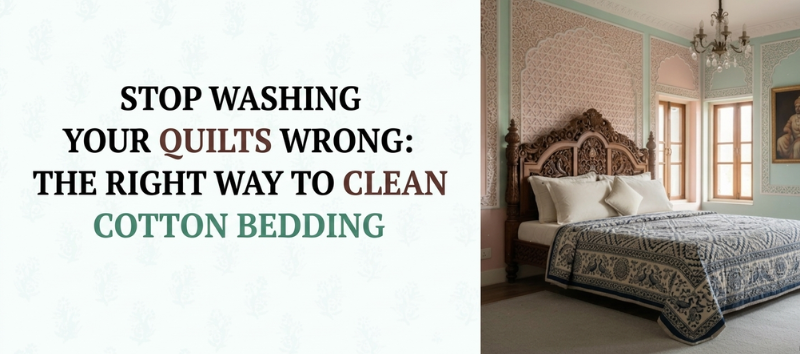
An Expert Guide to Preserving Hand-Block Printed Textiles in the UK Climate.
In the United Kingdom, where the shift from damp autumns to crisp winters necessitates high-quality bedding, many homeowners are moving away from synthetic duvets toward the breathable, artisanal charm of Indian Quilts. However, a common problem persists: these handcrafted masterpieces are often treated like standard, mass-produced machine linens. If you have noticed your vibrant patterns fading or the cotton batting becoming lumpy, you are likely washing your quilts wrong.
Proper maintenance of heritage textiles is not just about cleanliness; it is about preservation. When you invest in authentic Cotton Quilts Online, you are purchasing a piece of functional art. These items are crafted using natural dyes and hand-stitched techniques that require a nuanced approach to care. This guide will walk you through the professional standards of cleaning and storing your premium bedding to ensure it remains a centerpiece of your home for generations.
The Anatomy of Artisan Bedding: Why Standard Washing Fails
To care for your bedding, you must first understand its construction. Unlike factory-made polyester fills, authentic block print quilts from Roopantaran feature high-grade cotton voile and hand-fluffed cotton batting. Standard UK washing cycles—often set at 40°C or 60°C with high-spin speeds—are designed for high-tensile synthetic fibres, not delicate hand-stamped cotton.
The Risk of "Bleed and Break"
Natural dyes used in traditional Indian craftsmanship are "living" colours. Excessive heat or harsh biological detergents break the molecular bond between the dye and the fibre, leading to premature fading. Furthermore, the high-speed centrifugal force of a standard UK washing machine can shift the internal cotton layers, leading to "bunching," particularly in larger King Size Quilts where the weight of the water increases the mechanical stress on the hand-stitching.
Step-by-Step: The Correct Way to Wash Your Quilt
The golden rule for artisanal bedding is: Wash rarely, refresh often. Cotton is naturally antimicrobial and breathable; it does not require the same frequent laundering as synthetic sheets.
1. The Temperature Check
Never exceed 30°C. In the UK, many "Eco" modes default to 30°C, which is ideal. Cold water prevents the cotton fibres from swelling and releasing the pigment. For your queen size quilts, ensure the drum is large enough to allow the quilt to move freely. If the machine is too small, the friction against the drum door can cause "scuffing" on the block print designs.
2. Detergent Selection (Non-Bio is Key)
In the UK, "Biological" detergents contain enzymes that break down proteins. While great for grass stains, these enzymes can eventually degrade the natural cotton fibres and dull the intricate designs of your indian quilts. Always opt for a gentle, non-biological, silk/wool-friendly liquid detergent.
3. The "Gentle Spin" Strategy
Avoid "Heavy Duty" or "Cotton" cycles. Instead, use the "Delicate" or "Hand Wash" setting. Set your spin speed to the lowest possible setting (typically 400-600 RPM). This removes enough excess water to prevent mildew without putting undue strain on the hand-quilting threads.
Drying in the UK Climate: Avoiding the "Damp Smell"
Drying is where most damage occurs. In the UK, the temptation to use a tumble dryer during winter is high. However, high heat is the enemy of the Block Print Quilts.
- Flat Dry Only: Never hang a wet quilt on a washing line by its corners. The weight of the wet cotton will stretch the fabric and snap the delicate hand-quilting. Lay it flat across a large drying rack (airer).
- The Indoor Airing Secret: If drying indoors, use a dehumidifier in the room. This pulls moisture from the air quickly, preventing that "musty" smell that can plague thick King Size Quilts in British homes.
- Avoid Direct Sunlight: While UV light is a natural disinfectant, direct British "summer" sun (on those rare clear days) can bleach natural dyes. Dry your quilts in a shaded, well-ventilated area.
Professional Storage: Preventing Fading and Pests
When the seasons change and you swap your heavy winter layers for lighter throws, how you store your twin size quilts matters.
The "No Plastic" Rule
Never store your cotton bedding in plastic vacuum bags or "space bags." Cotton needs to breathe. Plastic traps residual moisture, which—combined with the fluctuating humidity in UK lofts or cupboards—creates a breeding ground for mildew and yellowing. Instead, wrap your quilts in a plain white cotton sheet or a breathable muslin bag.
The Fold vs. The Roll
To prevent permanent creases that weaken the fibres, try "Rolling" your quilts rather than folding them into tight squares. If you must fold them, ensure you refold them every few months to change the pressure points. This is especially vital for Queen Size Quilts, which have a larger surface area prone to creasing.
Why Quality Materials Matter
When you browse cotton quilts online, the quality of the base fabric determines how well the item survives the wash. Roopantaran’s commitment to "Slow Fashion" means we use long-staple cotton that resists pilling and "bleeding" better than cheaper alternatives. Whether you are dressing a guest room with Twin Size Quilts or upgrading your master suite, choosing artisan-made goods is an investment in durability.
Frequently Asked Questions (FAQs)
1. Can I dry clean my Indian Quilts?
While professional dry cleaning is an option, we recommend "Green" or "Eco" dry cleaners who avoid harsh perchlorethylene (Perc). Traditional dry cleaning chemicals can sometimes strip the natural softness of the cotton batting.
2. How do I remove a stain without washing the whole quilt?
Spot cleaning is best. Use a damp cloth with a tiny drop of non-bio detergent and dab (don't rub) the area. This preserves the integrity of the surrounding block print.
3. My quilt has a slight "earthy" smell when it arrives. Is this normal?
Yes! Authentic Indian Quilts often use traditional vegetable dyes and are sun-dried in Jaipur. This natural scent will dissipate after 24 hours of airing out in a well-ventilated room.
4. Are these quilts suitable for UK winters?
Absolutely. Our king size quilts are filled with pure cotton batting, which provides excellent thermal insulation while remaining breathable, making them perfect for layering over a flat sheet.
5. Will the colours run during the first wash?
We use high-quality fixatives, but like all natural textiles, a very minimal "flush" of excess dye may occur. This is why we insist on washing separately in cold water for the first cycle.