

The Complete Journey of a Hand Block Printed Fabric
Hand block printing is more than a decorative technique. It is a slow, thoughtful process where every stage is shaped by skilled hands. At Roopantaran, we work closely with artisans who keep this centuries-old craft alive while creating home furnishing, quilts, fabrics, and garments for modern homes and wardrobes. If you have ever wondered how a simple piece of cotton becomes a beautifully patterned textile, here is the complete journey from raw fabric to finished product.
1. Choosing the Fabric
The journey begins with selecting the right base fabric. Cotton is the most commonly used material in hand block printing because it absorbs dyes well and feels soft and breathable. At Roopantaran, we prefer natural fabrics that highlight the richness of traditional printing. The fabric is inspected for texture, weave, and consistency before moving to the next stage.
2. Preparing the Cloth
Raw fabric contains starch, oils, and impurities that can prevent dyes from absorbing evenly. To prepare it, artisans wash and treat the cloth thoroughly. This stage may include:
- Scouring Removing natural oils and residues.
- Bleaching (if needed) Lightening the fabric for brighter colors.
- Drying and stretching Ensuring the fabric is smooth and ready for printing.
Proper preparation is essential because it helps the dye bind evenly and keeps the print looking crisp.
3. Designing the Pattern
Before printing begins, the pattern is planned carefully. Traditional motifs may be inspired by flowers, leaves, paisleys, geometric shapes, or regional art styles. The design is often separated into different layers, especially when multiple colors are involved. Each color usually requires its own wooden block.
4. Carving the Wooden Blocks
One of the most fascinating parts of the process is block carving. Skilled craftsmen carve the design into seasoned wood, traditionally teak or sheesham. The block must be precise because even a small mistake can affect the final pattern. Tiny grooves and raised surfaces are created so the block can hold and transfer dye accurately. These blocks are durable and can be used for years, carrying the mark of the artisan who carved them.
5. Preparing the Dyes
Dyes are mixed carefully to achieve the desired shades. Many traditional workshops use natural dyes made from plants, minerals, and other organic sources, while some also work with modern eco-friendly pigments for consistency. The dye must have the right thickness. Too watery, and the print spreads. Too thick, and the block does not release the color properly.
6. Printing the Fabric
Now comes the heart of the craft. The fabric is spread tightly on a long padded table. The printer dips the carved block into dye, taps it to remove excess color, and presses it firmly onto the cloth. Each block placement is done by hand, one impression at a time. The artisan aligns the pattern carefully so the design flows seamlessly across the fabric. For multicolored prints, the process is repeated with different blocks and dyes. This requires remarkable patience and accuracy. A single large fabric piece may involve hundreds of individual block impressions.
7. Drying and Setting the Colors
After printing, the fabric is left to dry naturally. Sunlight and air help the colors settle into the fibers. Depending on the dye type, the fabric may then undergo steaming, washing, or fixing treatments to improve color fastness. This ensures the print remains vibrant even after regular use and washing.
8. Washing and Finishing
Once the colors are fixed, the fabric is washed again to remove excess dye. It is then dried, ironed, and inspected for quality. Any irregularities are checked by hand. In true handmade textiles, slight variations are not flaws but part of the fabric’s character. They reflect the human touch behind each piece.
9. Crafting the Final Product
The printed fabric is now ready to become something useful and beautiful. At Roopantaran, artisans transform these fabrics into:
- Home furnishing pieces such as cushion covers, table linens, and curtains
- Soft, lightweight quilts and dohars
- Yardage fabrics for creative projects
- Comfortable garments that celebrate traditional craftsmanship
Each product is cut and stitched with care so the print placement enhances the final design.
Why This Process Matters
Hand block printing is slow by modern manufacturing standards, but that is exactly what makes it special. Every stage depends on human skill, patience, and attention to detail. When you choose a hand block printed product from Roopantaran, you are not just buying fabric. You are supporting:
- Traditional Indian craftsmanship
- Artisan communities and family-run workshops
- Sustainable, small-batch production
- Textiles with individuality and soul
No two pieces are ever perfectly identical, and that uniqueness is part of their beauty.
Bringing the Journey Home
The next time you hold a hand block printed quilt, garment, or home furnishing, take a moment to notice the tiny details in the pattern. Each motif was stamped by hand, each color layered carefully, and each piece shaped through a long tradition of craftsmanship. At Roopantaran, we are proud to carry this journey forward by bringing authentic hand block printed textiles into everyday life.
-
 September 18th, 2026
 -
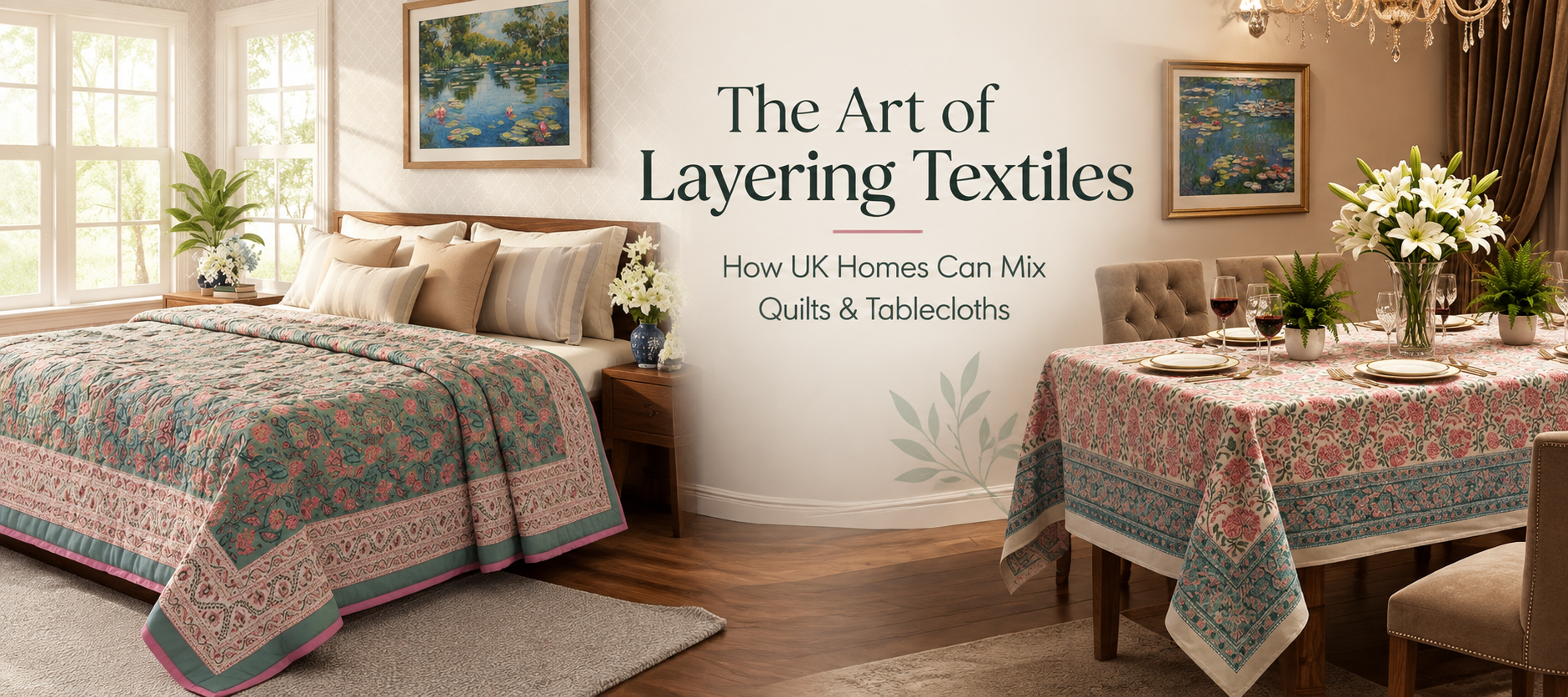
The Art of Layering Textiles: How UK Homes Can Mix Quilts & Tablecloths
September 11th, 2026 -
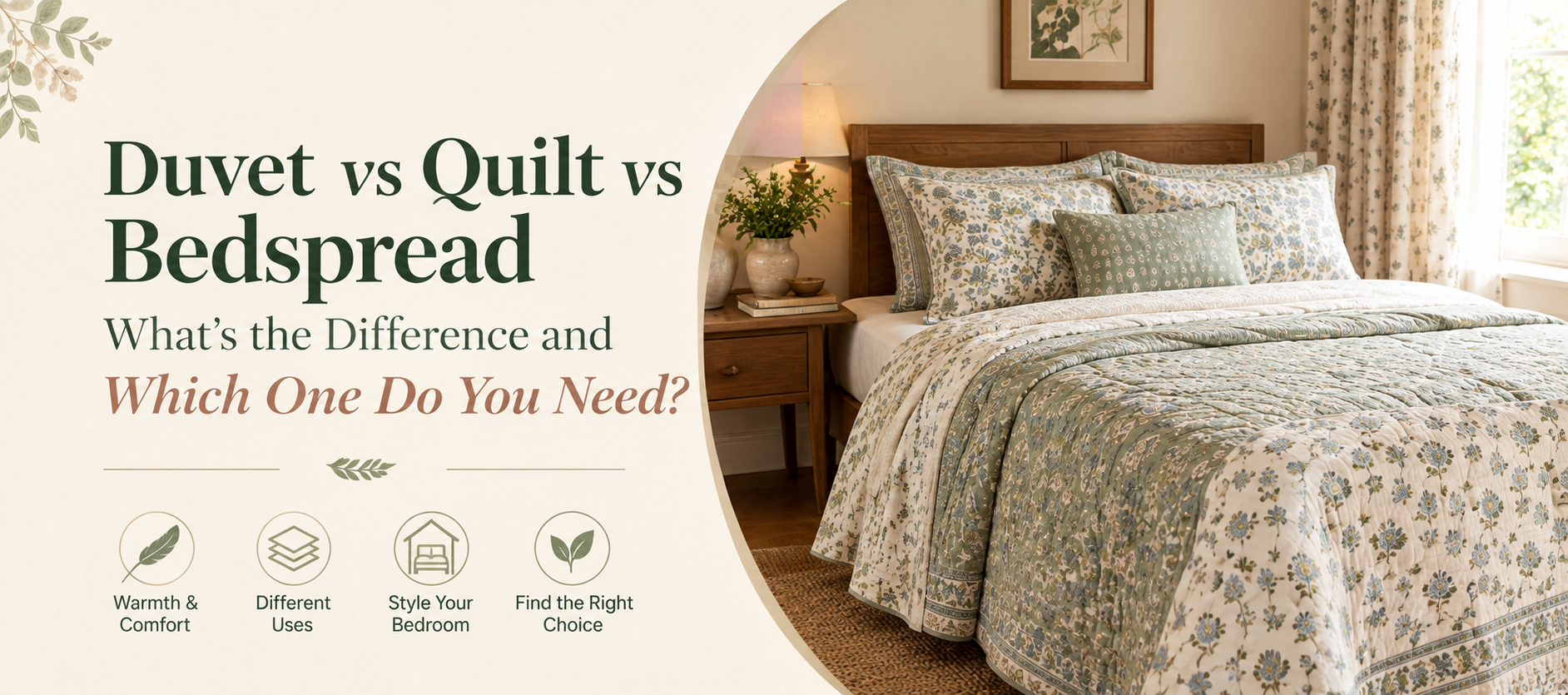
Duvet vs Quilt vs Bedspread: What's the Difference and Which One Do You Need?
September 11th, 2026 -
 August 26th, 2026