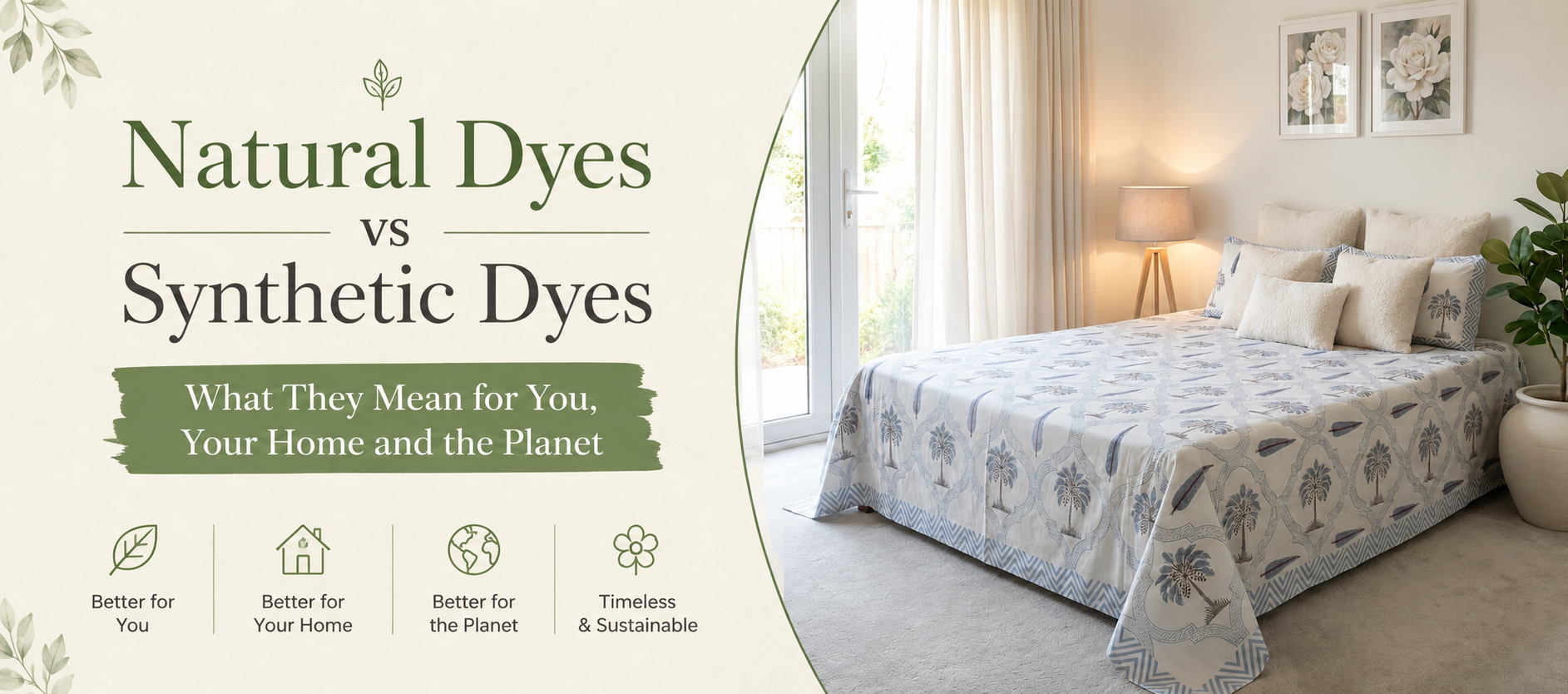
Natural Dyes vs Synthetic Dyes: What They Mean for You, Your Home and the Planet
The colours in your home tell a story. From the warm terracotta of a quilted bedspread to the soft indigo running through a cotton throw, every shade you live with was put there by a dye. But how that colour was made — and what it leaves behind — matters far more than most of us realise.
Over the last few decades, synthetic dyes have dominated the global textile industry, prized for their consistency and low cost. Yet awareness is growing, particularly among UK consumers, about the environmental and health consequences of chemically produced colour. Natural dyes, once considered obsolete, are quietly making a well-deserved return — and for good reason.
This guide unpacks the difference between the two approaches to colouring fabric, what each means for your skin and your home environment, and why the choice matters beyond aesthetics.
A Brief History: How We Learned to Colour Cloth
Humans have been dyeing textiles for more than 4,000 years. Before the Industrial Revolution, every colour came from the natural world — roots, bark, berries, minerals, and even insects. Indigo from plants yielded rich blues. Madder root produced warm reds. Turmeric and pomegranate rinds created golden yellows. These techniques were refined across cultures and generations, particularly in textile-rich regions such as India, where artisans developed extraordinary mastery of natural colour.
Everything changed in 1856, when the first synthetic dye — mauveine — was accidentally discovered by a British chemist. What followed was a rapid industrialisation of colour. Synthetic dyes were cheaper to produce, easier to apply at scale, and capable of generating an almost unlimited range of vivid shades. By the mid-20th century, natural dyeing had been largely pushed to the margins of craft and heritage practice.
Today, we are in the middle of a reversal. Consumers, scientists, and designers are looking critically at what synthetic chemistry has cost us — and rediscovering what was lost when we abandoned the natural world as our palette.
What Are Natural Dyes Made From?
Natural dyes are extracted from plant, mineral, or animal sources. Common plant-based sources include:
- Indigo — sourced from the Indigofera tinctoria plant, used widely in South Asian textiles for centuries
- Madder root — produces reds and pinks
- Pomegranate rind — yields yellows and tans
- Turmeric — a warm golden yellow
- Henna — earthy browns and greens
- Weld and marigold — bright, warm yellows
In traditional Indian block printing — the technique at the heart of Roopantaran's work — natural dyes are paired with mordants (fixatives such as alum, tannins, or iron) to help the colour bond to the fibre. The result is a palette that is subtler and more complex than synthetic alternatives, with a depth that comes directly from the earth.
What Are Synthetic Dyes Made From?
Synthetic dyes are manufactured from petrochemicals — compounds derived from crude oil. The most common include azo dyes, reactive dyes, acid dyes, and vat dyes. These are engineered to be vivid, colourfast, and easy to apply in industrial volumes.
The chemicals used in their production — which can include mercury, lead, chromium, copper sulphate, benzene, and toluene — are far from benign. During the dyeing process, a significant proportion of the dye (typically 10 to 15 per cent) is not absorbed by the fabric and is discharged as effluent. In regions without adequate wastewater treatment infrastructure, this waste often enters rivers and groundwater directly.
Environmental Impact: The True Cost of Cheap Colour
The environmental footprint of synthetic textile dyeing is considerable. The global fashion and textile industry is responsible for approximately 20 per cent of industrial water pollution, much of it traceable to dye discharge. Rivers in major textile-manufacturing regions have, at times, run visibly coloured from dye waste, with devastating consequences for aquatic life, local farming, and human health.
Key environmental concerns with synthetic dyes include:
- Water contamination — heavy metals and chemical compounds in dye effluent are highly toxic to aquatic ecosystems
- Non-biodegradability — many synthetic dyes persist in the environment for extended periods
- Carbon-intensive production — manufacturing petrochemical dyes is energy-heavy and dependent on fossil fuel derivatives
- Soil degradation — contaminated wastewater can render agricultural land unproductive
Natural dyes, by contrast, are biodegradable and derived from renewable sources. The mordanting process can introduce some chemical elements (iron mordants, for instance, require careful handling), but the overall environmental burden is considerably lower when managed responsibly. Choosing naturally dyed textiles is one of the more meaningful steps a consumer can take in reducing the ecological footprint of their home.
Skin Health and Safety: What Touches Your Body Matters
For many UK shoppers, the question of what is in their fabric — and what it might do to their skin — has become increasingly pressing. Synthetic dyes can contain residues of toxic compounds, and some azo dyes break down to release carcinogenic aromatic amines. While regulations in the UK and EU restrict the use of the most hazardous synthetic dyes, the sheer variety of chemicals involved means that residues can remain in finished textiles.
Concerns are particularly acute for:
- Children and babies — whose skin is thinner and absorbs chemical compounds more readily
- People with sensitive skin or eczema — synthetic dye residues can aggravate skin conditions
- Anyone spending extended time in contact with dyed fabric — such as through bedding
Natural dyes, derived from plant and mineral sources, carry none of these concerns. They are inherently skin-friendly, particularly when used on natural fibres such as cotton. If you are choosing a queen size quilted bedspread for everyday use, the colouring method is as relevant as the fabric itself.
Colour Quality and Aesthetic Character
One of the most common misconceptions is that natural dyes produce dull or faded colours. In skilled hands, natural dyes yield tones of extraordinary richness and complexity — a quality that synthetic dyes, for all their vibrancy, cannot replicate.
The difference lies in depth. Synthetic dyes tend to produce flat, uniform colour. Natural dyes, because they are absorbed differently across individual fibres and interact with the unique properties of each plant source, create subtle variations within a single shade. It is this quality — a kind of visual warmth — that distinguishes artisan-made textiles from mass-produced alternatives.
This is especially apparent in block-printed cotton. When indigo or madder meets undyed cotton through a hand-cut wooden block, the resulting impression carries a texture and character that is impossible to replicate digitally or chemically. The slight imperfections, the variations in depth, the way the colour pools at the edges of a print — these are the signatures of a living craft.
That said, natural dyes do have genuine limitations. They are more susceptible to fading over time, particularly with heavy sun exposure or harsh washing. This is not a flaw so much as a characteristic — the colour evolves gently, rather than degrading sharply. Proper care (gentle washing, avoiding direct sunlight) preserves naturally dyed textiles very well.
What Happens When Naturally Dyed Textiles Are Washed?
A common concern from shoppers is how naturally dyed fabric behaves in the wash. Unlike some synthetic dyes, which can release chemical compounds into wastewater during every wash cycle, naturally dyed textiles break down into biodegradable compounds. The environmental impact of washing is therefore far lower.
For best results with naturally dyed bedding or home textiles:
- Wash on a cool or gentle cycle (30°C or below)
- Use a mild, pH-neutral detergent
- Avoid bleach entirely
- Air dry where possible, away from direct sunlight
- Wash dark and light colours separately for the first few washes
These guidelines apply equally to twin size quilts, throws, and any other naturally dyed textile in your home.
The Role of Traditional Dyeing in Artisan Textile Heritage
Natural dyeing is not simply an ecological choice — it is a cultural one. In Jaipur and across Rajasthan, the knowledge of natural dye sources, mordanting techniques, and colour combinations has been passed down through generations of artisan families. Each colour recipe is part of a living body of craft knowledge that connects contemporary textiles to centuries of Indian textile history.
When you choose a naturally dyed textile, you are participating in the continuation of that tradition. The artisan who dyed your cotton queen bedspread is drawing on knowledge developed and refined over hundreds of years. That is a very different proposition from purchasing a machine-dyed product in a factory setting.
This is why naturally dyed, hand-crafted textiles carry a premium — not because they are a luxury indulgence, but because they represent genuine skill, time, and cultural continuity. Slow fashion, at its best, is the opposite of disposability.
Comparing Natural and Synthetic Dyes at a Glance
Factor | Natural Dyes | Synthetic Dyes |
Source | Plants, minerals, insects | Petrochemicals |
Environmental impact | Low (biodegradable, renewable) | High (water pollution, non-biodegradable waste) |
Skin safety | Gentle, no toxic residues | Some residues may irritate sensitive skin |
Colour character | Complex, warm, evolving | Uniform, vivid, stable |
Colorfastness | Moderate (care dependent) | High |
Cultural value | Tied to artisan heritage and tradition | Industrial, standardised |
Carbon footprint | Lower | Higher (fossil fuel derived) |
Making an Informed Choice for Your Home
You do not need to overhaul your entire home to make more conscious choices about textile dyes. A few considered decisions — particularly around items you use daily or that come into close contact with your skin — can have a meaningful impact.
Bedding is the obvious starting point. The average adult spends roughly a third of their life in bed, in sustained contact with fabric. Whether you are looking for king size quilts or lighter summer options, the dye used in the textile is worth considering alongside thread count and fill weight.
Table linens and kitchen textiles are another sensible area to explore, given that synthetic dye residues in fabric can potentially migrate to food surfaces when wet. For bedroom and dining alike, naturally dyed cotton is a straightforward, aesthetically pleasing upgrade.
If you are new to naturally dyed textiles and want to start with something foundational, cotton percale bedding in natural or plant-dyed tones offers a clean, understated aesthetic that pairs well with almost any interior.
Block Printing and Natural Colour: A Perfect Partnership
There is a particular affinity between hand block printing and natural dyes. The technique — in which carved wooden blocks are pressed onto fabric by hand, repeat by repeat — was developed in regions where natural dye knowledge was already sophisticated. The two traditions evolved together.
A block print bedspread made with natural dyes carries both layers of that heritage. The pattern is hand-placed; the colour is drawn from the earth. The result is an object that is genuinely irreplaceable — not because it is precious, but because no factory process can replicate the judgment, rhythm, and accumulated skill that goes into its making.
This is what distinguishes artisan textiles from mass production. It is not merely a matter of aesthetics, though the aesthetic case is strong. It is about understanding where things come from, how they are made, and what they leave behind.
The Verdict: Natural Dyes vs Synthetic Dyes
The comparison between natural dyes vs synthetic dyes is, at its core, a comparison of two different relationships with the material world. Synthetic dyes represent the logic of industrial scale — consistent, efficient, and largely indifferent to origin or consequence. Natural dyes represent something older and more considered: colour that comes from the land, applied by hand, with knowledge accumulated across generations.
For UK consumers who care about what they bring into their homes — who they support with their spending, what their choices cost the planet, and what touches their skin each night — the direction of travel is clear. Naturally dyed, artisan-made textiles are not a compromise. They are, increasingly, the more intelligent option.
Frequently Asked Questions
Are natural dyes as colourfast as synthetic dyes?
Natural dyes are generally less colourfast than synthetic dyes, but with proper care — cool washing, avoiding direct sunlight, and using gentle detergents — naturally dyed textiles retain their colour well for many years. The slight colour evolution over time is considered a natural characteristic of the material.
Are synthetic dyes harmful to skin?
Some synthetic dyes, particularly certain azo dyes, can release compounds that irritate sensitive skin or cause allergic reactions. Residual dye chemicals in finished textiles are a concern for people with conditions such as eczema, and especially for children, whose skin absorbs external substances more readily than adults.
Do natural dyes require special washing instructions?
Yes. Naturally dyed textiles should be washed at low temperatures (30°C or below), with a pH-neutral or gentle detergent, and dried away from direct sunlight. These conditions help preserve both the colour and the integrity of natural fibres such as cotton.
Why do naturally dyed textiles cost more than mass-produced alternatives?
Natural dyeing is a labour-intensive process that requires sourcing plant or mineral materials, preparing mordants, and applying dye through careful, time-consuming methods. When combined with hand crafting techniques such as block printing, the total skill and time investment is substantial — which is reflected in the price.
How can I tell if a textile has been naturally dyed?
Naturally dyed textiles typically display subtle variations in tone and a warmth or depth that uniform synthetic colours lack. Brands that use natural dyes will usually say so clearly in their product descriptions. When in doubt, asking the brand directly about their dyeing methods is a reliable way to find out.
-

Why Hand Block Printed Home Furnishings Are Getting Popular in the UK
October 16th, 2026 -
 October 2nd, 2026
 -
 September 25th, 2026

