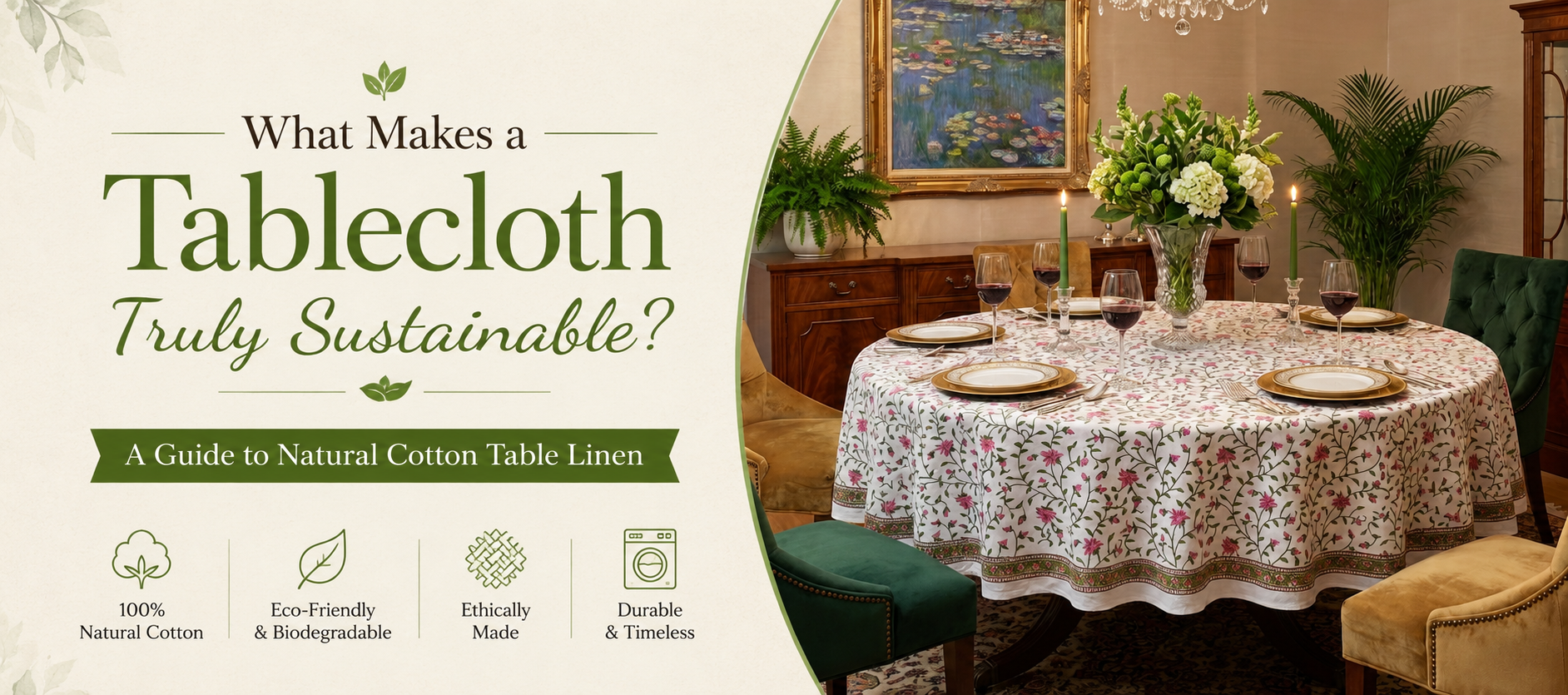
What Makes a Tablecloth Truly Sustainable? A Guide to Natural Cotton Table Linen
The dining table is more than a place to eat — it is where families gather, conversations linger, and memories are made. Yet the cloth we spread across it often goes unexamined. Most people buy a tablecloth based on colour or size, giving little thought to what it is made from, how it was produced, or what happens to it at the end of its life. That oversight has environmental consequences far larger than most of us realise.
If you are trying to make more intentional choices at home, the tablecloth is an excellent — and frequently overlooked — place to start. This guide breaks down exactly what gives a piece of table linen genuine sustainability credentials, why natural cotton sits at the heart of that story, and what to look for when choosing consciously made dining textiles in the UK.
Why Your Tablecloth Choice Matters More Than You Think
The global textile industry is one of the heaviest polluters on the planet. Synthetic fabrics — polyester, nylon, acrylic — are derived from petrochemicals, consume substantial energy in production, and shed microplastics every time they are washed. A polyester tablecloth that ends up in landfill can take up to 200 years to decompose, leaching chemicals into soil and groundwater throughout that time.
Conventional cotton is not automatically clean either. Traditionally grown cotton accounts for roughly 24% of global insecticide sales and 11% of pesticide sales, despite covering only about 2.5% of the world's agricultural land. That is a significant ecological footprint for something that sits on a dining table.
Choosing a genuinely eco-conscious tablecloth — one made with natural fibres, responsible dyes, and ethical labour — is a small act with a compounding positive impact. It reduces demand for harmful synthetics, supports sustainable farming, and keeps skilled artisans employed in communities where textile craft has been practised for generations.
What Does "Sustainable" Actually Mean for Table Linen?
Sustainability in textiles is not a single attribute — it is a spectrum covering material sourcing, production methods, dye processes, labour practices, and end-of-life biodegradability. Here is how each layer applies to table linen specifically.
Natural, Biodegradable Fibres
The fibre a tablecloth is made from determines its entire environmental trajectory. Natural fibres — cotton, linen, hemp — are plant-based, renewable, and biodegradable. When properly composted or disposed of, a 100% natural cotton tablecloth can break down within months, returning to the earth without leaving toxic residue. Synthetic or blended fabrics cannot make the same claim.
Among natural options, cotton — particularly organically grown or sustainably farmed cotton — is uniquely practical for table linen. It is soft, washable, hypoallergenic, and grows more comfortable with every wash. It also absorbs moisture readily, which is exactly the behaviour you want at a dining table.
Responsible Dyeing and Printing Techniques
Even a cloth made from organic cotton can carry an unsustainable footprint if it is dyed using azo-based synthetic dyes, which are known to release carcinogenic amines and contaminate waterways. Truly sustainable table linen uses low-impact, azo-free, or naturally derived dyes that are safe for people and the environment alike.
Hand block printing — the traditional Indian method of pressing hand-carved wooden blocks dipped in colour onto fabric — is one of the most environmentally gentle decorating techniques in textiles. It requires no electricity-intensive machinery, produces minimal waste, and can be executed with natural or low-impact pigments. The resulting patterns carry the slight, beautiful irregularity that only a human hand can create — something no factory print can replicate.
Ethical Production and Artisan Livelihoods
Sustainability is not only ecological — it is social. Table linen that is made in fair-wage workshops, by artisans who receive proper compensation and work in safe conditions, embeds human dignity into every metre of cloth. The slow fashion movement recognises that the people who make our textiles are as important as the materials they work with.
Jaipur, Rajasthan — a city with centuries of textile heritage — is one of the world's most concentrated centres of block printing and hand-stitching craft. When you buy table linen from artisans rooted in that tradition, you are not just purchasing a product; you are participating in the preservation of a living art form.
How to Identify a Genuinely Sustainable Tablecloth When Shopping in the UK
The British consumer market for home textiles is maturing rapidly when it comes to sustainability awareness, but greenwashing remains widespread. Here are the key questions to ask — and the signals to look for — before you buy.
Check the Fibre Content
Always read the label. A tablecloth described as "cotton feel" or "cotton-look" may still contain polyester. Look for 100% cotton, 100% organic cotton, or 100% natural fibre. Blends with 5–20% synthetic content are common and significantly affect biodegradability and microplastic shedding in the wash.
Look for Certifications
Third-party certifications help cut through marketing language. Key ones to look for when buying a sustainable tablecloth UK include:
- GOTS (Global Organic Textile Standard) — confirms the entire supply chain meets organic and ethical criteria.
- OEKO-TEX Standard 100 — certifies the finished textile has been tested for harmful substances.
- Fairtrade — ensures fair wages and safe conditions for producers.
Not every artisan brand will hold formal certifications — particularly small workshops in India — but a commitment to natural dyes, handcraft methods, and transparent sourcing can carry equal weight when accompanied by clear communication about production practices.
Ask About the Printing Method
Machine-printed tablecloths using reactive or synthetic dyes dominate the mass market. Handcrafted alternatives — particularly those using traditional block printing — are meaningfully different in their environmental impact. If a brand uses block print tablecloths, ask whether the inks are azo-free or naturally derived. Reputable artisan brands will answer this question without hesitation.
Consider the Shape and Size You Actually Need
Buying the right size the first time reduces waste. Rectangle tablecloths are the most versatile format and suit the vast majority of dining tables in UK homes. A standard 6-seater rectangular table typically takes a 60 × 90 inch cloth for a formal drop, or 52 × 70 inches for everyday use. If you have a circular table, a round table cover cloth will drape correctly without the bunching or excess fabric that comes from forcing a rectangular cloth onto a circular surface.
For long dining tables — common in open-plan kitchen-diners and farmhouse-style homes — long tablecloths in 90-inch or 108-inch lengths provide full coverage while maintaining an elegant, unfussy look.
The Case for Hand Block-Printed Cotton at the Dining Table
Among all the sustainable options available to UK consumers, hand block-printed cotton table linen occupies a unique position. It sits at the intersection of ecological responsibility, artisan heritage, and genuine visual beauty — qualities that mass-market alternatives simply cannot offer simultaneously.
A block print cotton tablecloth is never truly identical to another. The slight variation in pressure, the organic spread of pigment at the edges of a motif, the alignment of repeated stamps — these are the hallmarks of a human hand at work. That individuality is precisely what makes each piece worth treasuring rather than discarding.
From a practical standpoint, cotton block print cloths are machine-washable, become softer with repeated laundering, and hold colour well when washed on a cool cycle with mild detergent. They are equally at home on a kitchen table for weekday meals as they are at a laid dinner party setting, which is the sort of versatility that makes a single quality piece replace multiple cheaper ones over time.
Completing the Sustainable Table Setting: Napkins and Coordination
A sustainable approach to dining linen extends beyond the tablecloth itself. Single-use paper napkins are one of the most unnecessary contributors to household waste — a family of four can easily go through 500 paper napkins a year. Switching to cloth is one of the simplest, highest-impact changes a household can make.
Block printed napkins in matching or complementary cotton bring cohesion to a table setting without requiring a perfectly matched set. Because the block printing process produces slight natural variation, even napkins from the same print run look considered rather than corporate when placed together — a quality that elevates everyday dining without effort.
When choosing napkins to pair with a patterned tablecloth, a simple rule applies: match tone rather than motif. If your tablecloth features a warm terracotta and indigo print, napkins in plain indigo or unbleached natural cotton will create harmony without visual competition.
Caring for Natural Cotton Table Linen to Maximise Its Life
The most sustainable tablecloth is the one that lasts. Longevity is as much a function of care as it is of quality, and natural cotton responds particularly well to thoughtful maintenance.
- Wash at 30°C or 40°C — sufficient to clean thoroughly without stressing fibres or fading natural dyes.
- Use a gentle, plant-based detergent — harsh chemicals can break down natural dyes over time.
- Line dry when possible — tumble drying generates both energy use and wear on the fabric.
- Iron damp or use a steam iron — natural cotton smooths beautifully with heat and moisture, restoring a crisp, fresh appearance without chemical starch sprays.
- Treat stains promptly and gently — cool water and a mild soap applied quickly will lift most food stains before they set, avoiding the need for aggressive bleach-based treatments.
A well-maintained cotton tablecloth can remain in daily use for ten years or more. That longevity makes it economically and ecologically superior to replacing cheaper synthetic alternatives every one to two years.
Why More UK Households Are Moving Towards Artisan Table Linen
There is a visible shift happening in how British consumers think about home textiles. The combination of heightened environmental awareness, a growing appreciation for handmade goods, and increasing dissatisfaction with fast-fashion quality is driving demand for pieces that carry both story and substance.
Artisan-made table linen from traditional textile regions like Jaipur offers something the high-street simply cannot: authenticity. When a cloth has been hand-printed by a craftsperson who has spent years mastering their technique, using tools and designs with a cultural lineage stretching back centuries, it carries a different kind of value — one that is neither manufactured nor marketed.
For UK consumers seeking a genuinely sustainable tablecloth, the answer is rarely found in a supermarket aisle. It is found in the work of makers who have chosen craft over convenience, slow production over speed, and natural materials over synthetic shortcuts. That choice — made by the artisan and echoed in the consumer's purchasing decision — is what makes a tablecloth truly sustainable.
Final Thoughts
Sustainability in dining linen is not about perfection — it is about making progressively better choices. Moving from polyester to natural cotton is a significant step. Choosing hand block-printed over machine-printed is another. Opting for a single, well-made piece rather than a stack of disposable alternatives compounds that impact further with every meal shared around the table.
The next time you set the table, consider what is underneath the plates. A cloth made with care, from natural fibres, by skilled hands, in a tradition worth preserving — that is a tablecloth you can feel good about in more ways than one.
Frequently Asked Questions
Is natural cotton better than linen for a sustainable tablecloth?
Both are strong eco-friendly options, but they suit different needs. Natural cotton — particularly organic or sustainably farmed cotton — is exceptionally soft, affordable, widely available, and highly washable, making it ideal for everyday dining use. Linen (made from the flax plant) requires very little water to grow and becomes even more durable over time, but tends to be stiffer initially and comes at a higher price point. For most UK households looking for a practical, beautiful, and genuinely sustainable tablecloth, natural cotton is the more versatile starting point, especially when sourced from artisan makers using low-impact dyes.
How can I tell if a tablecloth is genuinely eco-friendly and not just greenwashed?
Look beyond marketing language and focus on three things: fibre content (100% natural, not blended with polyester), dye process (azo-free, low-impact, or naturally derived), and production transparency (does the brand share information about where and how the textile is made?). Third-party certifications such as GOTS, OEKO-TEX Standard 100, or Fairtrade provide independent verification. With artisan brands, clear storytelling about their makers, materials, and methods is a reliable indicator of genuine commitment to sustainability.
Are hand block-printed tablecloths practical for everyday use?
Yes — hand block-printed cotton tablecloths are among the most practical choices for daily use. They are fully machine-washable, become softer with each wash, and hold their colour well when laundered at cooler temperatures with gentle detergent. The slight variations inherent in hand printing also mean that minor marks or imperfections blend naturally into the cloth's character over time, making it more forgiving than a stark white or uniformly printed machine-made alternative.
What size tablecloth should I choose for a standard UK dining table?
For a standard six-seater rectangular dining table (typically around 180 cm long), a 137 × 229 cm (54 × 90 inch) tablecloth gives a generous, formal drop of around 25–30 cm on each side. For everyday use, a slightly smaller drop of 15–20 cm on each side is perfectly acceptable. If you have a round table, measure the diameter and add twice your desired drop length to find your ideal size. Always buy for the table you have — an oversized cloth on a small table creates bunching and is a trip hazard.
How do I remove stains from a natural cotton tablecloth without damaging it?
Act quickly — the sooner you treat a stain, the easier it is to remove. Blot (never rub) the affected area with a clean cloth to absorb as much of the spill as possible. Apply a small amount of cool water and a mild, plant-based liquid soap directly to the stain, working gently from the outer edges inward to prevent spreading. For wine or berry stains, a paste of bicarbonate of soda and cold water applied and left for 15 minutes before rinsing can be very effective. Avoid hot water on unknown stains as heat can set proteins (such as those in food or blood). Wash the cloth as normal once the stain has been treated.
-

Why Hand Block Printed Home Furnishings Are Getting Popular in the UK
October 16th, 2026 -
 October 2nd, 2026
 -
 September 25th, 2026

