
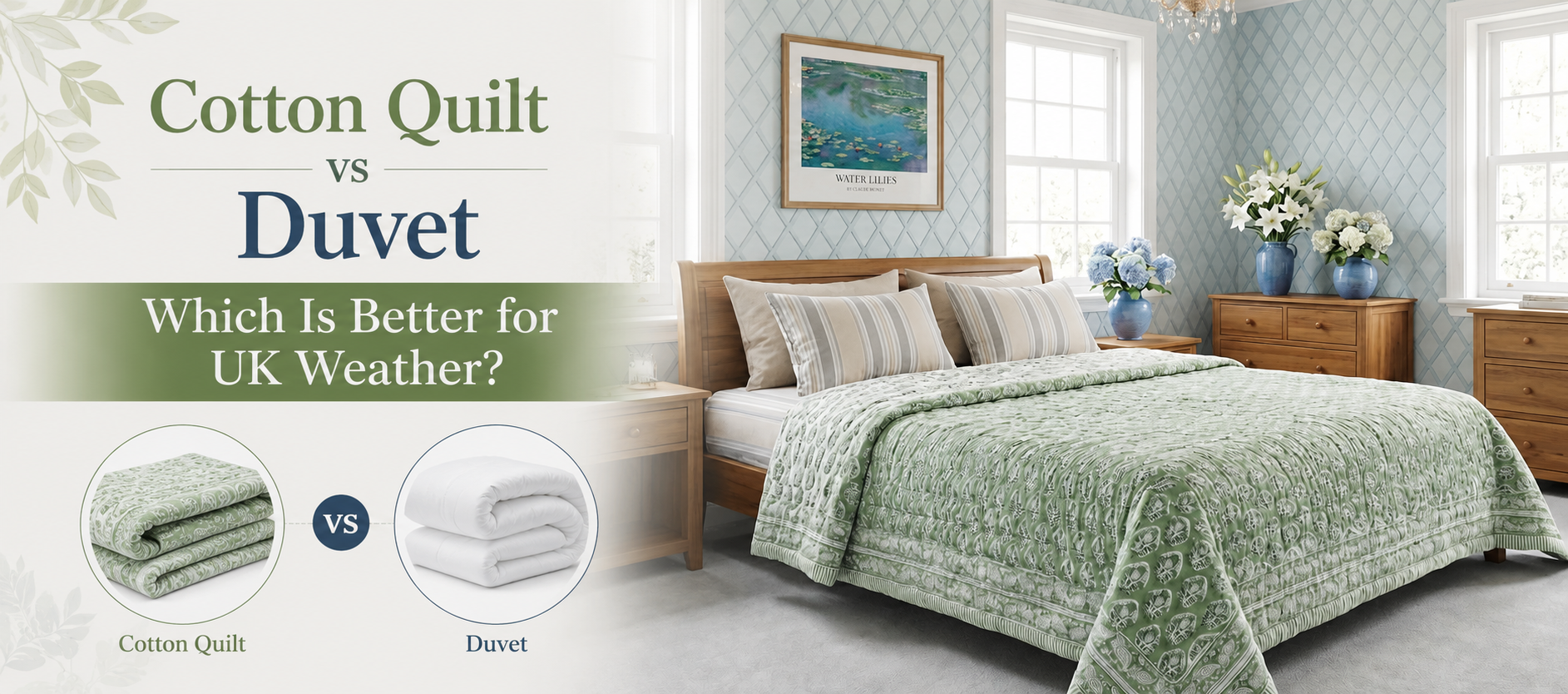
Cotton Quilt vs Duvet: Which Is Better for UK Weather
Few bedding decisions cause as much hesitation as choosing between a cotton quilt and a duvet. Both promise warmth and comfort, yet they work in completely different ways, and the right choice often comes down to how your bedroom feels across a typical British year rather than which option simply looks nicer in a catalogue. With damp winters, mild summers, and everything in between, finding the best bedding UK homes can rely on year-round means understanding what each option actually does, not just how it's marketed.
This guide breaks down the practical differences between cotton quilts and duvets, looking at warmth, breathability, maintenance, and how each performs through the UK's unpredictable seasons. Whether you're furnishing a new bedroom or simply reconsidering what's currently on your bed, the comparison below should make the decision considerably easier.
It's also worth noting that this isn't necessarily a strict either-or decision. Many UK households end up using both, choosing whichever suits a particular month, room, or sleeper, rather than committing permanently to one type of bedding for every bed in the house. Understanding the strengths of each option makes it far easier to build a bedding wardrobe that actually adapts to how the seasons change, rather than settling for whatever happened to come with the bed originally.
Understanding How Cotton Quilts and Duvets Actually Differ
At a glance, quilts and duvets can look similar once they're on a bed, but their construction tells a different story. A duvet is essentially a fabric envelope filled with an insulating material, typically down, feather, or a synthetic alternative, designed to trap air and hold heat close to the body. A cotton quilt, by contrast, is a layered, stitched textile, usually filled with cotton batting and finished with rows of hand or machine quilting that hold the filling evenly in place. That stitching is what gives a quilt its characteristically flat, structured drape, compared to the puffier silhouette of a duvet.
This structural difference affects more than appearance. Quilts tend to be lighter and less insulating than duvets, which makes them better suited to layering across seasons rather than acting as a single all-weather solution. Duvets, with their thicker fill, are usually rated by tog value and chosen specifically for the warmth a household needs through a British winter, with lighter togs swapped in for summer.
The way each is made also affects how long it lasts. A well-made cotton quilt, stitched by hand and filled with natural batting, can hold its shape and loft for many years with proper care, since the quilting stitches prevent the filling from shifting or clumping over time. Duvets, particularly those filled with synthetic materials, tend to compress more readily with repeated washing, gradually losing some of their original insulating power even when cared for correctly.
What a Cotton Quilt Brings to a British Bedroom
Cotton quilts have a long history in regions like Rajasthan, where hand-stitched, block-printed quilts have been made for generations using breathable cotton fabric and natural cotton filling. Unlike synthetic duvet inserts, cotton allows air to pass through far more readily, which helps regulate temperature rather than trapping heat uniformly. For UK sleepers who tend to overheat at night, this breathability can make a noticeable difference to sleep quality, particularly during the warmer, more humid stretches of summer.
Beyond comfort, cotton quilts also bring a visual dimension that duvets, hidden beneath a cover, simply don't offer. Hand block printed patterns turn the quilt itself into a decorative feature, meaning it can be used as the top layer of a bed without needing an additional cover at all.
There's also a practical side to skipping the cover entirely. Duvet covers require regular changing and ironing to look their best, an extra task many households would rather avoid. A patterned cotton quilt removes that step, since the printed surface is designed to be seen and used directly, simplifying the weekly bedmaking routine without sacrificing how the bed actually looks.
Why Duvets Became the UK's Default Bedding Choice
Duvets rose to dominance in British homes from the 1970s onward, largely because of convenience. A single duvet, paired with a fitted sheet and a removable cover, replaced the multi-layer bedmaking process of sheets, blankets, and a bedspread that many households had relied on previously. That convenience, combined with consistent warmth through cold winters, cemented the duvet as the default choice for most UK bedrooms, a position it has held for decades.
However, convenience doesn't always equal comfort for every sleeper. Down and synthetic fills can trap heat unevenly, leading to the kind of overheating that disrupts deep sleep, especially in centrally heated UK homes where indoor temperatures often run warmer than outdoor conditions would suggest.
There's also the question of allergies, which duvets handle less consistently than many shoppers realise. Down and feather fills can trigger reactions in sensitive sleepers, while synthetic alternatives, though often marketed as hypoallergenic, can still trap dust and require frequent washing to stay genuinely fresh. Natural cotton fillings tend to be more consistently tolerated, which is part of why they remain popular among households managing allergies or sensitive skin.
Comfort and Breathability Across the Seasons
UK weather rarely behaves consistently for long, which is exactly why breathability matters as much as warmth when choosing bedding. Cotton, as a natural fibre, absorbs and releases moisture far more effectively than synthetic materials, helping to regulate the microclimate created underneath a quilt or duvet overnight. This is one of the clearest reasons cotton quilts are increasingly considered part of the best bedding UK households can choose for managing temperature swings between seasons rather than relying on a single heavyweight duvet all year.
Layering also becomes far easier with quilts than with most duvets. A lightweight cotton quilt can be added or removed as the season shifts, whereas swapping duvet togs typically means owning two separate duvets and storing whichever one isn't currently in use.
Choosing the Right Size for Single Beds and Guest Rooms
Sizing matters just as much as material when comparing quilts and duvets. For single beds, guest rooms, or children's bedrooms, Twin size quilts offer a neat, well-proportioned fit without the excess fabric that an oversized duvet can sometimes create on a smaller bed. Their lighter weight also makes them easier to wash and store between seasons, a practical advantage for households managing multiple guest rooms or compact bedrooms where storage space is limited.
This sizing advantage extends to flexibility too. A twin quilt is easy to fold and store at the top of a wardrobe or in a blanket box when not in use, something far less practical with a bulky duvet, particularly during the warmer months when households often want to switch to lighter bedding without losing storage space elsewhere in the home.
Stepping Up to Double and Queen Beds
For standard double and queen beds, Queen size quilts strike a balance between coverage and manageability that suits most UK households. They're substantial enough to cover the full mattress with a neat overhang, yet light enough to handle easily during washing and changeovers, something larger bedding can make surprisingly cumbersome on a typical UK washing machine.
This middle-ground sizing also makes queen quilts a sensible choice for households that share a bed but have different temperature preferences. Because the quilt sits lighter than a duvet, it's easier for one person to pull more fabric toward themselves without leaving their partner uncovered, a small but genuinely useful advantage over a single, fixed-fill duvet.
Going Larger for Spacious Bedrooms
Larger bedrooms with king-sized mattresses call for proportionally larger bedding, and king size quilts are designed specifically for that extra coverage. The additional fabric allows for a more generous drape on either side of the bed, which matters both for warmth retention and for the finished, tailored look many people want in a larger master bedroom.
Larger bedrooms also tend to lose heat differently than smaller, more enclosed rooms, particularly in older UK properties with higher ceilings or draughtier windows. A generously sized king quilt helps compensate for that, providing enough surface area to retain warmth effectively even in a room that doesn't hold heat as consistently as a smaller, more compact bedroom would.
Sourcing Quilts With Genuine Craft Heritage
Not all quilts are made the same way, and that distinction matters more than many shoppers realise. Indian quilts made using traditional hand-block printing carry a level of craftsmanship that mass-produced bedding simply cannot replicate, with each piece hand-stamped using carved wooden blocks and natural dyes. For UK buyers specifically looking for sustainable, slow-fashion alternatives to synthetic bedding, this kind of provenance adds genuine value beyond the comfort the quilt itself provides.
Shopping for Artisan Bedding Without Leaving Home
The convenience of browsing cotton quilts online has made it considerably easier for UK shoppers to access handcrafted bedding that would once have required travel to source directly. Buying this way also makes it simpler to compare sizes, patterns, and fabric weights side by side before committing, something that's much harder to do when relying solely on a single high-street retailer's limited in-store range.
Layering for a Polished, Hotel-Style Finish
For those who want the visual benefits of a quilt without sacrificing the everyday practicality of a duvet, layering offers a useful middle ground. A block print bedspread placed over a duvet during the day creates a neat, considered look, then folds away easily at night, giving households the best of both styles without having to choose permanently between one or the other.
Ultimately, the choice between a cotton quilt and a duvet comes down to how a household actually sleeps and lives, rather than which option is more familiar. Quilts suit those who run warm, value breathable natural fibres, and want bedding that doubles as décor. Duvets remain a sensible, low-maintenance option for consistent winter warmth, particularly in colder bedrooms without central heating. Many UK households now find that combining both, a quilt for warmer months and lighter layering, a duvet for deep winter cold, delivers more genuine comfort than committing to a single solution year-round.
Whatever combination suits your bedroom, prioritising natural, breathable materials over synthetic fills tends to pay off in better sleep quality over time, making the search for genuinely comfortable, well-made bedding a worthwhile investment rather than a routine purchase.
Frequently Asked Questions
Is a cotton quilt warmer than a duvet?
Not typically. Duvets generally provide more concentrated warmth due to their thicker fill, making them better suited to cold winters. Cotton quilts are lighter and more breathable, working best for layering or milder seasons rather than as standalone winter bedding.
Can I use a cotton quilt all year round in the UK?
Yes, especially when layered. A lightweight cotton quilt works well alone in spring and summer, and can be combined with a duvet or extra throw during colder UK winters for added warmth without overheating.
Are hand block printed quilts more expensive than regular duvets?
They can carry a higher price point due to the time and skill involved in hand-printing and stitching. However, their durability and craftsmanship often mean better long-term value compared to mass-produced, shorter-lived synthetic alternatives.
How do I care for a cotton quilt compared to a duvet?
Cotton quilts generally need gentler washing, cold water, and mild detergent to protect natural dyes and stitching. Duvets often tolerate higher temperatures depending on fill type, but always check the manufacturer's specific care instructions first.
Which option is better for people who overheat at night?
Cotton quilts are usually preferable, since natural cotton fibres breathe and regulate temperature more effectively than many duvet fills. This makes them a popular choice for warmer sleepers seeking better airflow and reduced overheating overnight.
-

Why Hand Block Printed Home Furnishings Are Getting Popular in the UK
October 16th, 2026 -
 October 2nd, 2026
 -
 September 25th, 2026

