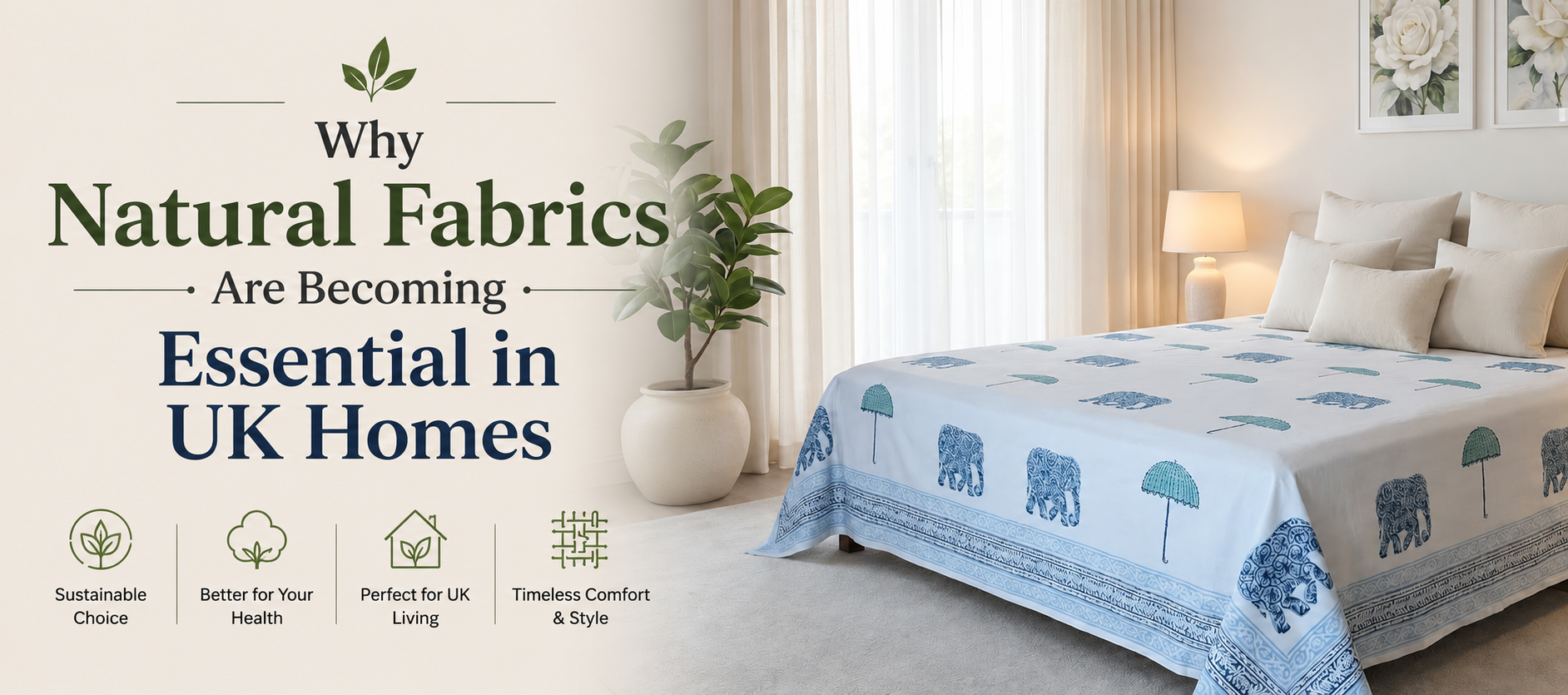
Why Natural Fabrics Are Becoming Essential in UK Homes
Across the UK, more households are rethinking what goes into their bedrooms and living spaces, and the shift toward natural fabrics is one of the clearest signs of this change. From bedding to dining linen, shoppers are moving away from synthetic blends in favour of natural fibres that breathe, age gracefully, and carry a genuine sense of origin. This guide explores why the move toward natural, artisan-made textiles is gathering pace in the UK, what makes these materials different, and how to bring them into your own home in a way that suits both comfort and style.
The Growing Case for Natural Textiles in British Homes
What Counts as a Natural Textile?
Natural textiles are fabrics made from fibres sourced directly from plants or animals, rather than synthesised from petroleum-based chemicals. Cotton, linen, wool, and silk are the most familiar examples, with cotton remaining the most widely used across bedding and home textiles due to its versatility. Unlike polyester or acrylic blends, these fibres are biodegradable, breathable, and tend to soften rather than degrade with repeated washing. This distinction matters more than it might first appear, particularly for anything that sits close to the skin for hours at a time, such as bedding or table linen.
Why UK Households Are Making the Switch
The UK's changeable climate is one practical reason natural, breathable materials have found such a strong following here. Cotton in particular regulates temperature far better than synthetic alternatives, staying cool in summer and providing gentle insulation during colder months. Beyond comfort, there is a growing awareness of what synthetic textiles shed during washing, along with a broader interest in sustainable, slow-fashion purchasing habits. For many shoppers, moving toward genuinely natural, breathable materials has become less of a niche preference and more of a considered, everyday decision that touches bedding, dining linen, and soft furnishings alike.
Indian Quilts and the Heritage of Handcrafted Cotton
Among the most distinctive expressions of natural fibre craftsmanship are indian quilts, prized for their breathable cotton fill and centuries-old hand-block printing techniques. Rooted in Rajasthani textile tradition, these quilts are made using entirely natural cotton, from the outer fabric to the internal batting, making them gentle on sensitive skin and genuinely suited to year-round UK use. Their lightweight construction means they can be used alone in summer or layered beneath a duvet in winter, offering a level of seasonal flexibility synthetic bedding rarely matches.
Breathability: The Underrated Benefit of Natural Fibres
One of the most significant, if often overlooked, advantages of plant-based textiles is breathability. Cotton fibres allow air to circulate and moisture to evaporate, which helps regulate body temperature through the night and reduces the clammy feeling associated with synthetic bedding. This is particularly relevant during warmer UK summers, when heat retention in polyester-based fabrics can disrupt sleep. Choosing breathable, natural materials for bedding and dining textiles is a simple, practical step toward a more comfortable home environment.
Block Print Tablecloths and the Everyday Elegance of Cotton
The appeal of natural fibres extends well beyond the bedroom, and block print tablecloths are a clear example of how cotton brings both practicality and character to the dining table. Made from breathable, durable cotton and finished using traditional hand-block printing, these tablecloths hold up to daily use while still feeling special enough for guests. Their natural fibre content also means they can be washed repeatedly without losing shape or softness, unlike many synthetic printed alternatives that stiffen or fade over time.
Supporting a More Sustainable Home
Choosing plant-based, natural materials is also a meaningful way to reduce a household's environmental footprint. Cotton is biodegradable, and when produced using traditional, low-impact methods rather than industrial processing, its production requires far less synthetic chemical input than manufactured fibres. Artisan-made natural textiles, in particular, tend to be produced in smaller batches using techniques passed down through generations, which naturally limits the scale of resource use compared with mass manufacturing. For households aiming to make more sustainable purchasing choices, choosing natural fabrics offers a tangible, everyday way to do so.
Cotton Percale Bedding for a Crisp, Breathable Sleep
For those specifically focused on sleep quality, Cotton percale bedding offers a particularly crisp, cool option well suited to the UK climate. Woven using a tight, one-over-one-under weave, percale fabric has a matte finish and a smooth, breathable hand feel that many compare to a hotel-quality finish. It is hypoallergenic and gentle on sensitive skin, making it a practical choice for anyone who runs warm at night or prefers a clean, structured bedroom aesthetic over heavier, more textured bedding.
Comparing Durability: Plant Fibres Versus Synthetics
There is a common misconception that synthetic fabrics last longer than natural ones, but the reality is more nuanced. While polyester blends resist wrinkling, they tend to pill, retain odours, and degrade in texture more quickly than well-made natural textiles. High-quality cotton, by contrast, often improves with age, softening gradually through each wash while retaining its structural integrity. Artisan-made cotton pieces, finished using traditional dyeing and weaving techniques, are frequently built to last for years of regular use rather than a single fashion cycle. This durability is a large part of why so many UK households now see natural fibre bedding as a longer-term investment rather than a seasonal purchase.
Block Print Bedspread Options for a Considered Bedroom
A block print bedspread is another example of how natural cotton can be styled for both comfort and visual impact. Lightweight enough for warm months yet easily layered with a duvet in winter, these bedspreads work well as a primary bed covering or as a decorative throw across a sofa or reading chair. Because they are made from breathable cotton, they suit UK households looking for versatile bedding that performs well across the country's variable seasons.
Caring for Plant-Based Textiles the Right Way
Getting the most from natural fibres means adjusting care habits slightly compared with synthetic textiles. Washing in cold or lukewarm water with a mild detergent helps preserve both colour and fibre strength, while avoiding bleach and harsh chemicals prevents premature fading. Air drying in shade, rather than direct sun or high-heat tumble drying, protects natural dyes and keeps cotton soft rather than brittle. A light iron on medium heat while the fabric is still slightly damp gives the cleanest finish. These small adjustments make a meaningful difference in how long a natural fibre piece continues to look and feel its best.
Block Print Quilts: Where Craft Meets Comfort
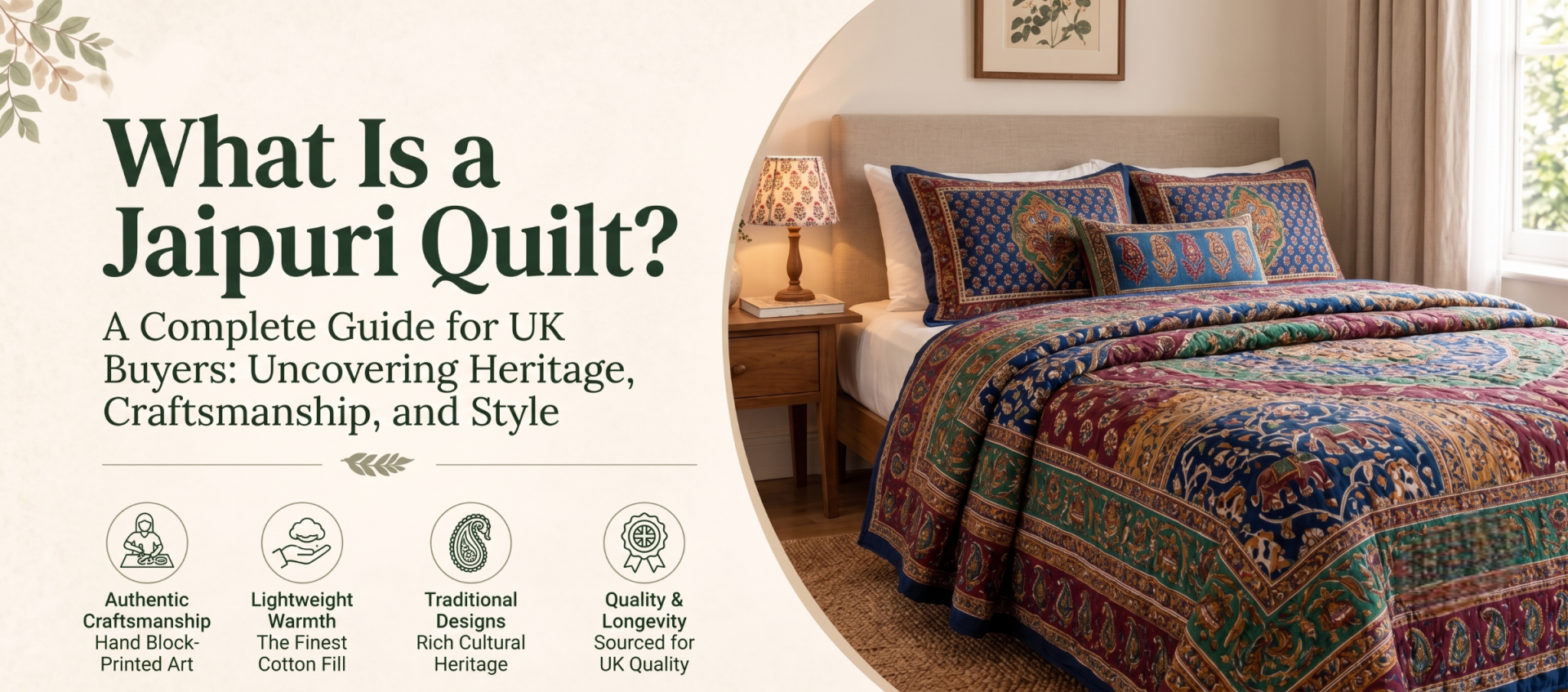
Block print quilts represent one of the most complete expressions of natural fibre craftsmanship, combining breathable cotton fill with hand-carved wooden block printing techniques passed down through generations of Rajasthani artisans. Each quilt is entirely handmade, meaning the printing, stitching, and finishing are all done without industrial machinery. For UK buyers seeking bedding with genuine provenance rather than an anonymous factory origin, these quilts offer both comfort and a documented craft story.
Styling Plant-Based Textiles Across Different Interior Tastes
One of the underappreciated strengths of natural, breathable materials is how adaptable they are across interior styles. A block-printed cotton quilt can sit comfortably in a maximalist, pattern-forward bedroom just as easily as it complements a pared-back, neutral-toned space. Pairing a cotton tablecloth with simple stoneware, or layering a printed bedspread over crisp white linens, are both simple ways to introduce texture and warmth without overcommitting to a single aesthetic direction. This flexibility is part of why interest in genuinely natural, artisan-made textiles continues to grow across UK homes.
Cotton Quilts Online: What to Look for Before You Buy
When browsing cotton quilts online, it helps to know what separates a genuinely well-made piece from a lower-quality alternative. Look for 100% natural cotton in both the outer fabric and internal fill, clear sizing information suited to standard UK bed dimensions, and evidence of traditional hand-finishing techniques such as block printing or hand stitching. A well-made cotton quilt should feel substantial without being heavy, and its pattern should show the gentle, natural variation that comes from genuine handcraft rather than machine repetition.
Building a Home Around Natural, Artisan-Made Textiles
Whether the starting point is a single tablecloth or a full bedroom refresh, moving toward genuinely natural, artisan-made textiles is a practical, achievable shift for most UK households. Each handcrafted piece, from a cotton quilt to a set of table linens, brings both everyday performance and a story of traditional craftsmanship that mass-produced synthetic alternatives simply cannot offer. As more shoppers prioritise comfort, sustainability, and genuine provenance, natural fibre textiles are likely to remain a lasting fixture in UK homes rather than a passing trend. For anyone starting this shift, focusing on one room at a time — bedding first, then dining linen, then soft furnishings — tends to make the transition feel manageable rather than overwhelming.
Frequently Asked Questions
Why are natural fibres better for bedding than synthetic materials?
Natural fibres like cotton are more breathable, help regulate body temperature, and soften with each wash rather than degrading. They are also biodegradable and gentler on sensitive skin, making them a more comfortable and sustainable choice for everyday bedding.
Are cotton quilts suitable for the UK's changing seasons?
Yes, cotton quilts are lightweight enough for summer use alone and can be layered under a duvet during colder months. Their breathable fibres adapt well to the UK's variable climate, offering year-round comfort without overheating.
How do I care for cotton bedding and table linen?
Wash in cold or lukewarm water with a mild detergent, avoiding bleach and harsh chemicals. Air dry in shade rather than direct sunlight to preserve colour and fibre softness, and iron on medium heat while slightly damp for the cleanest finish.
What makes hand block printed textiles different from mass-produced fabrics?
Hand block printed fabrics are stamped by artisans using carved wooden blocks, creating slight natural variations between repeats. This handcrafted process, combined with natural cotton fibres, results in unique, durable pieces with genuine provenance rather than uniform factory output.
Is choosing plant-based textiles a more sustainable option?
Generally, yes. Cotton and other plant-based fibres are biodegradable and, when produced using traditional artisan methods, typically involve less synthetic chemical processing than mass-manufactured fibres, supporting more sustainable, slow-fashion purchasing habits.
-

Why Hand Block Printed Home Furnishings Are Getting Popular in the UK
October 16th, 2026 -
 October 2nd, 2026
 -
 September 25th, 2026

