

Why UK Homes Are Falling in Love With Handmade Indian Block Prints
Walk into a growing number of British homes this year and you'll notice something quietly different about the way people are dressing their tables and bedrooms. Crisp, factory-perfect linens are sharing space with pieces that carry small irregularities, faint variations in colour, and the unmistakable warmth of something made by hand. This shift sits at the centre of one of the most interesting handmade décor trends shaping UK interiors right now, and at the heart of it is a centuries-old Indian craft: hand block printing.
For decades, Indian textiles were treated mostly as holiday souvenirs or occasional accent pieces. That perception has changed. UK shoppers are now choosing hand block printed cotton as a considered, everyday choice for bedding, dining linens, and soft furnishings, drawn in by sustainability concerns, a desire for individuality, and a genuine appreciation for craftsmanship that mass production simply cannot replicate. This article looks at why that shift is happening, what makes the craft itself so distinctive, and how UK households are bringing it into their homes, from the bedroom through to the dining table.
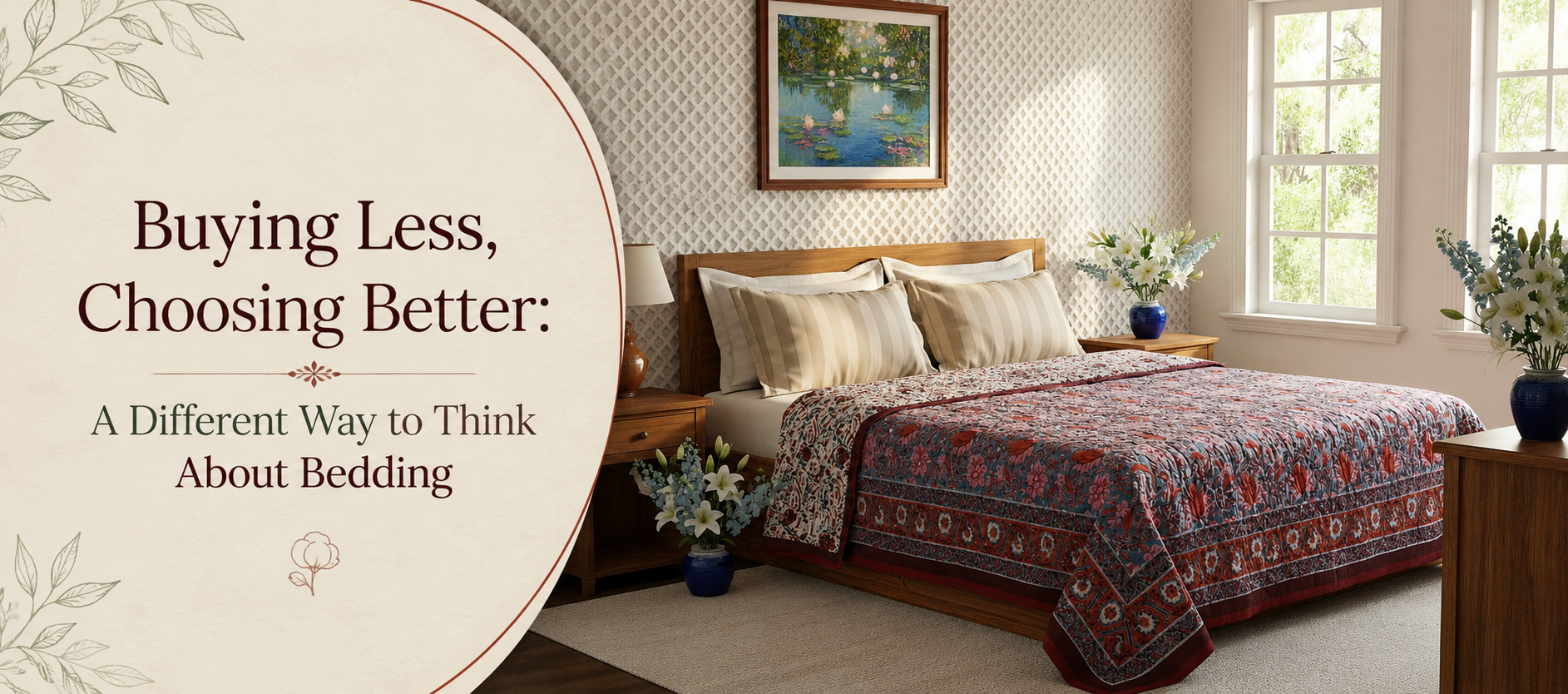
Part of what's driving this change is a broader rethink of how people shop for their homes in the first place. Rather than refreshing décor every season to chase whatever's trending, a growing number of UK households are choosing fewer, more meaningful pieces that they expect to keep for years. That mindset has opened the door for handmade textiles in a way that simply wasn't the case a decade ago, when speed and price tended to dominate homeware buying decisions almost entirely.
The Story Behind India's Handmade Textile Revival
To understand why this craft resonates so strongly with UK buyers, it helps to understand where it comes from. Hand block printing originated centuries ago in Rajasthan, particularly around the cities of Jaipur and Sanganer, which remain the spiritual home of the technique today. Artisans carve intricate motifs — florals, paisleys, geometric lattices — into blocks of seasoned wood, most often teak or sheesham. Each block is then dipped into natural or low-impact dye and pressed methodically onto fabric, repeat by repeat, until a pattern takes shape across the cloth.
The process is slow by design. A single complex pattern may require a block to be stamped hundreds or even thousands of times across one piece of fabric, with an artisan's hand guiding every impression. No two lengths of cloth turn out identically; small shifts in pressure, dye saturation, and alignment give each piece a quiet individuality. For UK shoppers who have spent years surrounded by uniform, machine-printed homeware, that individuality is precisely the appeal.
It's also worth understanding the materials behind the craft. Most artisan workshops in Rajasthan still rely on natural or low-impact dyes, often derived from minerals, plants, and traditional pigment recipes refined over generations. Fabrics are typically pre-washed cotton, chosen specifically because it absorbs dye evenly and softens further with each wash a buyer gives it at home. This combination of natural fibre and traditional pigment is part of why the finished textiles feel so different to the touch compared with synthetic, chemically printed alternatives found in most high-street homeware shops.
From Jaipur's Workshops to British Living Rooms
What makes this craft particularly suited to the current mood of UK interiors is its alignment with slow living and sustainable consumption. Rather than buying disposable décor that gets replaced each season, more households are investing in fewer, better-made pieces that age gracefully. Natural cotton softens with every wash rather than wearing thin, and the patterns, rooted in genuine cultural heritage, don't feel tied to a passing trend cycle the way mass-market prints often do.
Why This Handcrafted Bedding Is Becoming a UK Staple
Nowhere is this shift more visible than in the bedroom. Indian quilts have become a particular favourite among UK buyers looking to move away from synthetic bedding without sacrificing comfort. Made from breathable cotton and finished with hand block printed motifs, these quilts are light enough for summer use yet substantial enough to layer through a damp British winter. Their appeal lies as much in their practicality as in their story: each one is stitched and printed by artisans working in craft clusters across Rajasthan, which means every quilt carries a sense of place that factory bedding simply cannot offer.
Beyond their warmth, these quilts work well as decorative layers too — folded at the foot of the bed, draped over an armchair, or used as a lightweight throw during cooler evenings. Their patterns, often geometric Jaipuri florals, sit comfortably within both traditional and contemporary bedroom schemes, which is part of why they've moved so quickly from niche interest to genuine bedroom staple.
Dressing the Table the Slow-Fashion Way
The dining table has become another focal point for this craft. A block print cotton tablecloth brings a sense of occasion to everyday meals without veering into formal or fussy territory. Made entirely from natural cotton and printed using the same hand-carved wooden blocks used for centuries in Sanganer and Jaipur, these tablecloths hold their colour and shape through repeated washing while developing a gentle, lived-in softness over time.
What sets these tablecloths apart from printed alternatives found on the high street is the texture of the print itself. Run a hand across the surface and you can feel the faint relief of the dye, a small but telling sign of genuine craftsmanship. For households who entertain regularly, or simply want their everyday dining to feel a little more considered, this kind of textile does real work in transforming the mood of a meal.
Small Details That Make a Big Difference
It isn't only the larger pieces that carry this craft into UK homes. Block printed napkins are often the easiest, lowest-commitment way for someone to introduce hand block printing into their dining routine. A set of patterned cotton napkins instantly elevates an otherwise simple table setting, and because they're made from durable, absorbent cotton, they hold up to genuine daily use rather than sitting in a drawer reserved for special occasions.
This is part of a wider pattern in how UK shoppers are approaching handcrafted textiles: starting small with accessories before committing to larger investment pieces like quilts or bedspreads. Napkins, table runners, and table mats all offer an accessible entry point into the craft, letting people experiment with colour and pattern before deciding how far they want to take it through the rest of the home.
Choosing Round Linens for Cosy, Casual Dining
Round dining tables have grown in popularity in smaller UK homes and flats, partly because they make better use of limited floor space and encourage a more sociable seating arrangement. A well-fitted round table cover cloth suits this kind of table particularly well, draping evenly without the awkward overhang that a rectangular cloth can create on a circular surface.
Getting the size right matters more than people often expect. Measuring the table's diameter and allowing for a modest overhang on all sides ensures the cloth sits properly rather than pooling unevenly on one side. Once sized correctly, a round cloth in a hand block printed pattern becomes a quiet centrepiece in its own right, especially in open-plan kitchen-diners where the dining area is constantly on view.
Sourcing Sustainable Bedding Without the Guesswork
Sustainability has become one of the strongest drivers behind this shift in taste, and bedding is often where UK shoppers feel that concern most acutely, given how much fabric a bed actually uses. Buying cotton quilts online from artisan sources allows households to make that switch with confidence, knowing the materials are natural, the dyeing methods are low-impact, and the production process supports skilled communities rather than industrial supply chains.
There's also a practical case for this kind of bedding beyond ethics. Cotton breathes in a way synthetic fills cannot, regulating temperature through the unpredictable swings of a British year. A handcrafted quilt sourced this way tends to outlast cheaper alternatives too, both in terms of fabric integrity and the simple fact that people are less inclined to discard something they know was made by hand.
Bringing Heritage Pattern Into the Bedroom
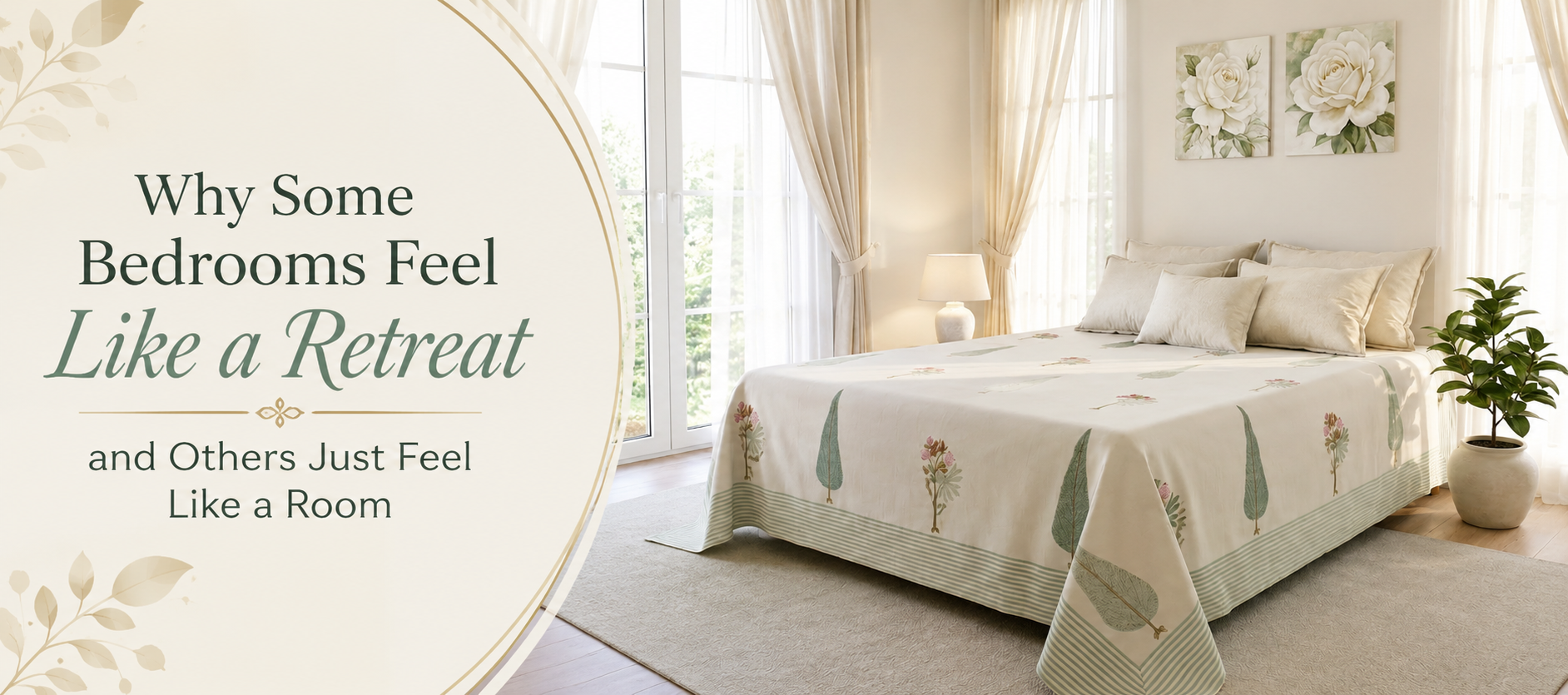
For those wanting a bolder visual statement, a block print bedspread offers a different kind of impact than a quilt. Rather than focusing on insulation, bedspreads are about drape, coverage, and pattern — a flatter, more decorative layer that turns a bed into something closer to a styled centrepiece. Many UK buyers use them in guest rooms specifically because they create a consistently tidy, hotel-like finish without the daily upkeep a duvet requires.
Beyond the bedroom, these bedspreads have found a second life as sofa throws, picnic blankets, and even informal wall hangings, a versatility that speaks to how genuinely well-made textiles tend to outgrow their original purpose. The bold florals and geometric motifs typical of Jaipur printing translate just as comfortably into a living room as they do across a bed.
Taken together, these pieces tell a consistent story about where UK interiors are heading. The appetite for individuality, sustainability, and visible craftsmanship is reshaping how people think about everyday textiles, and hand block printing answers all three at once. As more households discover this craft, it's likely to remain one of the more enduring handmade décor trends rather than a passing seasonal interest, simply because the pieces themselves are built to be lived with for years, not seasons.
This durability matters more than it might first appear. A tablecloth or quilt that's expected to last a decade changes the maths of buying it in the first place; a slightly higher upfront cost becomes far more reasonable when measured against years of use rather than a single season's styling. For households trying to reduce how often they replace homeware altogether, that long view is arguably as important as the pattern or colour they choose.
Whether the starting point is a single set of napkins or a full bedroom refresh, the appeal of these textiles lies in their honesty. Each piece carries the trace of the hand that made it, a quality no machine has yet managed to convincingly imitate, and one that UK homes are clearly ready to welcome.
Frequently Asked Questions
What makes hand block printed textiles different from regular printed fabric?
Hand block printing uses carved wooden blocks dipped in dye and pressed by hand, repeat by repeat, across the fabric. This creates subtle variations between pieces that machine printing cannot reproduce, giving each textile genuine individuality and a tactile surface texture.
Are these textiles suitable for everyday use, or only special occasions?
They're designed for daily life. Natural cotton is durable, washable, and softens over time, making quilts, tablecloths, and napkins practical choices for regular use rather than pieces reserved only for entertaining or special occasions.
How should I care for hand block printed cotton items?
Wash gently in cold water with a mild detergent, avoiding bleach and harsh chemicals. Air-drying in shade rather than direct sunlight helps preserve colour vibrancy and keeps the print looking sharp for years of regular washing.
Why is hand block printing considered more sustainable than mass-produced textiles?
The process uses natural materials, low-impact dyes, and minimal machinery, relying instead on skilled artisan labour. This reduces energy and water consumption compared to industrial printing while supporting fair, traditional livelihoods in craft communities.
Do these products ship reliably to UK addresses?
Yes. Hand block printed textiles from Rajasthan are shipped internationally with UK delivery as standard, with orders carefully packaged to protect the fabric in transit so pieces arrive ready to use straight from the box.
-

Natural Fibres vs Synthetic Blends: What Works Best on Your Table
August 25th, 2026 -

How to Build a Timeless Bedroom with Layered Cotton Textiles
August 24th, 2026 -

How to Style Block Printed Accessories with Everyday Outfits
August 21st, 2026 -
Buying Less, Choosing Better: A Different Way to Think About Bedding
August 20th, 2026 -
Why Some Bedrooms Feel Like a Retreat and Others Just Feel Like a Room
August 20th, 2026