
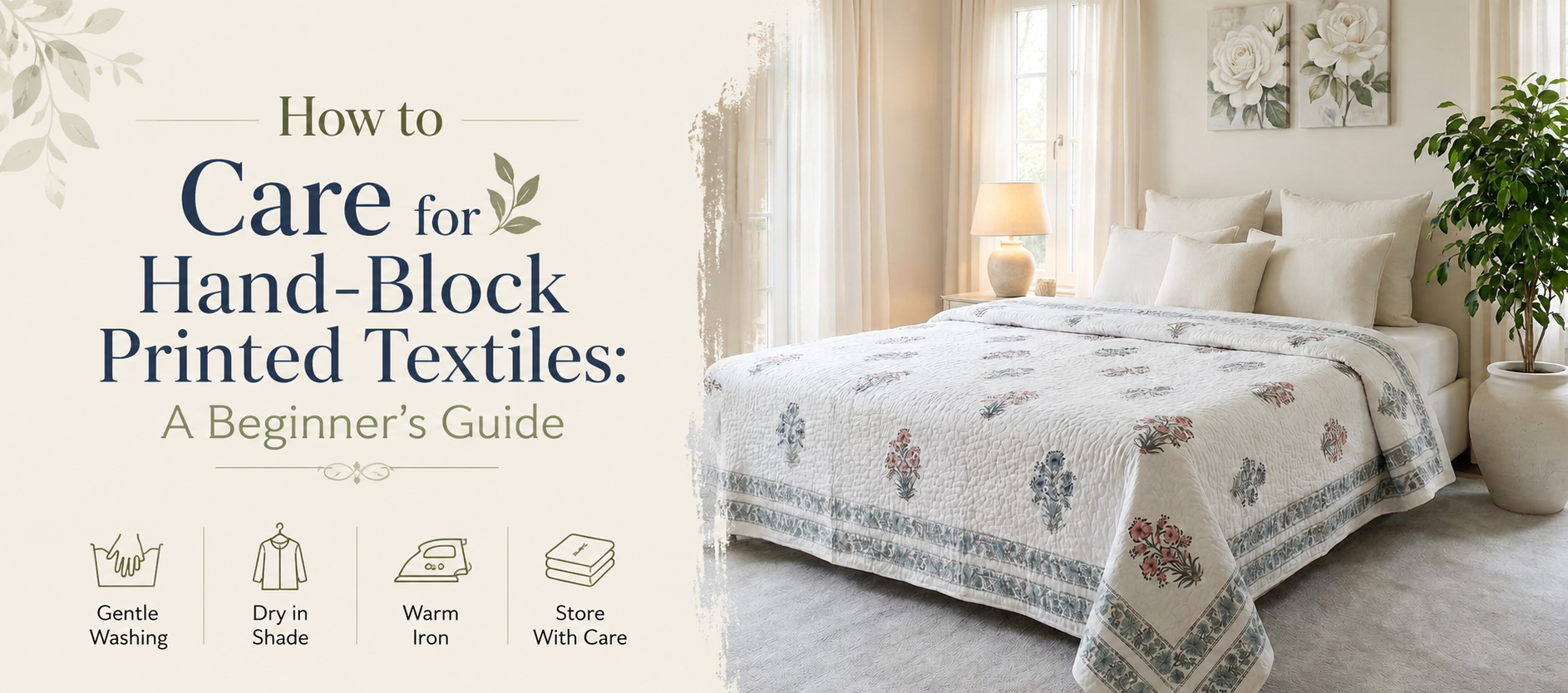
How to Care for Hand-Block Printed Textiles: A Beginner's Guide
There is something quietly extraordinary about a textile that has been touched by human hands at every stage of its making. Hand-block printed fabrics — whether a quilted bedspread, a tablecloth, or a set of cushion covers — carry within them hours of artisan skill, natural dyes, and centuries of Indian craft tradition. When you bring one of these pieces into your home, you are not simply buying décor. You are becoming a custodian of something made to last.
That longevity, however, depends on how you care for it. Block-printed cotton responds differently to washing, drying, and storage than mass-produced textiles, and understanding these differences is what separates a piece that fades within months from one that deepens beautifully with every wash. This guide covers everything a first-time owner needs to know — clearly, practically, and without unnecessary jargon.
What Makes Hand-Block Printed Fabric Different?
Before you can care for something properly, it helps to understand what it is made of. Hand-block printing is a resist or direct-dye technique in which carved wooden blocks are pressed onto fabric by hand — one block, one impression, one layer at a time. The process is slow by design. Artisans in Jaipur and other centres of Indian textile craft work with natural or reactive dyes that penetrate the cotton fibres directly, creating colour that is part of the cloth rather than sitting on top of it.
This is why hand block print fabric care is not the same as caring for printed polyester or digitally printed cotton. The dyes are reactive to heat, harsh detergents, and agitation. The fabric itself — usually a natural cotton — is breathable and absorbent, which also means it can be unforgiving if you wash it carelessly.
The good news is that block-printed cotton, when washed correctly, does not degrade. It softens. Colours settle into a lived-in richness that machine prints can never replicate. The key is consistency.
First Wash: What to Do Before You Use Your Textile
The first wash is arguably the most important. New block-printed textiles may carry excess dye — particularly in darker or more saturated colourways — and washing them correctly before use prevents colour transfer onto other fabrics or surfaces.
Cold Water Soak - Before the first machine or hand wash, soak your textile in cold water for 20 to 30 minutes. Add two tablespoons of white vinegar to the water. Vinegar acts as a mild mordant, helping to set reactive dyes and reduce bleeding. Do not use hot water at this stage — heat opens the cotton fibres and accelerates colour loss.
Separate Colours - Always wash dark and light textiles separately for the first two or three washes. Deep indigos, rich reds, and earthy block print pigments are the most likely to bleed slightly on initial washing. This is not a defect — it is simply the nature of natural and reactive dye chemistry.
Skip the Spin Cycle - For the first wash, gently squeeze out excess water by hand and allow the piece to drip dry rather than spin it at high speed. High-speed spinning can stress the fibres and cause uneven shrinkage in natural cotton.
Day-to-Day Washing: The Right Method for Long-Lasting Colour
Once the first wash is done, ongoing care becomes straightforward. Below are the key principles that apply to all block-printed cotton textiles — from tablecloths and napkins to bedspreads and quilts.
Always Wash in Cold or Lukewarm Water
Hot water is the single most common cause of premature colour fading in block-printed fabrics. Keep your wash temperature at or below 30°C. Most modern washing machines have a dedicated cold or delicate cycle that works well for these textiles.
Use a Gentle, pH-Neutral Detergent
Avoid biological detergents, bleach-containing products, and any detergent with optical brighteners. These chemicals are designed to strip colour or to make fabrics appear whiter — neither effect is desirable on a hand-dyed textile. A mild, pH-neutral liquid detergent (widely available in UK supermarkets and health stores) is all you need. Use half the amount you would for regular laundry, as cotton absorbs detergent readily and residue build-up can make colours appear dull over time.
Choose a Delicate Cycle
Set your machine to a gentle or delicate cycle with low spin speed. This minimises mechanical friction on the print surface. If you are hand-washing — which is ideal for smaller pieces like napkins, cushion covers, and table mats — use light, circular motions rather than scrubbing or wringing.
Do Not Mix Prints with Towels or Jeans
Rough fabrics create surface friction that can abrade the print over time. Wash block-printed textiles with similar fabrics — other cotton pieces, light linens — or on their own.
Drying: The Step Most People Get Wrong
How you dry a block-printed textile matters as much as how you wash it. The two main risks at the drying stage are heat damage and direct sunlight exposure.
Air Dry in Shade :- Always dry block-printed textiles in the shade, not in direct sunlight. UV exposure causes photodegradation of dyes — a process that accelerates significantly when the fabric is wet. Drying in indirect natural light or indoors (near an open window in British summer conditions is perfectly effective) preserves colour depth far longer.
Avoid the Tumble Dryer :- Tumble drying at high heat is one of the fastest ways to shorten the life of any handcrafted textile. The combination of heat, mechanical tumbling, and reduced moisture can cause shrinkage, fading, and in some cases, distortion of the print edges. If you must use a dryer, select the lowest heat setting and remove the piece while it is still slightly damp, then allow it to finish air drying flat.
Reshape While Damp :- Cotton dries into the shape it takes when wet. While your textile is still damp, gently pull it into shape — particularly important for bedspreads, quilts, and tablecloths where an even drape matters.
Ironing and Finishing Printed Cotton
Block-printed cotton can be ironed, but with care. The print surface, particularly in wax-resist techniques like batik-adjacent processes, can be sensitive to direct contact with a very hot iron plate.
Iron on the Reverse Side
Always iron printed textiles on the reverse (wrong side) of the fabric. This protects the print surface from direct heat and prevents any risk of the iron sticking to dye-rich areas.
Use a Pressing Cloth
For extra caution, place a thin cotton pressing cloth between the iron and the fabric. This distributes heat more evenly and adds a layer of protection, particularly useful for densely printed areas or delicate embellishment.
Medium Heat Only
A medium cotton setting on your iron is appropriate. Avoid the steam function on older irons with mineral deposits, as the water spray can cause localised dye migration on certain reactive colours.
Storage: Preserving Your Textiles Between Seasons
Good storage habits extend the life of handcrafted textiles significantly, particularly for seasonal pieces such as quilts, throws, and heavier bedspreads.
Clean Before Storing Never store a block-printed textile that is not freshly washed. Any oils, food residue, or invisible stains will oxidise over time and become far harder to remove after months in storage. They can also attract moths in UK homes, particularly if the textile has any silk or wool blend components.
Use Natural Storage Materials Fold your textile loosely and store it in a breathable cotton bag or wrapped in acid-free tissue paper. Avoid plastic bags or sealed containers — these trap moisture and can cause mildew, particularly in the damp conditions common across much of the UK.
Refold Periodically If storing for an extended period, refold your textile every few weeks along different lines. This prevents permanent crease marks from forming at the same fold points.
Cedar Over Mothballs If you are concerned about moths (a genuine consideration for UK households storing natural-fibre textiles), use cedar blocks or lavender sachets rather than chemical mothballs. Mothballs leave a persistent odour and the chemicals can interact with natural dyes over time.
Caring for Block-Printed Bedspreads and Quilts
Larger pieces like bedspreads require slightly adjusted care routines due to their size and layered construction. A bedspreads queen size or similar format combines a printed outer layer with wadding and a backing — all of which need to move through the wash and dry evenly.
Wash Large Pieces in a Commercial Machine
If your home machine is not large enough to allow a bedspread or quilt to move freely in the drum, use a launderette's commercial machine. Cramming a large piece into a small drum causes uneven cleaning and mechanical stress on the seams and quilting stitches.
Dry Flat or Over Two Lines
Large quilted pieces should be dried flat on a clean surface or supported over two parallel washing lines so the weight of wet wadding is evenly distributed. A queen size quilted bedspread that hangs from a single line can stretch asymmetrically while wet, pulling the quilting stitches and distorting the print layout.
The same principles apply to a block print bedspread — the outer layer is printed cotton and responds to the same cold water, gentle detergent, and shade-drying method described throughout this guide.
For those with a larger bed, a king size quilted bedspread should be treated with the same care but given even more attention at the drying stage, as the additional fabric weight makes even drying more important.
A well-maintained cotton queen bedspread in block-printed percale can last a decade or more with consistent care. The print does not disappear — it matures, developing what textile conservators sometimes describe as a "patina of use."
Stain Removal: Acting Quickly Without Causing Damage
Stains on block-printed fabric require prompt, gentle action. The most common mistake is reaching immediately for a stain remover spray — many of which contain bleaching agents or strong solvents that will strip dye from the print alongside the stain.
Blot, Do Not Rub - For fresh stains, blot with a clean white cloth to absorb as much of the substance as possible. Rubbing spreads the stain and drives it deeper into the cotton fibres.
Cold Water and Mild Soap - Rinse the affected area from the back of the fabric with cold water, pushing the stain outward. Apply a small amount of mild liquid detergent directly to the stain, work it gently with your fingertips, and rinse again with cold water. Repeat as necessary.
Avoid Enzymatic Cleaners on Natural Dyes - Enzymatic stain removers (commonly sold in UK supermarkets for protein-based stains) can react unpredictably with natural and reactive dyes. Stick to plain mild soap for spot treatment on printed areas.
Sun-Bleaching as a Last Resort - For persistent light stains on white or very pale ground fabrics, brief exposure to direct sunlight after dampening can help bleach the stain naturally. Use this method sparingly and only on pale grounds — on coloured prints, sun exposure will fade the dye alongside the stain.
The Long View: Why Good Care Is Part of Slow Fashion
There is a broader reason why hand block print fabric care matters beyond the practical. When you extend the life of a handcrafted textile, you reduce demand for replacement, which reduces production, energy use, and waste. This is the logic of slow fashion — not simply buying ethically, but using thoughtfully.
Artisan textiles made in Jaipur by skilled craftspeople represent hours of human skill and cultural knowledge. A block-printed bedspread that is washed correctly every time, dried in the shade, and stored carefully in breathable cotton does not need to be replaced for many years. In that longevity is a form of respect — for the artisan who made it, for the tradition it embodies, and for the resources that went into its creation.
Caring for your textiles is not a chore. It is a practice.
Quick Reference: Block Print Care at a Glance
- Wash temperature: 30°C or below (cold preferred)
- Detergent: Mild, pH-neutral, no bleach or optical brighteners
- Cycle: Delicate or gentle; low spin
- First wash: Cold soak with white vinegar for 20–30 minutes
- Drying: Air dry in shade; avoid tumble dryer
- Ironing: Medium heat, reverse side, pressing cloth recommended
- Storage: Clean, breathable cotton bag, refold periodically
- Stain treatment: Blot, cold water, mild soap — no enzymatic removers on print areas
Frequently Asked Questions
Can I machine wash hand-block printed textiles?
Yes, most hand-block printed cotton textiles can be machine washed safely on a delicate or gentle cycle at 30°C or below. Use a mild, pH-neutral detergent and avoid biological products or anything containing bleach. Low spin speed is recommended to minimise friction on the print surface.
Why is my block-printed fabric bleeding colour in the wash?
Some colour bleeding during the first one to three washes is normal for reactive and natural dyes — it is not a sign of poor quality. Soak new textiles in cold water with a small amount of white vinegar before the first wash to help set the dye. Always wash dark and light pieces separately initially.
How often should I wash a block-printed bedspread or quilt?
Bedspreads used daily can generally be washed every two to four weeks, depending on use. Quilts that sit over a duvet cover may need washing less frequently — every one to two months. More frequent washing with correct technique is far less damaging than infrequent washing with incorrect technique.
Will the print fade over time even with careful washing?
Some softening of tone is natural over many years of use and is considered desirable in artisan textiles — it is the hallmark of a well-loved piece, not a flaw. With cold water washing, shade drying, and gentle detergent, significant colour loss is unlikely for five to ten years or more under normal household conditions.
What is the best way to store block-printed textiles for several months?
Wash the textile before storage, allow it to dry completely, and fold loosely. Store in a breathable cotton bag or wrapped in acid-free tissue paper in a cool, dry space. Avoid plastic bags and direct sunlight. Use cedar blocks rather than mothballs to deter pests without chemical risk to the dyes.
-
 October 2nd, 2026
 -
 September 25th, 2026
 -
 September 18th, 2026
 -

The Art of Layering Textiles: How UK Homes Can Mix Quilts & Tablecloths
September 11th, 2026 -

Duvet vs Quilt vs Bedspread: What's the Difference and Which One Do You Need?
September 11th, 2026