

The Difference Between a Bedspread, a Quilt, and a Duvet — And Which One You Actually Need
"You don't need more bedding. You need the right bedding — and there is a difference."
Walk into any bedding aisle — or browse online — and you'll quickly encounter a familiar puzzle: what is the actual difference between a bedspread, a quilt, and a duvet? They all go on a bed. They all look vaguely similar in product photos. Yet they are built differently, serve different purposes, and suit different seasons, sleeping styles, and bedroom aesthetics entirely.
In the UK, where the weather has a personality of its own and bedroom interiors are taken seriously, choosing the wrong bedding can mean too-cold winters, too-hot summers, or a bedroom that simply never looks quite right. This guide cuts through the confusion so you can make a choice that's genuinely informed — not just guided by whichever thumbnail looked nicest on your screen.
Let's start from the very beginning.
Bedspreads, Quilts, and Duvets at a Glance
Before getting into the details, here's a simple overview of each bedding type and what sets them apart structurally.
Bedspread: A single-layer, decorative covering designed to drape over the entire bed — often all the way to the floor. Its primary role is aesthetic rather than thermal.
Quilt: A three-layered bed covering — decorative top, insulating batting, and a backing fabric — all stitched together with intricate patterns. Functional and beautiful.
Duvet: A two-part system: a thick, filled insert (down, wool, or synthetic) paired with a removable, washable duvet cover. The UK's most popular everyday bedding choice. Each of these is a genuinely distinct product with a distinct purpose. Understanding these differences is the first step to building a bed that works for you — aesthetically and practically.
What Is a Bedspread?
A bedspread is the most misunderstood of the three. Many people assume the word is simply a general term for any bed covering, but it has a more specific meaning in the world of home textiles.
A bedspread is a single-layered or lightly quilted covering designed to drape generously over the entire bed — typically reaching the floor on all sides. Unlike a duvet or a quilt, its primary function is decorative. It gives the bed a clean, polished, pulled-together look, covering not just the mattress but also the pillows and often the bed frame itself.
How Bedspreads Are Made
Bedspreads are generally woven from a single layer of fabric — often cotton, chenille, or a cotton blend — with little to no internal padding. Some bedspreads feature a light quilted top for gentle texture, but unlike true quilts, they don't have substantial insulating batting. The focus is entirely on drape, coverage, and visual appeal.
Traditionally, bedspreads were a staple of British hotel rooms and period homes, chosen specifically because they create an immaculate, formal look. You'll still find them in heritage-inspired interiors today — particularly when the goal is a neat, tailored bedroom aesthetic without any visible duvets or crumpled layers.
When a Bedspread Makes Sense
A bedspread is an excellent choice if you're decorating a guest room and want a consistently tidy appearance, or if you live in a home with warmer interior temperatures and prefer lighter bedding. It works especially well as a layering piece — placed on top of a duvet during the day to keep the bed looking sharp, then folded aside at night.
Those who appreciate traditional Indian block-print textiles will recognise the bedspread as a form that has thrived in South Asian homes for centuries. A block print bedspread — hand-printed by skilled artisans using natural dyes — brings extraordinary visual character to a bedroom. The detail in the print does the decorative work, so there is no need for excess padding or bulk.
What Is a Quilt?
The quilt is arguably the most culturally rich bedding type of the three. Its history stretches back centuries across multiple continents — from Kantha needlework in Bengal to patchwork traditions in rural England — and today it straddles the line between functional bedding and textile art.
Structurally, a quilt is made of three distinct layers: a decorative top fabric, an inner layer of batting or wadding for insulation, and a backing fabric. All three layers are held together by lines of stitching — a process known as quilting. It is this stitching that gives quilts their characteristic texture and visual depth.
The Art of Quilting
Quilting stitches can follow geometric patterns, floral motifs, diagonal lines, or even the contours of a printed design — a technique called outline quilting. The variety is vast. In traditional Indian quilts, the stitching often runs in rows of small, even running stitches that give the textile a subtle rippled texture when held up to the light. This is the hallmark of authentic hand-quilting, and it is very different from the machine-stitched grid patterns found on most mass-produced quilts.
The batting layer in a quilt is generally thinner than the filling in a duvet, which is why quilts lie relatively flat and neat on the bed. They provide moderate warmth — more than a bedspread, considerably less than a thick winter duvet — making them ideal for spring, summer, and milder autumn evenings in the UK.
Quilts in the UK Bedroom
In Britain, quilts fell slightly out of fashion when the duvet arrived in the 1970s and 1980s and quickly became the dominant everyday bedding choice. However, in recent years there has been a strong renewed interest in quilts — particularly those rooted in traditional craft — as part of a broader appreciation for slow fashion and artisan textiles.
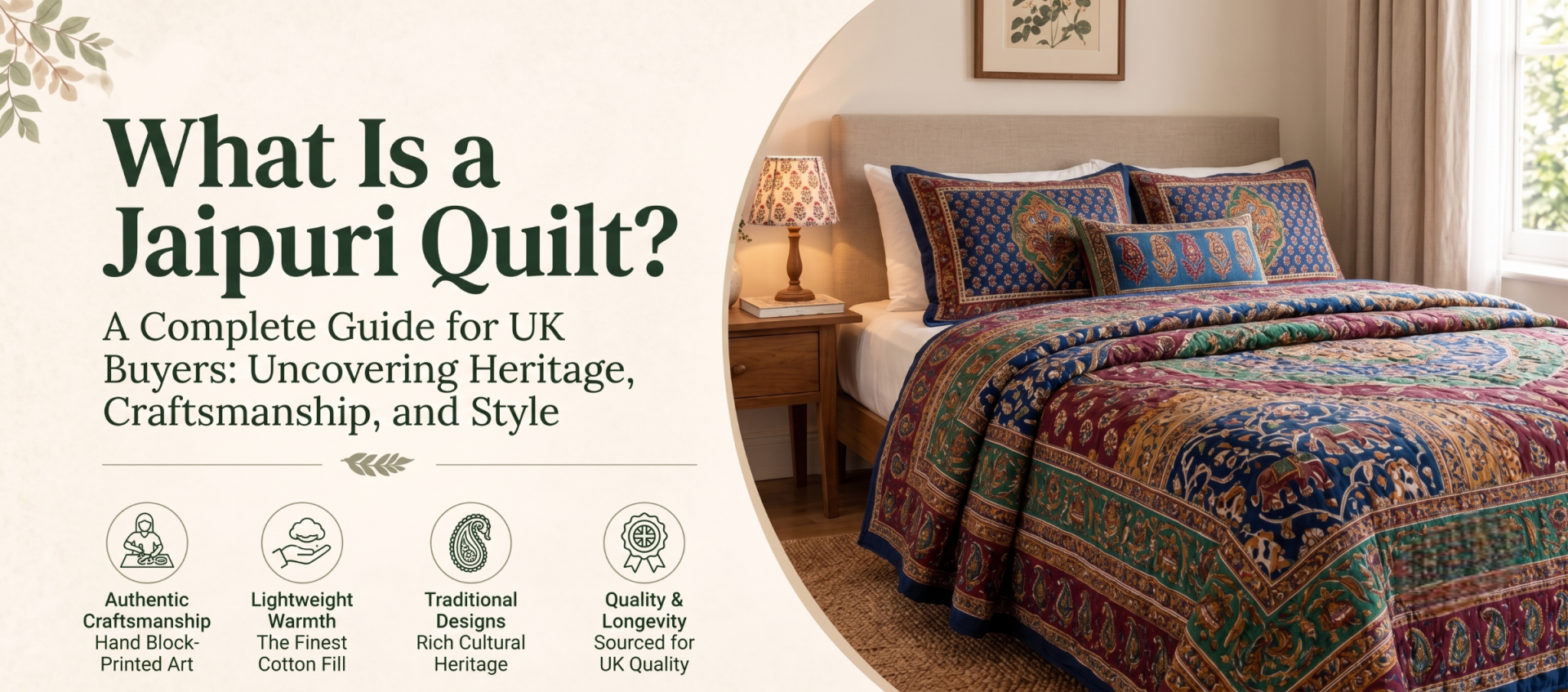
Cotton quilts online from Indian artisan brands now reach homes across the UK, bringing with them the heritage of Jaipur's block-printing traditions. A well-made Indian quilt is not just a bedcovering — it's a statement of taste, a commitment to craft, and a practical piece of bedding that works across multiple seasons.
Quilts are also versatile beyond the bedroom. Draped over a sofa or folded at the foot of the bed, they add warmth and visual interest to a living space in a way that a duvet simply cannot.
Block Print Quilts — A Category Worth Knowing
Among the many varieties of quilts available to UK shoppers, block print quilts occupy a particularly special position. Each one is made using carved wooden blocks dipped in natural dyes and pressed by hand onto cotton fabric — a technique that requires skill, patience, and years of practice. No two quilts are identical. The slight variations in pattern, the organic edges of the print, the gentle irregularities — these are not flaws. They are the fingerprints of the artisan.
Why Quilts Are Gaining Popularity in UK Homes
- Suitable for layering across all UK seasons
- Lie flat and neat — no bunching or slipping
- Decorative enough to be used as a throw or wall hanging
- Natural cotton versions are breathable and hypoallergenic
- Handcrafted versions support traditional artisan communities
- Easier to wash and dry than a full duvet
What Is a Duvet?
If quilts are beloved for their artistry and bedspreads for their elegance, duvets are the undisputed champion of everyday practicality. A duvet is the UK's most commonly used bedding choice, found in the majority of households across the country — and for understandable reasons.
A duvet is a two-part system. The first part is the insert — a soft, bag-like covering filled with an insulating material. This fill can be natural, such as goose down, duck feathers, wool, or silk, or it can be synthetic, made from microfibre or recycled polyester. The insert's sole function is warmth. It is not designed to be particularly decorative.
The second part is the duvet cover — a large, removable pillowcase-like casing that wraps around the insert. This is the piece you see, wash, and change. It is where design, colour, and personality come in.
Understanding Tog Ratings
In the UK, duvets are sold with a tog rating — a measurement of thermal resistance, or simply put, how warm the duvet is.
Tog Rating | Best For | UK Season |
4.5 Tog | Light sleepers, warm bedrooms | Summer |
7–9 Tog | Those who run warm at night | Spring / Autumn |
10.5 Tog | Most UK sleepers year-round | All seasons |
13.5+ Tog | Cold sleepers, unheated rooms | Winter |
The duvet's genius is in its simplicity. The insert stays clean inside its cover; you wash the cover regularly; you change the cover when you want a new look. It's an enormously practical system — and in a country where the weather shifts unpredictably between seasons, having the ability to swap fills or covers without replacing the entire bedding set is genuinely useful.
There is, however, a trade-off. Duvets — especially thicker ones — can be cumbersome to wash at home. The inserts themselves are rarely cleaned as often as they should be, and without a cover, a bare duvet can look rather plain.
Bedspread vs Quilt vs Duvet — Side-by-Side Comparison
To help put the difference between bedspread, quilt, and duvet in clear perspective, here's a direct comparison across the factors that matter most for UK households.
Feature | Bedspread | Quilt | Duvet |
Construction | Single layer / lightly woven | 3 layers, stitched together | 2-part: insert + removable cover |
Primary Purpose | Decorative coverage | Warmth + decoration Warmth + everyday comfort | Warmth + everyday comfort |
Warmth Level | Low | Moderate | Moderate to High (tog-dependent) |
Weight & Bulk | Lightweight | Light to moderate | Moderate to heavy |
Decorative Value | Very high | Very high | Medium (depends on cover) |
Ease of Washing | Easy | Generally easy | Cover: easy. Insert: bulky |
Best UK Season | Spring / Summer | Spring / Summer / Autumn | All year (with right tog) |
Style Range | Traditional, heritage | Artisan, eclectic, classic | Contemporary, minimal |
Layering Potential | Excellent | Excellent | Good (with cover changes) |
The honest answer is: it depends on what you value most. But here's a practical framework based on common UK household priorities.
Choose a Duvet If…
You want reliable warmth year-round with minimal fuss. If your priority is easy maintenance, the ability to update your bedroom look by simply swapping a cover, and consistent comfort through British winters, a duvet is almost certainly your best everyday choice. Pair it with a 10.5 tog insert and a set of quality cotton percale bedding for a hotel-quality sleeping experience at home.
Choose a Quilt If…
You want something that is simultaneously beautiful and functional — a bed covering that works as a piece of craft as much as a piece of bedding. Quilts are perfect for those who appreciate heritage textiles, want a lightweight option for spring and summer, or enjoy the layered, eclectic bedroom aesthetic that is currently very popular across UK interiors.
An artisan cotton quilt can be used year-round — over a sheet in warmer months, over a lightweight duvet insert in winter.
Choose a Bedspread If…
Your priority is an immaculately styled bedroom with clean, flowing lines from bed to floor. Bedspreads are ideal for guest rooms, rooms with period features, or any space where a tailored, traditional look is the goal.
They work beautifully as a daytime topper over other bedding — lifted away at night and replaced in the morning to give the room an instant refresh.
Or — Layer All Three
The most considered bedrooms in the UK often use a combination: a duvet for sleeping warmth, a quilt folded at the foot of the bed for visual interest and extra warmth on cold nights, and a bedspread used occasionally for a particularly polished daytime look.
This layered approach gives you flexibility, visual depth, and comfort across every season.
Why the Fabric Matters as Much as the Type
Whichever category you choose, the material your bedding is made from will significantly affect how comfortable, durable, and breathable it is. In the UK climate — where temperatures can swing significantly between seasons and even within a single week — fabric choice is especially important.
Cotton remains the gold standard for breathability. It absorbs moisture, regulates temperature naturally, and softens with every wash. For quilts and bedspreads in particular, 100% cotton is the material most associated with long-lasting quality and everyday comfort.
Within cotton, cotton percale is worth understanding. Percale refers to a tight weave structure — typically a one-over, one-under thread pattern — that gives the fabric its characteristic crisp, cool hand feel. It is particularly well-suited to summer bedding and to those who sleep warm.
Cotton Percale Bedding brings this combination of cool comfort and elegant texture to your bedroom in one well-considered piece.
For duvets, natural fills such as wool are particularly well-suited to the UK climate. Wool is naturally thermoregulating — it keeps you warm in winter and does not overheat in the summer — and is also resistant to dust mites, making it a sensible choice for those with allergies.
A Note on Artisan Textiles
- Hand-block printed cotton quilts and bedspreads are made using natural pigments and carved wooden blocks — no two pieces are alike
- Traditional Indian block printing uses techniques refined over centuries, particularly in Jaipur, Rajasthan
- Handcrafted textiles support skilled artisan communities and represent a considered, ethical alternative to fast-fashion bedding
- Natural cotton from artisan sources is generally free from harsh chemical finishes, making it gentler on skin
- Slow-fashion bedding — made to last rather than to be replaced seasonally — reduces textile waste over time
Caring for Your Bedding — Practical Tips for UK Homes
Good bedding, properly cared for, will last many years. Here are the most important care considerations for each bedding type.
Caring for a Bedspread
Most cotton bedspreads are machine-washable on a gentle or delicate cycle with cool water. Avoid high heat drying, which can cause shrinkage or weaken the fibres. Line drying is ideal and will preserve colour vibrancy — particularly important for hand-printed or block-printed designs.
Light pressing with a cool iron after washing helps maintain the crisp drape.
Caring for a Quilt
Cotton quilts can generally be machine-washed on a gentle cycle, though heavier or more intricately stitched pieces benefit from hand washing. Turn the quilt inside out before washing to protect the surface print or fabric. Use a mild, colour-safe detergent.
Air drying flat is ideal to prevent the batting from shifting or clumping. Artisan-made and hand-quilted pieces should always be checked for specific care instructions from the maker.
Caring for a Duvet
Wash your duvet cover weekly or fortnightly alongside your sheets. The duvet insert itself should be washed every three to six months — though many UK households wash it less frequently.
Check whether your washing machine is large enough to accommodate the insert; if not, a commercial laundry or professional dry cleaner is the practical option.
Tumble dry the insert on a low heat with a few clean tennis balls to redistribute the fill and prevent clumping.
Final Thoughts
The world of bedding is richer and more nuanced than it might first appear. A bedspread, a quilt, and a duvet each have their own construction, purpose, and personality — and the best bedroom is usually one that draws thoughtfully from all three.
In the UK, where practicality and aesthetics are both important considerations, the duvet remains the everyday workhorse. But the growing appreciation for handcrafted quilts and elegantly styled bedspreads reflects something deeper: a desire for bedding that tells a story, that is made with skill, and that outlasts the fast-fashion cycle.
Whether you're building a bed from scratch or simply looking to add a new layer of warmth and beauty, the difference between these three types of bedding is now clear. Choose the one — or the combination — that suits your lifestyle, your bedroom, and your values.
Frequently Asked Questions
What is the main difference between a quilt and a duvet?
A quilt is a self-contained three-layered bedcovering — with a decorative top, insulating batting, and a backing fabric — all stitched together in patterns. A duvet is a two-part system: a soft, filled insert used inside a removable, washable duvet cover.
Quilts are generally flatter, more decorative, and lighter; duvets are thicker, warmer, and more practical for everyday use, particularly in colder UK months.
Can I use a bedspread instead of a duvet in the UK?
Yes, but with some caveats. A bedspread is primarily a decorative, lightweight covering — well suited to warmer months or layering over a blanket.
Given the UK's cooler climate, most people find a bedspread alone insufficient for autumn and winter nights. However, a bedspread works beautifully as a top styling layer over a duvet or quilt during the day, adding visual elegance without extra bulk.
Are Indian quilts suitable for UK weather?
Absolutely. Traditional indian quilts — such as Jaipuri or Kantha quilts — are made from natural cotton, making them breathable, lightweight, and comfortable across seasons.
They work especially well in spring, summer, and early autumn in the UK. For colder winter months, they can be layered over a duvet or used as a decorative top layer, giving you the best of both warmth and aesthetics.
What tog rating should I choose for a UK duvet?
Tog rating measures the warmth of a duvet. For the UK climate: 4.5 tog suits summer or warm sleepers; 10.5 tog is a versatile all-seasons choice; and 13.5 tog or higher is recommended for cold winter nights.
Many households keep two duvets — a lighter one for summer and a warmer one for winter — or opt for an all-seasons combination duvet that can be split apart or joined together.
Which bedding is easiest to maintain — a quilt, bedspread, or duvet?
A duvet with a removable cover is generally the easiest to maintain day-to-day, as you only need to wash the cover regularly — not the heavy insert itself.
A bedspread is also relatively easy to launder, especially lighter cotton versions. Quilts, particularly handcrafted ones, may require more delicate care but are often machine-washable on a gentle cycle.
Always check the care label before washing any bedding piece.
-

Why Hand Block Printed Home Furnishings Are Getting Popular in the UK
October 16th, 2026 -
 October 2nd, 2026
 -
 September 25th, 2026

